This week we have two major items so my letter is a little long. Please see if you can address both issues. I would like you to take a look at our new book and I would also ask if you could protest against a “Queerfest” in Notre Dame.
First, our new book, Rejecting the Da Vinci Code, is now ready. Read about it by clicking here. It is certain to be part of the controversy surrounding the soon-to-be-released film based on Dan Brown’s book.
Here are just a few of the things you will find in this book:• Why the Church is not guilty of “the greatest cover-up of History.”See why Fr. John Trigilio called this book “a brilliant succinct, objective and convincing refutation of the prolific errors found in Dan Brown’s Da Vinci Code.”
• Having it both ways: claiming the book is both fact and fiction. Dan Brown’s questionable historians and sources.
• The code behind The Da Vinci Code: Gnosticism.
• The real story of Saint Mary Magdalene - much more beautiful than Dan Brown’s.
• Telling the difference between true Gospels and false Gnostic “gospels.”
• The “sacred feminine” and the feminist side of The Da Vinci Code story.
• And much, much more.
And so I urge you not to delay and to get your copy of this book today. It is only $8.95 and if you order on the web, postage is FREE. Click here to buy your book now.
The second item on the agenda is to ask you to protest right away.
For two consecutive years, the Catholic University of Notre Dame hosted a "Queer Film Festival" promoting sodomy to students.
At one session, pro-homosexual Sister Jeannine Gramick is reported to have told students: "I'm beginning to believe that the greatest sin for lesbian and gay people is to want to be straight." (LifeSiteNews.com, 02-14-05)
You see, next year's "Queer Film Festival" was already approved by Notre Dame's board of directors for some time in February. In a board meeting, they stated: "Such films should be shown and discussions on them should be held on a university campus."
That's why I am asking you to join me in a massive prayerful protest to stop this scandalous festival. You don't need to be a student to join this effort.
Click here now to send your urgent protest to Notre Dame president Fr. John Jenkins.
Finally, we also have a report on a small protest against Margaret Starbird promoted by friends and supporters in Kansas. Click here to read the story.
Until next time, I remain,
Yours in Jesus and Mary,
John Horvat
Webmaster
http://www.tfp.org
P.S. Remember there are two urgent items. First, click here to see our official web launching of the TFP book Rejecting The Da Vinci Code. Second please protest against the “Queer Film Festival” at Notre Dame by clicking here.
Saturday, October 22, 2005
A Book Launching and a Protest
An email update I received:


St Louis Marian Conference 2006 Announces Keynote Speaker
ADAM’S MARK HOTEL
January 13, 14, 15 -- 2006
SAINT LOUIS MISSOURI
It is an honor and privilege to announce:
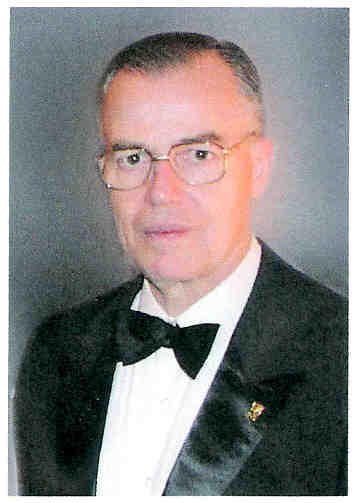
His Imperial and Royal Highness Prince Bertrand of Orleans-Braganza.
It is not often that you hear of a truly Catholic prince who lives his Faith, prays the Rosary daily and defends the right to life. What makes this prince even more special is that he is a descendent of St. Louis and he will be coming to St. Louis!
Prince Bertrand of Orleans-Braganza has graciously agreed to speak at our 2006 Marian Conference. He will deliver the keynote speech on the topic, “Our Lady of Fatima: The Reign of Mary.” You will not want to miss this talk!
Prince Bertrand is the Prince Imperial of Brazil and son of Prince Pedro Henrique of Orleans-Braganza (1909-1981) who until his death was the Head of the Imperial House of Brazil.
As a descendent of the Royal House of France, Prince Bertrand descends directly from Hugh Capet and St. Louis IX of France (1214-1270). He is 22nd in a line of unbroken male legitimacy from the holy Crusader King. He inherits from his mother, Princess Maria of Bavaria, the traditions of the Wittelsbach family, one of the oldest royal families of Europe and famous for its role in the arts, culture and history of Germany.
With kings, saints and heroes, empire builders and crusaders as his ancestors, Prince Bertrand received an education appropriate for the traditions he embodies.
Born in Mandelieu (France) in 1941, Prince Bertrand studied at the Jesuit high school in Rio de Janeiro (Brazil) and graduated as a lawyer in 1964 from the traditional Law School of the University of Sao Paulo (Brazil). From his earliest years Prince Bertrand received a polished Catholic formation. His final education was entrusted by his father to Prof. Plinio Correa de Oliveira, the great Catholic thinker, writer and man of action. Prince Bertrand is first in the line of succession to his older brother, Prince Louis of Orleans-Braganza, the current Head of the Imperial House of Brazil. He actively pursues his many activities in defense of our Christian tradition, the family and every man's right to private property and free enterprise. Faithful to the traditional teaching of the Catholic Church, he is outspoken in defense of the innocent unborn and is active in the pro-family and pro-life movement around the world.
Since his childhood he has always been attracted to the outdoors and enjoys hunting and horseback riding. Also a licensed pilot, he keeps up with aviation developments during his travels around the world. Prince Bertrand is Bailiff Grand-Cross of the Order of the Rose, Grand Cross of Peter I and of the other Imperial Orders of Brazil, and Bailiff Grand Cross of the Constantian Order of St. George of the House of Bourbon-Sicilies.
Jan 13-15, Seventh Annual St Louis Marian Conference
We invite and welcome you to the Seventh Annual St. Louis Marian Conference.
Archbishop Raymond L. Burke will open the conference on Friday 4:00PM January 13, 2006 with a special Mass. The Honorable Francis Slay, Mayor of St. Louis has been invited to officially receive and welcome Prince Bertrand of Orleans-Braganza to the city of St. Louis and to the Marian Conference. Prince Bertrand is a direct descendant of St. Louis IX, King of France, the patron of St. Louis and namesake.
“Mary is a woman, who brings people together.” Our Lady brings us closer to her Son. We embrace Jesus in the Eucharist with a hunger and thirst for his Presence. Please join us in this grace-filled weekend. Come for a winter retreat, a reunion with family and friends. Our fine selection of speakers include the following:
The cost for the 3-day event is $35 ($40 aftter 12/28); ($40 at the door); ($40 for Saturday only); (group of 8 or more $25 prior to 12/28); Young adults $15; Children (5-11) $5. Registration for Priests, Deacons, Vowed Religious is no charge. Gift registrations are available.
The conference will be held at the Adam’s Mark Hotel in downtown St. Louis, MO located 20 minutes from Lambert International Airport. When making your reservations at the Adam’s Mark, please ask for the discounted rates for the Conference of $67 + tax (single or double occupancy) $77 + tax (triple or quad). Please make your reservations as soon as possible. 1-800-444-ADAM
To REGISTER and for further information please call
(314) 423-1075 or FAX (314) 423-9973
Saint Louis Marian Conference 2006
8015 Monroe Street
Saint Louis, MO 63114
Saint Louis the Gateway to Jesus Through Mary
The Marian Centre of St. Louis is a member of the Catholic Chamber of Commerce
Archbishop Raymond L. Burke will open the conference on Friday 4:00PM January 13, 2006 with a special Mass. The Honorable Francis Slay, Mayor of St. Louis has been invited to officially receive and welcome Prince Bertrand of Orleans-Braganza to the city of St. Louis and to the Marian Conference. Prince Bertrand is a direct descendant of St. Louis IX, King of France, the patron of St. Louis and namesake.
“Mary is a woman, who brings people together.” Our Lady brings us closer to her Son. We embrace Jesus in the Eucharist with a hunger and thirst for his Presence. Please join us in this grace-filled weekend. Come for a winter retreat, a reunion with family and friends. Our fine selection of speakers include the following:
Archbishop Raymond L. Burke;
Prince Bertrand of Orleans-Braganza;
Father Eugene Morris;
Father Bill Casey;
Father Andre Mhanna;
Father Mitch Pacwa, S.J.;
Father Joseph Fessio, S.J.;
Father Charles Becker;
Father Don Calloway;
Father Pablo Straub.
The cost for the 3-day event is $35 ($40 aftter 12/28); ($40 at the door); ($40 for Saturday only); (group of 8 or more $25 prior to 12/28); Young adults $15; Children (5-11) $5. Registration for Priests, Deacons, Vowed Religious is no charge. Gift registrations are available.
The conference will be held at the Adam’s Mark Hotel in downtown St. Louis, MO located 20 minutes from Lambert International Airport. When making your reservations at the Adam’s Mark, please ask for the discounted rates for the Conference of $67 + tax (single or double occupancy) $77 + tax (triple or quad). Please make your reservations as soon as possible. 1-800-444-ADAM
(314) 423-1075 or FAX (314) 423-9973
Saint Louis Marian Conference 2006
8015 Monroe Street
Saint Louis, MO 63114
Saint Louis the Gateway to Jesus Through Mary
The Marian Centre of St. Louis is a member of the Catholic Chamber of Commerce
Gospel for Saturday, 29th Week In Ordinary Time
From: Luke 13:1-9
The Need for Repentance
[1] There were some present at that very time who told him of the Galileans whose blood Pilate had mingled with their sacrifices. [2] And he answered them, "Do you think that these Galileans were worse sinners than all the other Galileans, because they suffered thus? [3] I tell you, No; but unless you repent you will all likewise perish. [4] 0r those eighteen upon whom the tower in Siloam fell and killed them, do you think that they were worse offenders than all the others who dwelt in Jerusalem? [5] I tell you, No; but unless you repent you will all likewise perish."
Parable of the Barren Fig Tree
[6] And he told this parable: "A man had a fig tree planted in his vineyard; and he came seeking fruit on it and found none. [7] And he said to the vinedresser, 'Lo, these three years I have come seeking fruit on this fig tree, and I find none. Cut it down; why should it use up the ground?' [8] And he answered him, 'Let it alone, sir, this year also, till I dig about it and put on manure. [9] And if it bears fruit next year, well and good; but if not, you can cut it down.'"
**********************
Commentary:
1-5. Our Lord used current events in his teaching. The Galileans referred to here may be the same as mentioned in the Acts of the Apostles (5:37). The episode was fairly typical of the times Jesus lived in, with Pilate sternly suppressing any sign of civil unrest. We do not know anything about the accident at Siloam other than what the Gospel tells us.
The fact that these people died in this way does not mean that they were worse than others, for God does not always punish sinners in this life (cf. Jn 9:3). All of us are sinners, meriting a much worse punishment than temporal misfortune: we merit eternal punishment; but Christ has come to atone for our sins, he has opened the gates of heaven. We must repent of our sins; otherwise God will not free us from the punishment we deserve. "When you meet with suffering, the Cross, your thought should be: what is this compared with what I deserve?" ([St] J. Escriva, "The Way", 690)
3. "He tells us that, without Holy Baptism, no one will enter the Kingdom of heaven (cf. Jn 3:5); and, elsewhere, that if we do not repent we will all perish (Lk 13:3). This is all easily understood. Ever since man sinned, all his senses rebel against reason; therefore, if we want the flesh to be controlled by the spirit and by reason, it must be mortified; if we do not want the body to be at war with the soul, it and all our senses need to be chastened; if we desire to go to God, the soul with all its faculties needs to be mortified" (St John Mary Vianney, "Selected Sermons", Ash Wednesday).
6-9. Our Lord stresses that we need to produce plenty of fruit (cf. Lk 8:11-15) in keeping with the graces we have received (cf. Lk 12:48). But he also tells us that God waits patiently for this fruit to appear; he does not want the death of the sinner; he wants him to be converted and to live (Ezek 33:11) and, as St Peter teaches, he is "forbearing towards you, not wishing that any should perish, but that all should reach repentance" (2 Pet 3:9). But God's clemency should not lead us to neglect our duties and become lazy and, comfort-seeking, living sterile lives. He is merciful, but he is also just and he will punish failure to respond to his grace.
"There is one case that we should be especially sorry about--that of Christians who could do more and don't; Christians who could live all the consequences of their vocation as children of God, but refuse to do so through lack of generosity. We are partly to blame, for the grace of faith has not been given us to hide but to share with others (cf. Mt 5:15f). we cannot forget that the happiness of these people, in this life and in the next, is at stake. The Christian life is a divine wonder with immediate promises of satisfaction and serenity--but on condition that we know how to recognize the gift of God (cf. Jn 4:10) and be generous, not counting the cost" ([St] J. Escriva, "Christ Is Passing By", 147).
************************
Source: "The Navarre Bible: Text and Commentaries". Biblical text taken from the Revised Standard Version and New Vulgate. Commentaries made by members of the Faculty of Theology of the University of Navarre, Spain. Published by Four Courts Press, Kill Lane, Blackrock, Co. Dublin, Ireland.
Reprinted with permission from Four Courts Press and Scepter Publishers, the U.S. publisher.
The Need for Repentance
[1] There were some present at that very time who told him of the Galileans whose blood Pilate had mingled with their sacrifices. [2] And he answered them, "Do you think that these Galileans were worse sinners than all the other Galileans, because they suffered thus? [3] I tell you, No; but unless you repent you will all likewise perish. [4] 0r those eighteen upon whom the tower in Siloam fell and killed them, do you think that they were worse offenders than all the others who dwelt in Jerusalem? [5] I tell you, No; but unless you repent you will all likewise perish."
Parable of the Barren Fig Tree
[6] And he told this parable: "A man had a fig tree planted in his vineyard; and he came seeking fruit on it and found none. [7] And he said to the vinedresser, 'Lo, these three years I have come seeking fruit on this fig tree, and I find none. Cut it down; why should it use up the ground?' [8] And he answered him, 'Let it alone, sir, this year also, till I dig about it and put on manure. [9] And if it bears fruit next year, well and good; but if not, you can cut it down.'"
**********************
Commentary:
1-5. Our Lord used current events in his teaching. The Galileans referred to here may be the same as mentioned in the Acts of the Apostles (5:37). The episode was fairly typical of the times Jesus lived in, with Pilate sternly suppressing any sign of civil unrest. We do not know anything about the accident at Siloam other than what the Gospel tells us.
The fact that these people died in this way does not mean that they were worse than others, for God does not always punish sinners in this life (cf. Jn 9:3). All of us are sinners, meriting a much worse punishment than temporal misfortune: we merit eternal punishment; but Christ has come to atone for our sins, he has opened the gates of heaven. We must repent of our sins; otherwise God will not free us from the punishment we deserve. "When you meet with suffering, the Cross, your thought should be: what is this compared with what I deserve?" ([St] J. Escriva, "The Way", 690)
3. "He tells us that, without Holy Baptism, no one will enter the Kingdom of heaven (cf. Jn 3:5); and, elsewhere, that if we do not repent we will all perish (Lk 13:3). This is all easily understood. Ever since man sinned, all his senses rebel against reason; therefore, if we want the flesh to be controlled by the spirit and by reason, it must be mortified; if we do not want the body to be at war with the soul, it and all our senses need to be chastened; if we desire to go to God, the soul with all its faculties needs to be mortified" (St John Mary Vianney, "Selected Sermons", Ash Wednesday).
6-9. Our Lord stresses that we need to produce plenty of fruit (cf. Lk 8:11-15) in keeping with the graces we have received (cf. Lk 12:48). But he also tells us that God waits patiently for this fruit to appear; he does not want the death of the sinner; he wants him to be converted and to live (Ezek 33:11) and, as St Peter teaches, he is "forbearing towards you, not wishing that any should perish, but that all should reach repentance" (2 Pet 3:9). But God's clemency should not lead us to neglect our duties and become lazy and, comfort-seeking, living sterile lives. He is merciful, but he is also just and he will punish failure to respond to his grace.
"There is one case that we should be especially sorry about--that of Christians who could do more and don't; Christians who could live all the consequences of their vocation as children of God, but refuse to do so through lack of generosity. We are partly to blame, for the grace of faith has not been given us to hide but to share with others (cf. Mt 5:15f). we cannot forget that the happiness of these people, in this life and in the next, is at stake. The Christian life is a divine wonder with immediate promises of satisfaction and serenity--but on condition that we know how to recognize the gift of God (cf. Jn 4:10) and be generous, not counting the cost" ([St] J. Escriva, "Christ Is Passing By", 147).
************************
Source: "The Navarre Bible: Text and Commentaries". Biblical text taken from the Revised Standard Version and New Vulgate. Commentaries made by members of the Faculty of Theology of the University of Navarre, Spain. Published by Four Courts Press, Kill Lane, Blackrock, Co. Dublin, Ireland.
Reprinted with permission from Four Courts Press and Scepter Publishers, the U.S. publisher.
Nov 6 - It’s Not Just Fiction: Why We Must Reject The Da Vinci Code
You and your family are cordially invited to a presentation titled:
“It’s Not Just Fiction: Why We Must Reject The Da Vinci Code”
A Preview of the American TFP’s New Book
Rejecting the Da Vinci Code
to be held at:
Maria Center
336 E. Ripa Ave.
St. Louis, MO 63215
Sunday, November 6, 2005 at 1:30 PM.
They say it’s only fiction. However, The Da Vinci Code is a novel that brutally attacks Our Lord and the Catholic Church. Now, you can learn how to refute this work with hard-hitting facts. Get the real story of Saint Mary Magdalene. Defend the truths of the Faith that are being distorted. Discover the real Gnostic code behind The Da Vinci Code.
In this talk, American TFP member John Horvat will preview this new book, which also will be available for purchase. He will also discuss ways in which you can protest. Don’t miss this opportunity to learn how to defend Our Lord especially since Hollywood is pulling out all the stops to turn the book into a blockbuster movie. This is your chance to meet with like-minded Catholics who want to stand up and make a difference!
This talk is one of a series of regularly held talks sponsored by the American Society for the Defense of Tradition, Family and Property (TFP) and its America Needs Fatima campaign.
A question and answer period will follow the presentation. Please join us for what promises to be a stimulating evening of Catholic conviviality, enlightening conversation, and hope for the future.
====================================================
For additional information, contact Mark Serafino at (573) 459-5531.
The American TFP – America Needs Fatima • P.O. Box 341 Hanover, PA 17331 717-225-7147
A Preview of the American TFP’s New Book
Rejecting the Da Vinci Code
to be held at:
Maria Center
336 E. Ripa Ave.
St. Louis, MO 63215
Sunday, November 6, 2005 at 1:30 PM.
They say it’s only fiction. However, The Da Vinci Code is a novel that brutally attacks Our Lord and the Catholic Church. Now, you can learn how to refute this work with hard-hitting facts. Get the real story of Saint Mary Magdalene. Defend the truths of the Faith that are being distorted. Discover the real Gnostic code behind The Da Vinci Code.
In this talk, American TFP member John Horvat will preview this new book, which also will be available for purchase. He will also discuss ways in which you can protest. Don’t miss this opportunity to learn how to defend Our Lord especially since Hollywood is pulling out all the stops to turn the book into a blockbuster movie. This is your chance to meet with like-minded Catholics who want to stand up and make a difference!
This talk is one of a series of regularly held talks sponsored by the American Society for the Defense of Tradition, Family and Property (TFP) and its America Needs Fatima campaign.
A question and answer period will follow the presentation. Please join us for what promises to be a stimulating evening of Catholic conviviality, enlightening conversation, and hope for the future.
====================================================
For additional information, contact Mark Serafino at (573) 459-5531.
The American TFP – America Needs Fatima • P.O. Box 341 Hanover, PA 17331 717-225-7147
Friday, October 21, 2005
New Grammar Rules in "netherlands"...
No more "Christ" with a capital "C" in the [n]etherlands (Title corrected to reflect the lunacy occurring in [b]elgium and the [n]etherlands.
Some people/nations/societies are falling so fast towards complete and utter stupidity that they will become but an historical footnote in annals of recordas of mankind. They've lost their minds - they've all gone mad! The worst part is that it seems to be contagious...
Source.
According to a new grammar rule in the [n]etherlands and [b]elgium, the name "Christ" will soon be written with a lower-case "c", as stipulated by an orthography reform published last [f]riday.The above was corrected in anticipation of the [a]ugust 2006 requirement. I decided that in this context [i] would only capitalize the the first letter of the first word of a sentence. Of course that rule is probably superceded if the first word of a sentence happens to be "God" or "Christ"...
According to the [k]ath.net agency, the new spelling rules also will stipulate that the [d]utch word for "jews" (joden) be spelled with a capital "J" when referring to nationality and with a lower-case "j" when referring to the religion. The changes will be mandatory starting in [a]ugust 2006.
Some people/nations/societies are falling so fast towards complete and utter stupidity that they will become but an historical footnote in annals of recordas of mankind. They've lost their minds - they've all gone mad! The worst part is that it seems to be contagious...
Source.
Charleston Diocese Withdraws Support from "Race for the Cure"
CHARLESTON, S.C., October 20, 2005, (LifeSiteNews.com) - The Roman Catholic Diocese of Charleston has officially pulled its support for a fundraiser after learning the recipient organization gives money to the United States’ largest abortion agency.More at LifeSiteNews
The Diocese, along with Bishop England High School, was to have been involved with the Race for the Cure, a fundraising event that attracts 6,000 participants and benefits the Susan G. Komen Breast Cancer Research Foundation. It was later discovered that the foundation financially supports Planned Parenthood in other cities.
Is This Appropriate Bulletin Material???
As seen in the October 9 bulletin from St. Cronan's Parish (the self proclaimed beacon of Archdiocesan "Social Justice"), we note the following:
Source of Bulletin Article is here.
Prayer and Party - the perfect combination! The Holy Families Committee of the Catholic Action Network invites you to an early celebration of All Souls Day - Reclaiming the Gay Saints. We will have readings about gay saints, live music, scrumptious desserts and appetizers, wine, and wonderful company. Held at the home of Marty and Jerry King, on Friday, Oct. 21 at 7:30 p.m. Tickets are $15/advance, $20/door. For tickets, call CAN (721-2977) or Joan Lafferty.Actively promoting homosexuality is an abomination. Something seems seriously amiss at St. Cronan's and one wonders why this parish continues to promote itself as a Catholic entity?
Source of Bulletin Article is here.
Pride and Arrogance Renders Priest "Unfit" for Priesthood
PETERBOROUGH -- An Eastern Ontario Catholic priest has been stripped of his duties for suggesting women could someday become priests. Rev. Edward Cachia "can no longer be relied upon to celebrate the Eucharist within the Church as Christ intended," states a letter from Peterborough Diocese Bishop Nicola De Angelis.Source.
Cachia served at St. Michael's parish in Cobourg. Following an unofficial ordination of nine women on a tour boat on the St. Lawrence River near Kingston in July, Cachia told the Cobourg Daily Star that he hoped the ceremony was "the beginning of a new and awesome change in the life of the church."
LifeSiteNews also had an article on this:
In a press release yesterday from the chancery office of Peterborough Bishop Nicola De Angelis, the diocese states that it "regrets (Fr. Cachia's) decision to refuse to accept the universal and constant teaching of the Catholic Church in relation to holy orders being reserved to men alone." It continues, "Though having freely professed adherence to all the teachings of the Roman Catholic Church and to the Roman Pontiff on the day of his ordination, Fr. Cachia now feels unable to live out this commitment."There are some priests around here who still maintain that women will someday be "priestesses" in the Catholic Church. Unfortunately, most of these men have brains infected with all sorts "diseases" and about the only thing we can do is to pray for them.
Fr. Cachia was given over two months to reconsider his position but "sadly", says the release, "has chosen to remain attached to positions contrary to the teachings of the church."
The release explains that the Catholic Church, "like any other organization possesses rules and expectations that are necessary for membership," and that priests freely take on the responsibility of "teaching the entire deposit of the Catholic faith in the name of the Church and not his own feelings or points of view."
His refusal, "now renders him unfit to serve the Catholic people in the leadership role of priest," says the release.
Many of them cannot follow or understand simple reasoning or logic. Many really don't care what the Church teaches and, by and large, these same men ignore the Holy Father and act as though he doesn't even exist. Further, they continue to poison other Catholics with whom they come into contact.
These men and others like them who continue to poison the faithful seem to me to be the Church's version of the infamous "Typhoid Mary". The bishop in this case, should be applauded for taking the proper action to protect the faith and the faithful from those who, in essence, promote ideas contrary to what the Church teaches.
Perhaps other bishops will do likewise and begin removing those who are no longer "fit" to be priests because of a refusal to assent to Church teaching or because of openly denying Church teaching and promoting error. The souls of the faithful are seriously jeopardized by people such as these. They are the wolves in sheeps' clothing about which our Lord warned us.
Walgreens Gives $100,000 in Support of 'Gay' Games
Received via email last night.
Walgreens has given $100,000 to help sponsor the Gay Games in Chicago next year.I quit supporting Walgreens years ago. This only serves to confirm my opinion of that organization.
Oddly enough, Walgreens says they agreed to sponsor the Gay Games under the guise of helping prevent AIDS. But the official Gay Games web site has the following promotional statement, which promotes the very type of activity Walgreens says they are trying to prevent.
"The Gay Games Social Committee is currently in the process of gathering together Chicago's best bars and clubs, and some of the biggest and best party promoters in the country to create a Social Schedule unlike anything you've ever seen. Chicago's LGBT scene is fierce no matter what time of year it is, but during that one week in July 2006, we are committed to making sure you have the time of your life."
The gift, made to placate homosexual activists, puts Walgreens in the very top Premium Category of sponsorship. To make their sponsorship appear to be a good thing publicly, they say they are providing AIDS education. If any group should be aware of the dangers of AIDS and how to prevent it, it should be homosexual activists. Billions of tax dollars have been spent to educate the public about AIDS.
Gospel for Friday, 29th Week in Ordinary Time
From: Luke 12:54-59
The Coming of Christ
[54] He (Jesus) also said to the multitudes, "When you see a cloud rising in the west, you say at once, `A shower is coming'; and so it happens. [55] And when you see the south wind blowing, you say, `There will be scorching heat'; and it happens. [56] You hypocrites! You know how to interpret the appearances of earth and sky; but why do you not know how to interpret the present time?"
[57] "And why do you not judge for yourselves what is right? [58] As you go with your accuser before the magistrate, make an effort to settle with him on the way, lest he drag you to the judge, and the judge hand you over to the officer, and the officer put you in prison. [59] I tell you, you will never get out till you have paid the very last copper."
******************
Commentary:
56. Jesus' listeners knew from experience how to forecast the weather. However, although they knew the signs of the Messiah's coming announced by the prophets, and were hearing His preaching and witnessing His miracles, they did not want to draw the logical conclusion; they lacked the necessary good will and upright intention, and they just closed their eyes to the light of the Gospel (cf. Romans 1:18ff).
This attitude is also found to be very widespread in our own time, in forms of certain kinds of atheism denounced by the Second Vatican Council: "Those who willfully try to drive God from their heart and to avoid all questions about religion, not following the biddings of their conscience, are not free from blame" ("Gaudium Et Spes", 19).
**************************
Source: "The Navarre Bible: Text and Commentaries". Biblical text taken from the Revised Standard Version and New Vulgate. Commentaries made by members of the Faculty of Theology of the University of Navarre, Spain. Published by Four Courts Press, Kill Lane, Blackrock, Co. Dublin, Ireland.
Reprinted with permission from Four Courts Press and Scepter Publishers, the U.S. publisher.
The Coming of Christ
[54] He (Jesus) also said to the multitudes, "When you see a cloud rising in the west, you say at once, `A shower is coming'; and so it happens. [55] And when you see the south wind blowing, you say, `There will be scorching heat'; and it happens. [56] You hypocrites! You know how to interpret the appearances of earth and sky; but why do you not know how to interpret the present time?"
[57] "And why do you not judge for yourselves what is right? [58] As you go with your accuser before the magistrate, make an effort to settle with him on the way, lest he drag you to the judge, and the judge hand you over to the officer, and the officer put you in prison. [59] I tell you, you will never get out till you have paid the very last copper."
******************
Commentary:
56. Jesus' listeners knew from experience how to forecast the weather. However, although they knew the signs of the Messiah's coming announced by the prophets, and were hearing His preaching and witnessing His miracles, they did not want to draw the logical conclusion; they lacked the necessary good will and upright intention, and they just closed their eyes to the light of the Gospel (cf. Romans 1:18ff).
This attitude is also found to be very widespread in our own time, in forms of certain kinds of atheism denounced by the Second Vatican Council: "Those who willfully try to drive God from their heart and to avoid all questions about religion, not following the biddings of their conscience, are not free from blame" ("Gaudium Et Spes", 19).
**************************
Source: "The Navarre Bible: Text and Commentaries". Biblical text taken from the Revised Standard Version and New Vulgate. Commentaries made by members of the Faculty of Theology of the University of Navarre, Spain. Published by Four Courts Press, Kill Lane, Blackrock, Co. Dublin, Ireland.
Reprinted with permission from Four Courts Press and Scepter Publishers, the U.S. publisher.
From Inside the Vatican: "Adoration Is Awakening"
A cardinal attending this month's Synod of Bishops in Rome to reflect on the Eucharist, gives his view of the gathering. He found the exposure to traditions of the Oriental-rite Churches "very enriching."
By Andrew Rabel
VATICAN CITY, October 20, 2005 -- Canadian Cardinal Marc Oulette has been the archbishop of Quebec City, Canada since 2002. A member of the Order of St. Sulpice, he is an accomplished theologian who has been a professor at the John Paul II Institute for Marriage & the Family. He was made a cardinal by John Paul II in 2003.
His Eminence spoke today to Inside the Vatican about this month's Bishops' Synod of the Eucharist.
Some at this month's Synod, discussing liturgical abuses, have lamented a general forgetfulness of the supernatural dimension of the Eucharist?
CARDINAL MARC OULETTE: Something very enriching was the experience of the Oriental Churches. They have different liturgies and they have a different sense of the liturgy and so to hear them speak about the Holy Eucharist was very defining for us. At the same time, I think we became more aware of the abuses here and there in the way the liturgical reform has been implemented.
The Oriental Christians exploit the architecture of their churches to be respectful of the Church herself and of the Holy Eucharist which is the heart of the temple. They have a deep sense of the sacredness and so to hear them speak about the Holy Eucharist was very edifying for me. At the same time I think we became more aware of some abuses here and there in the way the liturgical reform has been implemented.
Many have spoken on that and I think there will be a follow-up in the congregations and in the different countries. I hope that the sacredness of the holy liturgy will be more conscious in the future. We need that in the West, to recover the sacredness of the liturgy. But what I have observed is that the adoration of the Blessed Sacrament is awakening and developing all over the world and this will help to restore the sacredness of the liturgical celebration of the Mass.
...
Do you feel more devotion to the Eucharist among our clergy, would have the same effect on the laity?
OULETTE: I think the renewal of adoration of the Blessed Sacrament, for example, comes from the laity. And that is a sign of the times, and a great sign of encouragement.
At the same time, I think that the Synod has a message of encouragement for the priest. They are in many parts of the world asked to cover long distances and give many Masses on Sundays, so it is a hard job. So they need encouragement; and so they need to be sustained by the people of God, by their prayer and sacrifices.
...........
More later here.
By Andrew Rabel
VATICAN CITY, October 20, 2005 -- Canadian Cardinal Marc Oulette has been the archbishop of Quebec City, Canada since 2002. A member of the Order of St. Sulpice, he is an accomplished theologian who has been a professor at the John Paul II Institute for Marriage & the Family. He was made a cardinal by John Paul II in 2003.
His Eminence spoke today to Inside the Vatican about this month's Bishops' Synod of the Eucharist.
Some at this month's Synod, discussing liturgical abuses, have lamented a general forgetfulness of the supernatural dimension of the Eucharist?
CARDINAL MARC OULETTE: Something very enriching was the experience of the Oriental Churches. They have different liturgies and they have a different sense of the liturgy and so to hear them speak about the Holy Eucharist was very defining for us. At the same time, I think we became more aware of the abuses here and there in the way the liturgical reform has been implemented.
The Oriental Christians exploit the architecture of their churches to be respectful of the Church herself and of the Holy Eucharist which is the heart of the temple. They have a deep sense of the sacredness and so to hear them speak about the Holy Eucharist was very edifying for me. At the same time I think we became more aware of some abuses here and there in the way the liturgical reform has been implemented.
Many have spoken on that and I think there will be a follow-up in the congregations and in the different countries. I hope that the sacredness of the holy liturgy will be more conscious in the future. We need that in the West, to recover the sacredness of the liturgy. But what I have observed is that the adoration of the Blessed Sacrament is awakening and developing all over the world and this will help to restore the sacredness of the liturgical celebration of the Mass.
...
Do you feel more devotion to the Eucharist among our clergy, would have the same effect on the laity?
OULETTE: I think the renewal of adoration of the Blessed Sacrament, for example, comes from the laity. And that is a sign of the times, and a great sign of encouragement.
At the same time, I think that the Synod has a message of encouragement for the priest. They are in many parts of the world asked to cover long distances and give many Masses on Sundays, so it is a hard job. So they need encouragement; and so they need to be sustained by the people of God, by their prayer and sacrifices.
...........
More later here.
Reading for Friday, 29th Week In Ordinary Time
From: Romans 7:18-25b
Interior Struggle
[18] For I know that nothing good dwells within me, that is, in my flesh. I can will what is right, but I cannot do it. [19] For I do not do the good I want, but the evil I do not want is what I do. [20] Now if I do what I do not want, it is no longer I that do it, but sin which dwells within me.
[21] So I find it to be a law that when I want to do right, evil lies close at hand. [22] For I delight in the law of God, in my inmost self, [23] but I see in my members another law at war with the law of my mind and making me captive to the law of sin which dwells in my members. [24] Wretched man that I am! Who will deliver me from this body of death? [25b] Thanks be to God through Jesus Christ our Lord!
*******************
Commentary:
14-25. As can be seen from the use of the present tense, the "I" in vv. 14-25 is no longer Paul before his conversion, but rather after it: and it also stands for all mankind redeemed by Christ's grace. Here we have a vivid description of the interior struggle which everyone experiences, Christians included. These words are in line with something we are all well aware of: in our bodies there is a "law", an inclination, which fights against the law of our spirit (cf. v. 23), that is, against the spiritual good which God's grace causes us to desire. The very _expression "the law of sin which dwells in my members" emphasizes how strenuously our senses, appetites and passions try to reject the dictates of the spirit; however, the spirit can gain the upper hand. The Church's teaching is that Baptism does not take away a person's inclination to sin ("fomes peccati"), concupiscence: he or she still experiences a strong desire for earthly or sensual pleasure. "Since it [concupiscence] is left to provide a trial, it has no power to injure those who do not consent and who, by the grace of Christ Jesus, manfully resist" (Council of Trent, "De Peccato Originali", can. 5).
The Jews were able to keep the Law of Moses only through the help of divine grace granted them in anticipation of the merits of Christ. Without grace they were like slaves, "sold-under sin" (v. 14). After Christ, a person who rejects the Redemption is in a similar position, for "in the state of corrupt nature man needs grace to heal his nature and enable him to avoid sin entirely. In this present life this healing is brought about in his mind [the spiritual part of man]: the carnal appetite is not completely healed. Hence the Apostle (Rom 7:25) says of the person healed by grace, 'I serve the law of God with my mind, but with my flesh I serve the law of sin'. In this state a person can avoid mortal sin [...] but he cannot avoid all venial sin, due to the corruption of his sensual appetite" (St Thomas Aquinas, "Summa Theologiae", I-II, q. 109, a. 8).
Hence our need for God's help if we are to persevere in virtue; hence also our need to make a genuine personal effort to be faithful. The "St Pius V Catechism", when dealing with the fact that even after Baptism man is subject to various disabilities, including concupiscence, explains that God has willed that death and suffering, which originate in sin, remain part of our lot, thereby enabling us to attain mystical and real union with Christ, who chose to undergo suffering and death; and, likewise, we still have concupiscence, and experience bodily weakness etc. "that in them we may have the seed and material of virtue a which we shall hereafter receive a more abundant harvest of glory and more ample rewards" (II, 2, 48). "'Infelix ego homo!, quis me liberabit de corpore mortis huius? Unhappy man that I am! Who will deliver me from this body of death?' The cry is Saint Paul's--Courage: he too had to fight" ([St] J. Escriva, "The Way", 138).
*********************
Source: "The Navarre Bible: Text and Commentaries". Biblical text taken from the Revised Standard Version and New Vulgate. Commentaries made by members of the Faculty of Theology of the University of Navarre, Spain. Published by Four Courts Press, Kill Lane, Blackrock, Co. Dublin, Ireland.
Reprinted with permission from Four Courts Press and Scepter Publishers, the U.S. publisher.
Interior Struggle
[18] For I know that nothing good dwells within me, that is, in my flesh. I can will what is right, but I cannot do it. [19] For I do not do the good I want, but the evil I do not want is what I do. [20] Now if I do what I do not want, it is no longer I that do it, but sin which dwells within me.
[21] So I find it to be a law that when I want to do right, evil lies close at hand. [22] For I delight in the law of God, in my inmost self, [23] but I see in my members another law at war with the law of my mind and making me captive to the law of sin which dwells in my members. [24] Wretched man that I am! Who will deliver me from this body of death? [25b] Thanks be to God through Jesus Christ our Lord!
*******************
Commentary:
14-25. As can be seen from the use of the present tense, the "I" in vv. 14-25 is no longer Paul before his conversion, but rather after it: and it also stands for all mankind redeemed by Christ's grace. Here we have a vivid description of the interior struggle which everyone experiences, Christians included. These words are in line with something we are all well aware of: in our bodies there is a "law", an inclination, which fights against the law of our spirit (cf. v. 23), that is, against the spiritual good which God's grace causes us to desire. The very _expression "the law of sin which dwells in my members" emphasizes how strenuously our senses, appetites and passions try to reject the dictates of the spirit; however, the spirit can gain the upper hand. The Church's teaching is that Baptism does not take away a person's inclination to sin ("fomes peccati"), concupiscence: he or she still experiences a strong desire for earthly or sensual pleasure. "Since it [concupiscence] is left to provide a trial, it has no power to injure those who do not consent and who, by the grace of Christ Jesus, manfully resist" (Council of Trent, "De Peccato Originali", can. 5).
The Jews were able to keep the Law of Moses only through the help of divine grace granted them in anticipation of the merits of Christ. Without grace they were like slaves, "sold-under sin" (v. 14). After Christ, a person who rejects the Redemption is in a similar position, for "in the state of corrupt nature man needs grace to heal his nature and enable him to avoid sin entirely. In this present life this healing is brought about in his mind [the spiritual part of man]: the carnal appetite is not completely healed. Hence the Apostle (Rom 7:25) says of the person healed by grace, 'I serve the law of God with my mind, but with my flesh I serve the law of sin'. In this state a person can avoid mortal sin [...] but he cannot avoid all venial sin, due to the corruption of his sensual appetite" (St Thomas Aquinas, "Summa Theologiae", I-II, q. 109, a. 8).
Hence our need for God's help if we are to persevere in virtue; hence also our need to make a genuine personal effort to be faithful. The "St Pius V Catechism", when dealing with the fact that even after Baptism man is subject to various disabilities, including concupiscence, explains that God has willed that death and suffering, which originate in sin, remain part of our lot, thereby enabling us to attain mystical and real union with Christ, who chose to undergo suffering and death; and, likewise, we still have concupiscence, and experience bodily weakness etc. "that in them we may have the seed and material of virtue a which we shall hereafter receive a more abundant harvest of glory and more ample rewards" (II, 2, 48). "'Infelix ego homo!, quis me liberabit de corpore mortis huius? Unhappy man that I am! Who will deliver me from this body of death?' The cry is Saint Paul's--Courage: he too had to fight" ([St] J. Escriva, "The Way", 138).
*********************
Source: "The Navarre Bible: Text and Commentaries". Biblical text taken from the Revised Standard Version and New Vulgate. Commentaries made by members of the Faculty of Theology of the University of Navarre, Spain. Published by Four Courts Press, Kill Lane, Blackrock, Co. Dublin, Ireland.
Reprinted with permission from Four Courts Press and Scepter Publishers, the U.S. publisher.
Thursday, October 20, 2005
Springfield Missouri Abortion Clinic Closes Its Doors
JEFFERSON CITY, Mo. (AP) -- A Springfield abortion clinic leading a legal challenge against a new state law unexpectedly shut down Thursday, leaving Missouri with just two abortion clinics.The true reason for the closure remains a secret known only to the five-member board of the for-profit clinic, although they do say it was "business" decision. Could it be that they weren't able to murder enough babies to stay in business?
...
Missouri has just two other abortion clinics, both operated by Planned Parenthood, in St. Louis and Columbia. Another abortion clinic is located not far from St. Louis in Illinois, and the Kansas City area is served by a Planned Parenthood abortion clinic in Kansas.
Post Dispatch story here.
The Truth About Catholic Social Teachings
From CatholicCulture.org:
If you want to find out what the Church really teaches about social structures and policies, keep reading.
Recently I wrote an article about Catholic social principles. It immediately became apparent (from the responses I received) that there is a lot of confusion about what the Church has said regarding this topic.
I'm hoping that this week's Highlights article will shed some light on the subject. Titled The Truth About Catholic Social Teachings, it strives to dispel the confusion by discussing how individual freedoms relate to the common good -- in light of the Church's social teachings.
Read the Article!
The Truth About Catholic Social Teachings
Thank you for your continued support of CatholicCulture.org.
God bless,
Peter Mirus
Vice President, Trinity Communications
Gospel for Thursday, 29th Week in Ordinary Time
From: Luke 12:49-53
Jesus the Cause of Dissension
(Jesus said to His disciples,) [49] "I came to cast fire upon the earth; and would that it were already kindled! [50] I have a baptism to be baptized with; and how I am constrained until it is accomplished! [51] Do you think that I have come to give peace on earth? No, I tell you, but rather division; [52] for henceforth in one house there will be five divided, three against two and two against three; [53] they will be divided, father against son and son against father, mother against daughter and daughter against her mother, mother-in-law against daughter-in-law and daughter-in-law against her mother-in-law."
**********************
Commentary:
49-50. In the Bible, fire is often used to describe God's burning love for men. This divine love finds its highest __expression in the Son of God become man: "God so loved the world that He gave His only Son" (John 3:16). Jesus voluntarily gave up His life out of love for us, and "greater love has no man than this, that a man lays down his life for his friends" (John 15:13).
In these words reported by St. Luke, Jesus Christ reveals His abounding desire to give His life for love of us. He calls His death a baptism, because from it He will arise victorious never to die again. Our Baptism is a submersion in Christ's death, in which we die to sin and are reborn to the new life of grace: "We were buried therefore with Him by baptism into death, so that as Christ was raised from the dead by the glory of the Father, we too might walk in newness of life" (Romans 6:4).
Through this new life, we Christians should become set on fire in the same way as Jesus set His disciples on fire: "With the amazing naturalness of the things of God, the contemplative soul is filled with apostolic zeal. `My heart became hot within me, a fire blazed forth from my thoughts' (Psalm 38:4). What could this fire be if not the fire that Christ talks about: `I came to cast fire upon the earth, and would that it were already kindled' (Luke 12:49). An apostolic fire that acquires its strength in prayer: there is no better way than this to carry on, throughout the whole world, the battle of peace to which every Christian is called to fill up what is lacking in the sufferings of Christ (cf. Colossians 1:24)" ([St] J. Escriva, "Christ Is Passing By", 120).
51-53. God has come into the world with a message of peace (cf. Luke 2:14) and reconciliation (cf. Romans 5:11). By resisting, through sin, the redeeming work of Christ, we become His opponents. Injustice and error lead to division and war. "Insofar as men are sinners, the threat of war hangs over them and will so continue until the coming of Christ; but insofar as they can vanquish sin by coming together in charity, violence itself will be vanquished" (Vatican II, "Gaudium Et Spes", 78).
During His own life on earth, Christ was a sign of contradiction (cf. Luke 2:34). Our Lord is forewarning His disciples about the contention and division which will accompany the spread of the Gospel (cf. Luke 6:20-23; Matthew 10:24).
********************************
Source: "The Navarre Bible: Text and Commentaries". Biblical text taken from the Revised Standard Version and New Vulgate. Commentaries made by members of the Faculty of Theology of the University of Navarre, Spain. Published by Four Courts Press, Kill Lane, Blackrock, Co. Dublin, Ireland.
Reprinted with permission from Four Courts Press and Scepter Publishers, the U.S. publisher.
Jesus the Cause of Dissension
(Jesus said to His disciples,) [49] "I came to cast fire upon the earth; and would that it were already kindled! [50] I have a baptism to be baptized with; and how I am constrained until it is accomplished! [51] Do you think that I have come to give peace on earth? No, I tell you, but rather division; [52] for henceforth in one house there will be five divided, three against two and two against three; [53] they will be divided, father against son and son against father, mother against daughter and daughter against her mother, mother-in-law against daughter-in-law and daughter-in-law against her mother-in-law."
**********************
Commentary:
49-50. In the Bible, fire is often used to describe God's burning love for men. This divine love finds its highest __expression in the Son of God become man: "God so loved the world that He gave His only Son" (John 3:16). Jesus voluntarily gave up His life out of love for us, and "greater love has no man than this, that a man lays down his life for his friends" (John 15:13).
In these words reported by St. Luke, Jesus Christ reveals His abounding desire to give His life for love of us. He calls His death a baptism, because from it He will arise victorious never to die again. Our Baptism is a submersion in Christ's death, in which we die to sin and are reborn to the new life of grace: "We were buried therefore with Him by baptism into death, so that as Christ was raised from the dead by the glory of the Father, we too might walk in newness of life" (Romans 6:4).
Through this new life, we Christians should become set on fire in the same way as Jesus set His disciples on fire: "With the amazing naturalness of the things of God, the contemplative soul is filled with apostolic zeal. `My heart became hot within me, a fire blazed forth from my thoughts' (Psalm 38:4). What could this fire be if not the fire that Christ talks about: `I came to cast fire upon the earth, and would that it were already kindled' (Luke 12:49). An apostolic fire that acquires its strength in prayer: there is no better way than this to carry on, throughout the whole world, the battle of peace to which every Christian is called to fill up what is lacking in the sufferings of Christ (cf. Colossians 1:24)" ([St] J. Escriva, "Christ Is Passing By", 120).
51-53. God has come into the world with a message of peace (cf. Luke 2:14) and reconciliation (cf. Romans 5:11). By resisting, through sin, the redeeming work of Christ, we become His opponents. Injustice and error lead to division and war. "Insofar as men are sinners, the threat of war hangs over them and will so continue until the coming of Christ; but insofar as they can vanquish sin by coming together in charity, violence itself will be vanquished" (Vatican II, "Gaudium Et Spes", 78).
During His own life on earth, Christ was a sign of contradiction (cf. Luke 2:34). Our Lord is forewarning His disciples about the contention and division which will accompany the spread of the Gospel (cf. Luke 6:20-23; Matthew 10:24).
********************************
Source: "The Navarre Bible: Text and Commentaries". Biblical text taken from the Revised Standard Version and New Vulgate. Commentaries made by members of the Faculty of Theology of the University of Navarre, Spain. Published by Four Courts Press, Kill Lane, Blackrock, Co. Dublin, Ireland.
Reprinted with permission from Four Courts Press and Scepter Publishers, the U.S. publisher.
Wednesday, October 19, 2005
Gospel for Oct 19, Memorial: St. John de Brebeuf, Priest & Martyr; St. Isaac Jogues...
Memorial: St. John de Brebeuf, Priest & Martyr; St. Isaac Jogues,
Priest & Martyr; and their Companions, Martyrs
From: Luke 12:39-48
The Need for Vigilance and the Parable of the Steward (Continuation)
(Jesus said to His disciples,) [39] "But know this, that if the householder had known at what hour the thief was coming, he would have been awake and would not have left his house to be broken into. [40] You also must be ready; for the Son of Man is coming at an hour you do not expect."
[41] Peter said, "Lord are you telling this parable for us or for all?" [42] And the Lord said, "Who then is the faithful and wise steward, whom his master will set over his household, to give them their portion of food at the proper time? [43] Blessed is that servant whom his master when he comes will find so doing. [44] Truly I tell you, he will set him over all his possessions. [45] But if that servant says to himself, `My master is delayed in coming,' and begins to beat the menservants and the maidservants, and to eat and drink and get drunk, [46] the master of that servant will come on a day when he does not expect him and at an hour he does not know, and will punish him, and put him with the unfaithful. [47] And that servant who knew his master's will, but did not make ready or act according to his will, shall receive a severe beating. [48] But he who did not know, and did what deserved a beating, shall receive a light beating. Everyone to whom much is given, of him much will be required; and of him to whom men commit much they will demand the more."
*****************************
Commentary:
40. God has chosen to hide from us the time of our death and the time when the world will come to an end. Immediately after death everyone undergoes the Particular Judgment: "just as it is appointed for men to die once, and after that comes judgment..." (Hebrews 9:27). The end of the world is when the General Judgment will take place.
41-48. After our Lord's exhortation to vigilance, St. Peter asks a question (verse 41), the answer to which is the key to understanding this parable. On the one hand, Jesus emphasizes that we simply do not know exactly when God is going to ask us to render an account of our life; on the other--answering Peter's question--our Lord explains that His teaching is addressed to every individual. God will ask everyone to render an account of his doings: everyone has a mission to fulfill in this life and he has to account for it before the judgment seat of God and be judged on what he has produced, be it much or little.
"Since we know neither the day nor the hour, we should follow the advice of the Lord and watch constantly so that, when the single course of our earthly life is completed (cf. Hebrews 9:27), we may merit to enter with Him into the marriage feast and be numbered among the blessed (cf. Matthew 25:31-46) and not, like the wicked and slothful servants (cf. Matthew 25:26), be ordered to depart into the eternal fire (cf. Matthew 25:41)" (Vatican II, "Lumen Gentium", 48).
********************
Source: "The Navarre Bible: Text and Commentaries". Biblical text taken from the Revised Standard Version and New Vulgate. Commentaries made by members of the Faculty of Theology of the University of Navarre, Spain. Published by Four Courts Press, Kill Lane, Blackrock, Co. Dublin, Ireland.
Reprinted with permission from Four Courts Press and Scepter Publishers, the U.S. publisher.
Priest & Martyr; and their Companions, Martyrs
From: Luke 12:39-48
The Need for Vigilance and the Parable of the Steward (Continuation)
(Jesus said to His disciples,) [39] "But know this, that if the householder had known at what hour the thief was coming, he would have been awake and would not have left his house to be broken into. [40] You also must be ready; for the Son of Man is coming at an hour you do not expect."
[41] Peter said, "Lord are you telling this parable for us or for all?" [42] And the Lord said, "Who then is the faithful and wise steward, whom his master will set over his household, to give them their portion of food at the proper time? [43] Blessed is that servant whom his master when he comes will find so doing. [44] Truly I tell you, he will set him over all his possessions. [45] But if that servant says to himself, `My master is delayed in coming,' and begins to beat the menservants and the maidservants, and to eat and drink and get drunk, [46] the master of that servant will come on a day when he does not expect him and at an hour he does not know, and will punish him, and put him with the unfaithful. [47] And that servant who knew his master's will, but did not make ready or act according to his will, shall receive a severe beating. [48] But he who did not know, and did what deserved a beating, shall receive a light beating. Everyone to whom much is given, of him much will be required; and of him to whom men commit much they will demand the more."
*****************************
Commentary:
40. God has chosen to hide from us the time of our death and the time when the world will come to an end. Immediately after death everyone undergoes the Particular Judgment: "just as it is appointed for men to die once, and after that comes judgment..." (Hebrews 9:27). The end of the world is when the General Judgment will take place.
41-48. After our Lord's exhortation to vigilance, St. Peter asks a question (verse 41), the answer to which is the key to understanding this parable. On the one hand, Jesus emphasizes that we simply do not know exactly when God is going to ask us to render an account of our life; on the other--answering Peter's question--our Lord explains that His teaching is addressed to every individual. God will ask everyone to render an account of his doings: everyone has a mission to fulfill in this life and he has to account for it before the judgment seat of God and be judged on what he has produced, be it much or little.
"Since we know neither the day nor the hour, we should follow the advice of the Lord and watch constantly so that, when the single course of our earthly life is completed (cf. Hebrews 9:27), we may merit to enter with Him into the marriage feast and be numbered among the blessed (cf. Matthew 25:31-46) and not, like the wicked and slothful servants (cf. Matthew 25:26), be ordered to depart into the eternal fire (cf. Matthew 25:41)" (Vatican II, "Lumen Gentium", 48).
********************
Source: "The Navarre Bible: Text and Commentaries". Biblical text taken from the Revised Standard Version and New Vulgate. Commentaries made by members of the Faculty of Theology of the University of Navarre, Spain. Published by Four Courts Press, Kill Lane, Blackrock, Co. Dublin, Ireland.
Reprinted with permission from Four Courts Press and Scepter Publishers, the U.S. publisher.
A Touching Story from a Recent Email
From a recent email.
In spite of all you hear and read about the past few weeks regarding the hurricanes, this is one of many stories that will continue to rise to the top!
In spite of all you hear and read about the past few weeks regarding the hurricanes, this is one of many stories that will continue to rise to the top!
I just returned from New Jersey. While en route there, I was stuck in traffic on Interstate 81, just below the Virginia state line, (Bristol, Tennessee), due to a traffic accident with a fatality involved. This accident involved a tanker truck hauling a hazardous material load that developed a leak, which meant that we weren't going anywhere for several hours.
After being told by the Tennessee State Troopers that we would be sitting still until the clean up was completed, I set my brakes on the truck and got our to stretch my legs. Other truck drivers did the same, and at one point there were 5 of us standing there by my truck, complaining. Sitting right beside me in the left lane, were two elderly people in a Silverado pick up truck, which was loaded quite well.
The man, (Joe), lowered his window and asked what was going on regarding the traffic situation. Soon we were all talking with this couple. I mentioned that if I had known about this, I would have bought something to drink, (water), for I was becoming thirsty.
The lady, (Anna), said that they had plenty of water and sodas in the cooler in the bed of the truck, and offered everyone present something. While she was back there, she said that she had plenty of tuna salad made up, and asked if we would be interested in a sandwich. After some urging from Joe, we agreed to a sandwich.
While Anna was making the sandwiches on the tailgate of the truck, she was singing like a songbird. To be close to 70, (I guess), she had a remarkable voice. When she finished making the sandwiches, and putting everything up, Joe raised the tailgate of the truck to close it. I noticed a Mississippi license plate on it. I inquired as to what part of Mississippi they were from. Joe said Biloxi. Knowing that Biloxi had been ravaged also by hurricane Katrina, I asked if they sustained any damage.
Joe said that they lost everything but what they had on and what was in the pickup. All of us drivers tried unsuccessfully to pay them for their drinks and the sandwiches. They would have nothing to do with it. Joe said that their son was living around Harrisonburg, Virginia and that they were going there. He was in the real estate business and that there was a home that became open, and that they were going to start all over there. Starting over at their age would not be easy.
I will soon be 48 years old, and I have say that I have never eaten a tuna sandwich with side orders of reality and humility.
These people lost everything except the pictures, important documents, and some clothes. Joe had managed to get their antique heirloom grandfather clock into the bed of the truck and Anna got her china and silverware, but that was all. These wonderful people lost practically everything they owned and still would not accept any money for their food and drinks.
Joe said that "it was better to give than it is to receive." They sought refuge behind a block wall that he had built years ago, and they watched their belongings and their home disappear in the winds of Hurricane Katrina. Joe said that during all this he had one hand holding onto Anna and the other holding on to God.
They and their truck came out of Katrina unscathed. As I stated before, Anna was singing a song while making the sandwiches. The song is titled "I know who holds tomorrow," an old gospel song. She knew every word, and was quite a gifted singer of it. Have you ever heard it?
The chorus of this song is, "Many things, about tomorrow, I don't seem to understand. But I know who holds tomorrow, and I know who holds my hand."
There is no doubt, in my mind Who was holding both their hands. I know there have been many, many emails that have circulated over the years about things that will touch your heart, but this one I personally was involved in.
Forget all of the politics that the news is striving on, and think about people just like Joe and Anna.
If you can, help out with the victims relief funds. If you cannot, at least offer a prayer for everyone.
Do what you wish with this email, forward it, delete it, whatever. I know that these two elderly people got to this old boy. I will always remember them. Joe and Anna, if by some strange way you, or someone you know gets this, and shows it to you, God Bless you!
Mike D.
Hartselle, Alabama
Gospel for Oct 18, Feast: St. Luke, Evangelist
From: Luke 10:1-9
The Mission of the Seventy Disciples
[1] After this the Lord appointed seventy others, and sent them on ahead of Him, two by two, into every town and place where He Himself was about to come. [2] And He said to them, "The harvest is plentiful, but the laborers are few; pray therefore the Lord of the harvest to send out laborers into His harvest. [3] Go your way; behold, I send you out as lambs in the midst of wolves. [4] Carry no purse, no bag, no sandals; and salute no one on the road. [5] Whatever house you enter, first say, `Peace be to this house!' [6] And if a son of peace is there, your peace shall rest upon him; but if not, it shall return to you. [7] And remain in the same house, eating and drinking what they provide, for the laborer deserves his wages; do not go from house to house. [8] Whenever you enter a town and they receive you, eat what is set before you; [9] heal the sick in it and say to them, "The Kingdom of God has come near to you.'"
****************************
Commentary:
1-12. Those who followed our Lord and received a calling from Him (cf. Luke 9:57-62) included many other disciples in addition to the Twelve (cf. Mark 2:15). We do not know who most of them were; but undoubtedly some of them were with Him all along, from when Jesus was baptized by John up to the time of His ascension--for example, Joseph called Barrabas, and Matthias (cf. Acts 1:21-26). We can also include Cleopas and his companion, whom the risen Christ appeared to on the road to Emmaus (cf. Luke 24:13-35).
From among these disciples, our Lord chooses seventy-two for a special assignment. Of them, as of the Apostles (cf. Luke 9:1-5), He demands total detachment and complete abandonment to divine providence.
From Baptism onwards every Christian is called by Christ to perform a mission. Therefore, the Church, in our Lord's name, "makes to all the laity an earnest appeal in the Lord to give a willing, noble and enthusiastic response to the voice of Christ, who at this hour is summoning them more pressingly, and to the urging of the Holy Spirit. The younger generation should feel this call to be addressed in a special way to themselves; they should welcome it eagerly and generously. It is the Lord Himself, by this Council, who is once more inviting all the laity to unite themselves to Him ever more intimately, to consider His interests as their own (cf. Philippians 2:5), and to join in His mission as Savior. It is the Lord who is again sending them into every town and every place where He Himself is to come (cf. Luke 10:1). He sends them on the Church's apostolate, an apostolate that is one yet has different forms and methods, an apostolate that must all the time be adapting itself to the needs of the moment; He sends them on an apostolate where they are to show themselves His cooperators, doing their full share continually in the work of the Lord, knowing that in the Lord their labor cannot be lost (cf. 1 Corinthians 15:58)" (Vatican II, "Apostolicam Actuositatem", 33).
3-4. Christ wants to instill apostolic daring into His disciples; this is why He says, "I send you out", which leads St. John Chrysostom to comment: "This suffices to give us encouragement, to give us confidence and to ensure that we are not afraid of our assailants" ("Hom. on St. Matthew", 33). The Apostles' and disciples' boldness stemmed from their firm conviction that they were on a God-given mission: they acted, as Peter the Apostle confidently explained to the Sanhedrin, in the name of Jesus Christ of Nazareth, "for there is no other name under heaven by which we must be saved" (Acts 4:12).
"And the Lord goes on," St. Gregory the Great adds, "Carry no purse, no bag, no sandals; and salute no one on the road.' Such should be the confidence the preacher places in God that even if he is not provided with the necessities of life, he is convinced that they will come his way. This will ensure that worry about providing temporal things for himself does not distract him from providing others with eternal things" ("In Evangelia Homiliae", 17). Apostolate calls for generous self-surrender which leads to detachment; therefore, Peter, following our Lord's commandment, when the beggar at the Beautiful Gate asked him for alms (Acts 3:2-3), said, "I have no silver or gold" ("ibid.", 3:6), "not so as to glory in his poverty", St. Ambrose points out, "but to obey the Lord's command. It is as if he were saying, `You see in me a disciple of Christ, and you ask me for gold? He gave us something much more valuable than gold, the power to act in His name. I do not have what Christ did not give me, but I do have what He did give me: In the name of Jesus Christ, arise and walk' (cf. Acts 3:6)" ("Expositio Evangelii Sec. Lucam, in loc".). Apostolate, therefore, demands detachment from material things and it also requires us to be always available, for there is an urgency about apostolic work.
"And salute no one on the road": "How can it be", St. Ambrose asks himself, "that the Lord wishes to get rid of a custom so full of kindness? Notice, however, that He does not just say, `Do not salute anyone', but adds, `on the road.' And there is a reason for this.
"He also commanded Elisha not to salute anyone he met, when He sent him to lay his staff on the body of the dead child (2 Kings 4:29): He gave him this order so as to get him to do this task without delay and effect the raising of the child, and not waste time by stopping to talk to any passer-by he met. Therefore, there is no question of omitting good manners to greet others; it is a matter of removing a possible obstacle in the way of service; when God commands, human considerations should be set aside, at least for the time being. To greet a person is a good thing, but it is better to carry out a divine instruction which could easily be frustrated by a delay ("ibid.").
6. Everyone is "a son of peace" who is disposed to accept the teaching of the Gospel which brings with it God's peace. Our Lord's recommendation to His disciples to proclaim peace should be a constant feature of all the apostolic action of Christians: "Christian apostolate is not a political program or a cultural alternative. It implies the spreading of good, `infecting' others with a desire to love, sowing peace and joy" ([St] J. Escriva, "Christ Is Passing By", 124).
Feeling peace in our soul and in our surroundings is an unmistakable sign that God is with us, and a fruit of the Holy Spirit (cf. Galatians 5:22): "Get rid of these scruples that deprive you of peace. What takes away your peace of soul cannot come from God. When God comes to you, you will feel the truth of those greetings: My peace I give to you..., peace I leave you..., peace be with you..., and you will feel it even in the midst of troubles" ([St] J. Escriva, "The Way", 258).
7. Our Lord clearly considered poverty and detachment a key feature in an apostle. But He was aware of His disciples' material needs and therefore stated the principle that apostolic ministry deserves its recompense. Vatican II reminds us that we all have an obligation to contribute to the sustenance of those who generously devote themselves to the service of the Church: "Completely devoted as they are to the service of God in the fulfillment of the office entrusted to them, priests are entitled to receive a just remuneration. For `the laborer deserves his wages' (Luke 10:7), and `the Lord commanded that they who proclaim the Gospel should get their living by the Gospel' (1 Corinthians 9:14). For this reason, insofar as provision is not made from some other source for the just remuneration of priests, the faithful are bound by a real obligation of seeing to it that the necessary provision for a decent and fitting livelihood for the priests are available" (Vatican II, "Presbyterorum Ordinis", 20).
**********************
Source: "The Navarre Bible: Text and Commentaries". Biblical text taken from the Revised Standard Version and New Vulgate. Commentaries made by members of the Faculty of Theology of the University of Navarre, Spain. Published by Four Courts Press, Kill Lane, Blackrock, Co. Dublin, Ireland.
Reprinted with permission from Four Courts Press and Scepter Publishers, the U.S. publisher.
The Mission of the Seventy Disciples
[1] After this the Lord appointed seventy others, and sent them on ahead of Him, two by two, into every town and place where He Himself was about to come. [2] And He said to them, "The harvest is plentiful, but the laborers are few; pray therefore the Lord of the harvest to send out laborers into His harvest. [3] Go your way; behold, I send you out as lambs in the midst of wolves. [4] Carry no purse, no bag, no sandals; and salute no one on the road. [5] Whatever house you enter, first say, `Peace be to this house!' [6] And if a son of peace is there, your peace shall rest upon him; but if not, it shall return to you. [7] And remain in the same house, eating and drinking what they provide, for the laborer deserves his wages; do not go from house to house. [8] Whenever you enter a town and they receive you, eat what is set before you; [9] heal the sick in it and say to them, "The Kingdom of God has come near to you.'"
****************************
Commentary:
1-12. Those who followed our Lord and received a calling from Him (cf. Luke 9:57-62) included many other disciples in addition to the Twelve (cf. Mark 2:15). We do not know who most of them were; but undoubtedly some of them were with Him all along, from when Jesus was baptized by John up to the time of His ascension--for example, Joseph called Barrabas, and Matthias (cf. Acts 1:21-26). We can also include Cleopas and his companion, whom the risen Christ appeared to on the road to Emmaus (cf. Luke 24:13-35).
From among these disciples, our Lord chooses seventy-two for a special assignment. Of them, as of the Apostles (cf. Luke 9:1-5), He demands total detachment and complete abandonment to divine providence.
From Baptism onwards every Christian is called by Christ to perform a mission. Therefore, the Church, in our Lord's name, "makes to all the laity an earnest appeal in the Lord to give a willing, noble and enthusiastic response to the voice of Christ, who at this hour is summoning them more pressingly, and to the urging of the Holy Spirit. The younger generation should feel this call to be addressed in a special way to themselves; they should welcome it eagerly and generously. It is the Lord Himself, by this Council, who is once more inviting all the laity to unite themselves to Him ever more intimately, to consider His interests as their own (cf. Philippians 2:5), and to join in His mission as Savior. It is the Lord who is again sending them into every town and every place where He Himself is to come (cf. Luke 10:1). He sends them on the Church's apostolate, an apostolate that is one yet has different forms and methods, an apostolate that must all the time be adapting itself to the needs of the moment; He sends them on an apostolate where they are to show themselves His cooperators, doing their full share continually in the work of the Lord, knowing that in the Lord their labor cannot be lost (cf. 1 Corinthians 15:58)" (Vatican II, "Apostolicam Actuositatem", 33).
3-4. Christ wants to instill apostolic daring into His disciples; this is why He says, "I send you out", which leads St. John Chrysostom to comment: "This suffices to give us encouragement, to give us confidence and to ensure that we are not afraid of our assailants" ("Hom. on St. Matthew", 33). The Apostles' and disciples' boldness stemmed from their firm conviction that they were on a God-given mission: they acted, as Peter the Apostle confidently explained to the Sanhedrin, in the name of Jesus Christ of Nazareth, "for there is no other name under heaven by which we must be saved" (Acts 4:12).
"And the Lord goes on," St. Gregory the Great adds, "Carry no purse, no bag, no sandals; and salute no one on the road.' Such should be the confidence the preacher places in God that even if he is not provided with the necessities of life, he is convinced that they will come his way. This will ensure that worry about providing temporal things for himself does not distract him from providing others with eternal things" ("In Evangelia Homiliae", 17). Apostolate calls for generous self-surrender which leads to detachment; therefore, Peter, following our Lord's commandment, when the beggar at the Beautiful Gate asked him for alms (Acts 3:2-3), said, "I have no silver or gold" ("ibid.", 3:6), "not so as to glory in his poverty", St. Ambrose points out, "but to obey the Lord's command. It is as if he were saying, `You see in me a disciple of Christ, and you ask me for gold? He gave us something much more valuable than gold, the power to act in His name. I do not have what Christ did not give me, but I do have what He did give me: In the name of Jesus Christ, arise and walk' (cf. Acts 3:6)" ("Expositio Evangelii Sec. Lucam, in loc".). Apostolate, therefore, demands detachment from material things and it also requires us to be always available, for there is an urgency about apostolic work.
"And salute no one on the road": "How can it be", St. Ambrose asks himself, "that the Lord wishes to get rid of a custom so full of kindness? Notice, however, that He does not just say, `Do not salute anyone', but adds, `on the road.' And there is a reason for this.
"He also commanded Elisha not to salute anyone he met, when He sent him to lay his staff on the body of the dead child (2 Kings 4:29): He gave him this order so as to get him to do this task without delay and effect the raising of the child, and not waste time by stopping to talk to any passer-by he met. Therefore, there is no question of omitting good manners to greet others; it is a matter of removing a possible obstacle in the way of service; when God commands, human considerations should be set aside, at least for the time being. To greet a person is a good thing, but it is better to carry out a divine instruction which could easily be frustrated by a delay ("ibid.").
6. Everyone is "a son of peace" who is disposed to accept the teaching of the Gospel which brings with it God's peace. Our Lord's recommendation to His disciples to proclaim peace should be a constant feature of all the apostolic action of Christians: "Christian apostolate is not a political program or a cultural alternative. It implies the spreading of good, `infecting' others with a desire to love, sowing peace and joy" ([St] J. Escriva, "Christ Is Passing By", 124).
Feeling peace in our soul and in our surroundings is an unmistakable sign that God is with us, and a fruit of the Holy Spirit (cf. Galatians 5:22): "Get rid of these scruples that deprive you of peace. What takes away your peace of soul cannot come from God. When God comes to you, you will feel the truth of those greetings: My peace I give to you..., peace I leave you..., peace be with you..., and you will feel it even in the midst of troubles" ([St] J. Escriva, "The Way", 258).
7. Our Lord clearly considered poverty and detachment a key feature in an apostle. But He was aware of His disciples' material needs and therefore stated the principle that apostolic ministry deserves its recompense. Vatican II reminds us that we all have an obligation to contribute to the sustenance of those who generously devote themselves to the service of the Church: "Completely devoted as they are to the service of God in the fulfillment of the office entrusted to them, priests are entitled to receive a just remuneration. For `the laborer deserves his wages' (Luke 10:7), and `the Lord commanded that they who proclaim the Gospel should get their living by the Gospel' (1 Corinthians 9:14). For this reason, insofar as provision is not made from some other source for the just remuneration of priests, the faithful are bound by a real obligation of seeing to it that the necessary provision for a decent and fitting livelihood for the priests are available" (Vatican II, "Presbyterorum Ordinis", 20).
**********************
Source: "The Navarre Bible: Text and Commentaries". Biblical text taken from the Revised Standard Version and New Vulgate. Commentaries made by members of the Faculty of Theology of the University of Navarre, Spain. Published by Four Courts Press, Kill Lane, Blackrock, Co. Dublin, Ireland.
Reprinted with permission from Four Courts Press and Scepter Publishers, the U.S. publisher.
Monday, October 17, 2005
The "Extra" Synod Father: Raphael
The reproduction of his "Disputation on the Sacrament " has been placed in the hall of the synod on the Eucharist. Timothy Verdon, whom Benedict XVI has called to Rome as an expert consultant, explains why
by Sandro Magister
by Sandro Magister
ROMA, October 17 2005 – In the hall of the Vatican where the synod on the Eucharist is being held from October 2-23, above the presider's table is a large screen. It displays a famous fresco by Raphael, which illustrates for the synod fathers the theme of their meeting: the "Disputation on the Sacrament." At the center of the depiction, on an altar surrounded by other fathers who are reasoning and discussing – while they adore – is the consecrated host exposed in a magnificent monstrance.More here.
Sunday, October 16, 2005
Gospel for the 29th Sunday in Ordinary Time
From: Matthew 22:15-21
On Tribute to Caesar
[15] Then the Pharisees went and took counsel how to entangle him in his talk. [16] And they sent their disciples to him, along with the Herodians, saying, "Teacher, we know that you are true, and teach the way of God truthfully, and care for no man; for you do not regard the position of men. [17] Tell us, then, what you think. Is it lawful to pay taxes to Caesar, or not?" [18] But Jesus, aware of their malice, said, "Why put me to the test, you hypocrites? [19] Show me the money for the tax." And they brought him a coin. [20] And Jesus said to them, "Whose likeness and inscription is this?" [21] They said, "Caesar's." Then he said to them, "Render therefore to Caesar the things that are Caesar's, and to God the things that are God's."
************************
Commentary:
15-21. The Pharisees and Herodians join forces to plot against Jesus. The Herodians were supporters of the regime of Herod and his dynasty. They were quite well disposed to Roman rule and, as far as religious matters were concerned, they held the same kind of materialistic ideas as the Sadducees. The Pharisees were zealous keepers of the Law; they were anti-Roman and regarded the Herodians as usurpers. It is difficult to imagine any two groups more at odds with each other: their amazing
pact shows how much they hated Jesus.
Had Jesus replied that it was lawful to pay taxes to Caesar, the Pharisees could have discredited him in the eyes of the people, who were very nationalistic; if he said it was unlawful, the Herodians would have been able to denounce him to the Roman authorities.
Our Lord's answer is at once so profound that they fail to grasp its meaning, and it is also faithful to his preaching about the Kingdom of God: give Caesar what is his due, but no more, because God must assuredly be given what he has a right to (the other side of the question, which they omitted to put). God and Caesar are on two quite different levels, because for an Israelite God transcends all human
categories. What has Caesar a right to receive? Taxes, which are necessary for legitimate state expenses. What must God be given? Obviously, obedience to all his commandments--which implies personal love and commitment. Jesus' reply goes beyond the human horizons of these tempters, far beyond the simple yes or no they wanted to draw out of him.
The teaching of Jesus transcends any kind of political approach, and if the faithful, using the freedom that is theirs, chose one particular method of solving temporal questions, they "ought to remember that in those cases no one is permitted to identify the authority of the Churchexclusively with his own opinion" (Vatican II, "Gaudium Et Spes", 43).
Jesus' words show that he recognized civil authority and its rights, but he made it quite clear that the superior rights of God must be respected (cf. Vatican II, "Dignitatis Humanae", 11 ), and pointed out that it is part of God's will that we faithfully fulfill our civic duties (cf. Rom 13:1-7).
***************
Source: "The Navarre Bible: Text and Commentaries". Biblical text taken from the Revised Standard Version and New Vulgate. Commentaries made by members of the Faculty of Theology of the University of Navarre, Spain. Published by Four Courts Press, Kill Lane, Blackrock, Co. Dublin, Ireland.
Reprinted with permission from Four Courts Press and Scepter Publishers, the U.S. publisher.
On Tribute to Caesar
[15] Then the Pharisees went and took counsel how to entangle him in his talk. [16] And they sent their disciples to him, along with the Herodians, saying, "Teacher, we know that you are true, and teach the way of God truthfully, and care for no man; for you do not regard the position of men. [17] Tell us, then, what you think. Is it lawful to pay taxes to Caesar, or not?" [18] But Jesus, aware of their malice, said, "Why put me to the test, you hypocrites? [19] Show me the money for the tax." And they brought him a coin. [20] And Jesus said to them, "Whose likeness and inscription is this?" [21] They said, "Caesar's." Then he said to them, "Render therefore to Caesar the things that are Caesar's, and to God the things that are God's."
************************
Commentary:
15-21. The Pharisees and Herodians join forces to plot against Jesus. The Herodians were supporters of the regime of Herod and his dynasty. They were quite well disposed to Roman rule and, as far as religious matters were concerned, they held the same kind of materialistic ideas as the Sadducees. The Pharisees were zealous keepers of the Law; they were anti-Roman and regarded the Herodians as usurpers. It is difficult to imagine any two groups more at odds with each other: their amazing
pact shows how much they hated Jesus.
Had Jesus replied that it was lawful to pay taxes to Caesar, the Pharisees could have discredited him in the eyes of the people, who were very nationalistic; if he said it was unlawful, the Herodians would have been able to denounce him to the Roman authorities.
Our Lord's answer is at once so profound that they fail to grasp its meaning, and it is also faithful to his preaching about the Kingdom of God: give Caesar what is his due, but no more, because God must assuredly be given what he has a right to (the other side of the question, which they omitted to put). God and Caesar are on two quite different levels, because for an Israelite God transcends all human
categories. What has Caesar a right to receive? Taxes, which are necessary for legitimate state expenses. What must God be given? Obviously, obedience to all his commandments--which implies personal love and commitment. Jesus' reply goes beyond the human horizons of these tempters, far beyond the simple yes or no they wanted to draw out of him.
The teaching of Jesus transcends any kind of political approach, and if the faithful, using the freedom that is theirs, chose one particular method of solving temporal questions, they "ought to remember that in those cases no one is permitted to identify the authority of the Churchexclusively with his own opinion" (Vatican II, "Gaudium Et Spes", 43).
Jesus' words show that he recognized civil authority and its rights, but he made it quite clear that the superior rights of God must be respected (cf. Vatican II, "Dignitatis Humanae", 11 ), and pointed out that it is part of God's will that we faithfully fulfill our civic duties (cf. Rom 13:1-7).
***************
Source: "The Navarre Bible: Text and Commentaries". Biblical text taken from the Revised Standard Version and New Vulgate. Commentaries made by members of the Faculty of Theology of the University of Navarre, Spain. Published by Four Courts Press, Kill Lane, Blackrock, Co. Dublin, Ireland.
Reprinted with permission from Four Courts Press and Scepter Publishers, the U.S. publisher.
Saturday, October 15, 2005
Gospel for Oct 15, Memorial: St. Teresa of Jesus, Virgin & Doctor of the Church
From: Luke 12:8-12
Various Teachings of Jesus (Continuation)
(Jesus said to His disciples,) [8] "And I tell you, every one who acknowledges Me before men, the Son of Man also will acknowledge before the angels of God; [9] but he who denies Me before men will be denied before the angels of God. [10] And every one who speaks a word againstthe Son of Man will be forgiven; but he who blasphemes against the Holy Spirit will not be forgiven. [11] And when they bring you before the synagogues and the rulers and the authorities, do not be anxious how or what you are to answer or what you are to say; [12] for the Holy Spirit will teach you in that very hour what you ought to say."
********************************
Commentary:
8-9. This follows logically from Christ's previous teaching: worse than physical evils, worse even than death, are evils of the soul, that is, sin. Those who out of fear of temporal suffering deny our Lord and are unfaithful to the demands of the faith will fall into a greater evil still: they will be denied by Christ Himself on the Day of Judgment; whereas those who are penalized in this life because of their faithfulness to Christ will receive the eternal reward of being recognized by Him and will come to share His glory.
10. Blasphemy against the Holy Spirit consists in maliciously attributing to the devil actions which have God as their origin. A person who does that prevents God's pardon from reaching him: that is why he cannot obtain forgiveness (cf. Matthew 12:31; Mark 3:28-30). Jesus understands and excuses the weakness of a person who makes a oral mistake, but He is not similarly indulgent to someone who shuts his eyes and his heart to the wonderful things the Spirit does; that was the way these Pharisees acted who accused Jesus of casting out demons in the name of Beelzebul; it is the way unbelieving people act who refuse to see in Christ's work a sign of the goodness of God, who reject the invitation God offers them and who thereby put themselves outside the reach of salvation (cf. Hebrews 6:4-6; 10:26-31). See the note on Mark 3:28-30.
[The note on Mark 3:28-30 states:
28-30. Jesus has just worked a miracle but the scribes refuse to recognize it "for they had said `He has an unclean spirit'" (verse 30). They do not want to admit that God is the author of the miracle. In this attitude lies the special gravity of blasphemy against the Holy Spirit--attributing to the prince of evil, to Satan, the good works performed by God Himself. Anyone acting in this way will become like the sick person who has so lost confidence in the doctor that he rejects him as if an enemy and regards as poison the medicine that can save his life. That is why our Lord says that he who blasphemes against the Holy Spirit will not forgiven: not because God cannot forgive all sins, but because that person, in his blindness towards God, rejects Jesus Christ, His teaching and His miracles, and despises the graces of the Holy Spirit as if they were designed to trap him (cf. "St. Pius V Catechism", II, 5, 19; St. Thomas Aquinas, "Summa Theologiae", II-II, q. 14, a. 3).]
**************************
Source: "The Navarre Bible: Text and Commentaries". Biblical text taken from the Revised Standard Version and New Vulgate. Commentaries made by members of the Faculty of Theology of the University of Navarre, Spain. Published by Four Courts Press, Kill Lane, Blackrock, Co. Dublin, Ireland.
Reprinted with permission from Four Courts Press and Scepter Publishers, the U.S. publisher.
Various Teachings of Jesus (Continuation)
(Jesus said to His disciples,) [8] "And I tell you, every one who acknowledges Me before men, the Son of Man also will acknowledge before the angels of God; [9] but he who denies Me before men will be denied before the angels of God. [10] And every one who speaks a word againstthe Son of Man will be forgiven; but he who blasphemes against the Holy Spirit will not be forgiven. [11] And when they bring you before the synagogues and the rulers and the authorities, do not be anxious how or what you are to answer or what you are to say; [12] for the Holy Spirit will teach you in that very hour what you ought to say."
********************************
Commentary:
8-9. This follows logically from Christ's previous teaching: worse than physical evils, worse even than death, are evils of the soul, that is, sin. Those who out of fear of temporal suffering deny our Lord and are unfaithful to the demands of the faith will fall into a greater evil still: they will be denied by Christ Himself on the Day of Judgment; whereas those who are penalized in this life because of their faithfulness to Christ will receive the eternal reward of being recognized by Him and will come to share His glory.
10. Blasphemy against the Holy Spirit consists in maliciously attributing to the devil actions which have God as their origin. A person who does that prevents God's pardon from reaching him: that is why he cannot obtain forgiveness (cf. Matthew 12:31; Mark 3:28-30). Jesus understands and excuses the weakness of a person who makes a oral mistake, but He is not similarly indulgent to someone who shuts his eyes and his heart to the wonderful things the Spirit does; that was the way these Pharisees acted who accused Jesus of casting out demons in the name of Beelzebul; it is the way unbelieving people act who refuse to see in Christ's work a sign of the goodness of God, who reject the invitation God offers them and who thereby put themselves outside the reach of salvation (cf. Hebrews 6:4-6; 10:26-31). See the note on Mark 3:28-30.
[The note on Mark 3:28-30 states:
28-30. Jesus has just worked a miracle but the scribes refuse to recognize it "for they had said `He has an unclean spirit'" (verse 30). They do not want to admit that God is the author of the miracle. In this attitude lies the special gravity of blasphemy against the Holy Spirit--attributing to the prince of evil, to Satan, the good works performed by God Himself. Anyone acting in this way will become like the sick person who has so lost confidence in the doctor that he rejects him as if an enemy and regards as poison the medicine that can save his life. That is why our Lord says that he who blasphemes against the Holy Spirit will not forgiven: not because God cannot forgive all sins, but because that person, in his blindness towards God, rejects Jesus Christ, His teaching and His miracles, and despises the graces of the Holy Spirit as if they were designed to trap him (cf. "St. Pius V Catechism", II, 5, 19; St. Thomas Aquinas, "Summa Theologiae", II-II, q. 14, a. 3).]
**************************
Source: "The Navarre Bible: Text and Commentaries". Biblical text taken from the Revised Standard Version and New Vulgate. Commentaries made by members of the Faculty of Theology of the University of Navarre, Spain. Published by Four Courts Press, Kill Lane, Blackrock, Co. Dublin, Ireland.
Reprinted with permission from Four Courts Press and Scepter Publishers, the U.S. publisher.
Friday, October 14, 2005
Gospel for Friday, 28th Week in Ordinary Time
From: Luke 12:1-7
Various Teachings of Jesus
[1] In the meantime, when so many thousands of the multitude had gathered together that they trod upon one another, He (Jesus) began to say to His disciples first, "Beware of the leaven of the Pharisees, which is hypocrisy. [2] Nothing is covered up that will not be revealed, or hidden that will not be known. [3] Whatever you have said in the dark shall be heard in the light, and what you have whispered in private rooms shall be proclaimed upon the housetops."
[4] "I tell you, My friends, do not fear those who kill the body, and after that, have no more that they can do. [5] But I will warn you whom to fear: fear Him who, after He has killed, has power to cast into Hell; yes, I tell you, fear Him! [6] Are not five sparrows sold for two pennies? And not one of them is forgotten before God. [7] Why, even the hairs of your head are all numbered. Fear not; you are of more value than many sparrows."
***********************
Commentary:
3. Most Palestinian houses had a roof in the form of a terrace. There people would meet to chat and while away the time in the hottest part of the day. Jesus points out to His disciples that just as in these get-togethers things said in private became matters of discussion, so too, despite the Pharisees' and scribes' efforts to hide their vices and defects under the veil of hypocrisy, they would become a matter of common knowledge.
6-7. Nothing--not even the most insignificant thing--escapes God, His Providence and the judgment He will mete out. For this same reason no one should fear that any suffering or persecution he experiences in following Christ will remain unrewarded in eternity.
The teaching about fear, contained in verse 5, is filled out in verses 6 and 7, where Jesus tells us that God is a good Father who watches over every one of us--much more than He does over these little ones (whom He also remembers). Therefore, our fear of God should not be servile (based on fear of punishment); it should be a filial fear (the fear of someone who does not want to displease his father), a fear nourished by trust in Divine Providence.
******************************
Source: "The Navarre Bible: Text and Commentaries". Biblical text taken from the Revised Standard Version and New Vulgate. Commentaries made by members of the Faculty of Theology of the University of Navarre, Spain. Published by Four Courts Press, Kill Lane, Blackrock, Co. Dublin, Ireland.
Reprinted with permission from Four Courts Press and Scepter Publishers, the U.S. publisher.
Various Teachings of Jesus
[1] In the meantime, when so many thousands of the multitude had gathered together that they trod upon one another, He (Jesus) began to say to His disciples first, "Beware of the leaven of the Pharisees, which is hypocrisy. [2] Nothing is covered up that will not be revealed, or hidden that will not be known. [3] Whatever you have said in the dark shall be heard in the light, and what you have whispered in private rooms shall be proclaimed upon the housetops."
[4] "I tell you, My friends, do not fear those who kill the body, and after that, have no more that they can do. [5] But I will warn you whom to fear: fear Him who, after He has killed, has power to cast into Hell; yes, I tell you, fear Him! [6] Are not five sparrows sold for two pennies? And not one of them is forgotten before God. [7] Why, even the hairs of your head are all numbered. Fear not; you are of more value than many sparrows."
***********************
Commentary:
3. Most Palestinian houses had a roof in the form of a terrace. There people would meet to chat and while away the time in the hottest part of the day. Jesus points out to His disciples that just as in these get-togethers things said in private became matters of discussion, so too, despite the Pharisees' and scribes' efforts to hide their vices and defects under the veil of hypocrisy, they would become a matter of common knowledge.
6-7. Nothing--not even the most insignificant thing--escapes God, His Providence and the judgment He will mete out. For this same reason no one should fear that any suffering or persecution he experiences in following Christ will remain unrewarded in eternity.
The teaching about fear, contained in verse 5, is filled out in verses 6 and 7, where Jesus tells us that God is a good Father who watches over every one of us--much more than He does over these little ones (whom He also remembers). Therefore, our fear of God should not be servile (based on fear of punishment); it should be a filial fear (the fear of someone who does not want to displease his father), a fear nourished by trust in Divine Providence.
******************************
Source: "The Navarre Bible: Text and Commentaries". Biblical text taken from the Revised Standard Version and New Vulgate. Commentaries made by members of the Faculty of Theology of the University of Navarre, Spain. Published by Four Courts Press, Kill Lane, Blackrock, Co. Dublin, Ireland.
Reprinted with permission from Four Courts Press and Scepter Publishers, the U.S. publisher.
Thursday, October 13, 2005
Gospel for Thursday, 28th Week in Ordinary Time
Luke 11:47-54:
The Hypocrisy of the Scribes and Pharisees (Continuation)
(Jesus said to the Pharisees,) [47] "Woe to you! for you build the tombs of the prophets whom your fathers killed. [48] So you are witnesses and consent to the deeds of your fathers; for they killed them, and you build their tombs. [49] Therefore also the Wisdom of God said, `I will send them prophets and apostles, some of whom they will kill and persecute,' [50] that the blood of all the prophets, shed from the foundation of the world, may be required of this generation, [51] from the blood of Abel to the blood of Zechariah, who perished between the altar and the sanctuary. Yes, I tell you, it shall be required of this generation. [52] Woe to you lawyers! for you have taken away the key of knowledge; you did not enter yourselves, and you hindered those who were entering."
[53] As He went away from there, the scribes and the Pharisees began to press Him hard, and to provoke Him to speak of many things, [54] lying in wait for Him, to catch at something He might say.
**************************
Commentary:
51. Zechariah was a prophet who died by being stoned in the temple of Jerusalem around the year 800 B.C. because he accused the people of Israel of being unfaithful to God's law (cf. 2 Chronicles 24:20-22). The murder of Abel (Genesis 4:8) and that of Zechariah were, respectively, the first and last murders reported in these books which the Jews regarded as Sacred Scripture. Jesus refers to a Jewish tradition which, in His own time and even later, pointed out the stain of the blood of Zechariah.
The altar referred to here was the altar of holocausts, located outside, in the courtyard of the priests, in front of the temple proper.
52. Jesus severely reproaches these doctors of the Law who, given their study and meditation on Scripture, were the very ones who should have recognized Jesus as the Messiah, since His coming had been foretold in the sacred books. However, as we learn from the Gospel, the exact opposite happened. Not only did they not accept Jesus: they obstinately opposed Him. As teachers of the Law they should have taught the people to follow Jesus; instead, they blocked the way.
53-54. St. Luke frequently records this attitude of our Lord's enemies (cf. 6:11; 19:47-48; 20:19-20; 22:2). The people followed Jesus and were enthusiastic about His preaching and miracles, whereas the Pharisees and scribes would not accept Him and would not allow the people to follow Him; they tried in every way to discredit Him in the eyes of the people (cf. John 11:48).
***************************
Source: "The Navarre Bible: Text and Commentaries". Biblical text taken from the Revised Standard Version and New Vulgate. Commentaries made by members of the Faculty of Theology of the University of Navarre, Spain. Published by Four Courts Press, Kill Lane, Blackrock, Co. Dublin, Ireland.
Reprinted with permission from Four Courts Press and Scepter Publishers, the U.S. publisher.
The Hypocrisy of the Scribes and Pharisees (Continuation)
(Jesus said to the Pharisees,) [47] "Woe to you! for you build the tombs of the prophets whom your fathers killed. [48] So you are witnesses and consent to the deeds of your fathers; for they killed them, and you build their tombs. [49] Therefore also the Wisdom of God said, `I will send them prophets and apostles, some of whom they will kill and persecute,' [50] that the blood of all the prophets, shed from the foundation of the world, may be required of this generation, [51] from the blood of Abel to the blood of Zechariah, who perished between the altar and the sanctuary. Yes, I tell you, it shall be required of this generation. [52] Woe to you lawyers! for you have taken away the key of knowledge; you did not enter yourselves, and you hindered those who were entering."
[53] As He went away from there, the scribes and the Pharisees began to press Him hard, and to provoke Him to speak of many things, [54] lying in wait for Him, to catch at something He might say.
**************************
Commentary:
51. Zechariah was a prophet who died by being stoned in the temple of Jerusalem around the year 800 B.C. because he accused the people of Israel of being unfaithful to God's law (cf. 2 Chronicles 24:20-22). The murder of Abel (Genesis 4:8) and that of Zechariah were, respectively, the first and last murders reported in these books which the Jews regarded as Sacred Scripture. Jesus refers to a Jewish tradition which, in His own time and even later, pointed out the stain of the blood of Zechariah.
The altar referred to here was the altar of holocausts, located outside, in the courtyard of the priests, in front of the temple proper.
52. Jesus severely reproaches these doctors of the Law who, given their study and meditation on Scripture, were the very ones who should have recognized Jesus as the Messiah, since His coming had been foretold in the sacred books. However, as we learn from the Gospel, the exact opposite happened. Not only did they not accept Jesus: they obstinately opposed Him. As teachers of the Law they should have taught the people to follow Jesus; instead, they blocked the way.
53-54. St. Luke frequently records this attitude of our Lord's enemies (cf. 6:11; 19:47-48; 20:19-20; 22:2). The people followed Jesus and were enthusiastic about His preaching and miracles, whereas the Pharisees and scribes would not accept Him and would not allow the people to follow Him; they tried in every way to discredit Him in the eyes of the people (cf. John 11:48).
***************************
Source: "The Navarre Bible: Text and Commentaries". Biblical text taken from the Revised Standard Version and New Vulgate. Commentaries made by members of the Faculty of Theology of the University of Navarre, Spain. Published by Four Courts Press, Kill Lane, Blackrock, Co. Dublin, Ireland.
Reprinted with permission from Four Courts Press and Scepter Publishers, the U.S. publisher.
Wednesday, October 12, 2005
A Brief Defense of Corporal Mortification
As reported recently about the acts of mortification practiced by some members of Opus Dei, Fr. Michael Giesler wrote an article for Crisis Magazine in defense of the practice. That article can be found here:
This article by Fr. Giesler is a well reasoned and thorough one which everyone should be encouraged to read. In our age of instant gratification and our general fear and loathing of anything contrary to pleasure, this article should bring us back to a certain sense of reality that the practice of acts of mortification and penance can be something which allows us to grow closer to our Lord.
Please read and share the full article which can be found here.
Kudos to Marc P. for providing the link!
The Body’s Forgotten ally: A Brief Defense of Corporal MortificationFor those who are familiar with Fr. Corapi's Catechism Series, you may well remember his discussion of "hair shirts" and acts of penance and mortification.
By Rev. Michael Giesler
It’s an interesting question. Did Leonardo wear a cilice or use a discipline? Though not mentioned in Dan Brown’s fantasy novel, The Da Vinci Code—with its bizarre and misleading description of corporal mortification—and granting Leonardo a certain religious fervor, it’s possible.
The cilice, a sharp chain worn around the leg, is really a derivation of the ancient hair shirt, which originated in the region of Cilicia in Asia Minor. It was used for many centuries in the medieval and Renaissance Church as a means of purifying the senses, atoning for sin, and winning grace for others.
This article by Fr. Giesler is a well reasoned and thorough one which everyone should be encouraged to read. In our age of instant gratification and our general fear and loathing of anything contrary to pleasure, this article should bring us back to a certain sense of reality that the practice of acts of mortification and penance can be something which allows us to grow closer to our Lord.
Please read and share the full article which can be found here.
Kudos to Marc P. for providing the link!
Gospel for Wednesday, 28th Week in Ordinary Time
From: Luke 11:42-46
The Hypocrisy of the Scribes and Pharisees (Continuation)
(Jesus said to the Pharisees,) [42] "But woe to you Pharisees! for you tithe mint and rue and every herb, and neglect justice and the love of God; these you ought to have done, without neglecting the others. [43] Woe to you Pharisees! for you love the best seat in the synagogues and salutations in the market places. [44] Woe to you! for you are like graves which are not seen, and men walk over them without knowing it."
[45] One of the lawyers answered Him, "Teacher, in saying this You reproach us also." [46] And He said, "Woe to you lawyers also! for you load men with burdens hard to bear and you yourselves do not touch the burdens with one of your fingers."
***********************
Commentary:
42. The Law of Moses laid down that the harvest had to be tithed (cf. Leviticus 27:30-33; Deuteronomy 12:22ff; etc.) to provide for the worship offered in the temple. Insignificant products were not subject to this Law.
Rue is a bitter medicinal plant used by the Jews in ancient times. Did it have to be tithed?: the Pharisees, who were so nit-picking, said that it did.
44. According to the Old Law, anyone who touched a grave became unclean for seven days (Num 19:16), but with the passage of time a grave could become so overgrown that a person could walk on it without noticing. Our Lord uses this comparison to unmask the hypocrisy of these people He is talking to: they are very exact about very small details but they forget their basic duty--justice and the love of God (verse 42). On the outside they are clean but their hearts are full of malice and rottenness (verse 39); they pretend to be just, appearances are all that matters to them; they know that virtue is held in high regard, therefore they strive to appear highly virtuous (verse 43). Duplicity and deceit mark their lives.
***************************
Source: "The Navarre Bible: Text and Commentaries". Biblical text taken from the Revised Standard Version and New Vulgate. Commentaries made by members of the Faculty of Theology of the University of Navarre, Spain. Published by Four Courts Press, Kill Lane, Blackrock, Co. Dublin, Ireland.
Reprinted with permission from Four Courts Press and Scepter Publishers, the U.S. publisher.
The Hypocrisy of the Scribes and Pharisees (Continuation)
(Jesus said to the Pharisees,) [42] "But woe to you Pharisees! for you tithe mint and rue and every herb, and neglect justice and the love of God; these you ought to have done, without neglecting the others. [43] Woe to you Pharisees! for you love the best seat in the synagogues and salutations in the market places. [44] Woe to you! for you are like graves which are not seen, and men walk over them without knowing it."
[45] One of the lawyers answered Him, "Teacher, in saying this You reproach us also." [46] And He said, "Woe to you lawyers also! for you load men with burdens hard to bear and you yourselves do not touch the burdens with one of your fingers."
***********************
Commentary:
42. The Law of Moses laid down that the harvest had to be tithed (cf. Leviticus 27:30-33; Deuteronomy 12:22ff; etc.) to provide for the worship offered in the temple. Insignificant products were not subject to this Law.
Rue is a bitter medicinal plant used by the Jews in ancient times. Did it have to be tithed?: the Pharisees, who were so nit-picking, said that it did.
44. According to the Old Law, anyone who touched a grave became unclean for seven days (Num 19:16), but with the passage of time a grave could become so overgrown that a person could walk on it without noticing. Our Lord uses this comparison to unmask the hypocrisy of these people He is talking to: they are very exact about very small details but they forget their basic duty--justice and the love of God (verse 42). On the outside they are clean but their hearts are full of malice and rottenness (verse 39); they pretend to be just, appearances are all that matters to them; they know that virtue is held in high regard, therefore they strive to appear highly virtuous (verse 43). Duplicity and deceit mark their lives.
***************************
Source: "The Navarre Bible: Text and Commentaries". Biblical text taken from the Revised Standard Version and New Vulgate. Commentaries made by members of the Faculty of Theology of the University of Navarre, Spain. Published by Four Courts Press, Kill Lane, Blackrock, Co. Dublin, Ireland.
Reprinted with permission from Four Courts Press and Scepter Publishers, the U.S. publisher.
Reading for Wednesday, 28th Week in Ordinary Time
From: Romans 2:1-11
The Jews Also are Guilty
[1] Therefore you have no excuse, O man, whoever you are, when you judge another; for in passing judgment upon him you condemn yourself, because you, the judge, are doing the very same things. [2] We know that the judgment of God rightly falls upon those who do such things. [3] Do you suppose, 0 man, that when you judge those who do such things and yet do them yourself, you will escape the judgment of God? [4] 0r do you presume upon the riches of his kindness and forbearance and patience? Do you not know that God's kindness is meant to lead you to repentance? [5] But by your hard and impenitent heart you are storing up wrath for yourself on the day of wrath when God's righteous judgment will be revealed. [6] For he will render to every man according to his works: [7] to those who by patience in well-doing seek for glory and honor and immortality, he will give eternal life; [8] but for those who are factious and do not obey the truth, but obey wickedness, there will be wrath and fury. [9] There will be tribulation and distress for every human being who does evil, the Jew first and also the Greek, [10] but glory and honor and peace for every one who does good, the Jew first and also the Greek. [11] For God shows no partiality.
*****************************
Commentary:
1. The Apostle now addresses the Jews to make them see that, despite their privileged position, they too are unrighteous. He does this by setting up an imaginary conversation with a person representing the Jewish people, whose attitude is like that of those who "trusted in themselves that they were righteous and despised others" (Lk 18:9). If the pagans, who could only know God through the use of natural reason, cannot be excused for not worshipping him and for committing sin, how much more inexcusable is the behavior of Jews who, despite receiving supernatural Revelation, commit the very same sins as those for which they reproach the Gentiles. St Paul's invective against the Jews (vv. 17-24) is reminiscent of our Lord's criticism of the scribes and Pharisees (cf. Mt 23:13-33).
2-11. These verses contain the following truths: 1) God rewards and punishes, and therefore there is a close connection between a person's behavior in this life (meritorious or blameworthy) and what happens to him or her in the next life (cf. especially vv. 2, 5, 7-10). 2) God is a just and impartial Judge; he does not look to whether a person is Jew or Gentile but simply to how he lives. 3) The passage also tells us when this judgment will take place (v. 5, elaborated on by v. 16).
In the course of speaking about God as rewarding the good, St Paul describes the glorious state of the blessed in heaven ("eternal life", "glory", "honor", "peace": vv. 7, 10) and the fact that it will last for ever ("immortality": v. 7). He also teaches that in order to attain this state one must persevere in good works ("patience in well-doing": v. 7); this echoes what our Lord said: "he who endures to the end will be saved" (Mt 10:22; cf. 24:13).
Parallel with this, St Paul speaks of how God will punish sinners ("wrath and fury": v. 8) and of the unhappy fate of those condemned to hell ("tribulation and distress": v. 9).
The meaning of this passage becomes clearer in the light of many other passages of Sacred Scripture and, also, of the Church's teaching about the Judgment and when it will take place. There are two different occasions "when everyone must appear in the presence of the Lord to render an account of all his thoughts, words and actions [...]. The first takes place when each of us departs this life; for then he is instantly placed before the judgment seat of God, where all that he has ever done shall be subjected to the most rigid scrutiny. This is called the particular judgment. The second occurs when on the same day and in the same place all men shall stand together before the tribunal of their judge, that in the presence and hearing of all human beings of all times each may know his final doom and sentence" ("St Pius V Catechism", 1, 8, 3).
***********************************
Source: "The Navarre Bible: Text and Commentaries". Biblical text taken from the Revised Standard Version and New Vulgate. Commentaries made by members of the Faculty of Theology of the University of Navarre, Spain. Published by Four Courts Press, Kill Lane, Blackrock, Co. Dublin, Ireland.
Reprinted with permission from Four Courts Press and Scepter Publishers, the U.S. publisher.
The Jews Also are Guilty
[1] Therefore you have no excuse, O man, whoever you are, when you judge another; for in passing judgment upon him you condemn yourself, because you, the judge, are doing the very same things. [2] We know that the judgment of God rightly falls upon those who do such things. [3] Do you suppose, 0 man, that when you judge those who do such things and yet do them yourself, you will escape the judgment of God? [4] 0r do you presume upon the riches of his kindness and forbearance and patience? Do you not know that God's kindness is meant to lead you to repentance? [5] But by your hard and impenitent heart you are storing up wrath for yourself on the day of wrath when God's righteous judgment will be revealed. [6] For he will render to every man according to his works: [7] to those who by patience in well-doing seek for glory and honor and immortality, he will give eternal life; [8] but for those who are factious and do not obey the truth, but obey wickedness, there will be wrath and fury. [9] There will be tribulation and distress for every human being who does evil, the Jew first and also the Greek, [10] but glory and honor and peace for every one who does good, the Jew first and also the Greek. [11] For God shows no partiality.
*****************************
Commentary:
1. The Apostle now addresses the Jews to make them see that, despite their privileged position, they too are unrighteous. He does this by setting up an imaginary conversation with a person representing the Jewish people, whose attitude is like that of those who "trusted in themselves that they were righteous and despised others" (Lk 18:9). If the pagans, who could only know God through the use of natural reason, cannot be excused for not worshipping him and for committing sin, how much more inexcusable is the behavior of Jews who, despite receiving supernatural Revelation, commit the very same sins as those for which they reproach the Gentiles. St Paul's invective against the Jews (vv. 17-24) is reminiscent of our Lord's criticism of the scribes and Pharisees (cf. Mt 23:13-33).
2-11. These verses contain the following truths: 1) God rewards and punishes, and therefore there is a close connection between a person's behavior in this life (meritorious or blameworthy) and what happens to him or her in the next life (cf. especially vv. 2, 5, 7-10). 2) God is a just and impartial Judge; he does not look to whether a person is Jew or Gentile but simply to how he lives. 3) The passage also tells us when this judgment will take place (v. 5, elaborated on by v. 16).
In the course of speaking about God as rewarding the good, St Paul describes the glorious state of the blessed in heaven ("eternal life", "glory", "honor", "peace": vv. 7, 10) and the fact that it will last for ever ("immortality": v. 7). He also teaches that in order to attain this state one must persevere in good works ("patience in well-doing": v. 7); this echoes what our Lord said: "he who endures to the end will be saved" (Mt 10:22; cf. 24:13).
Parallel with this, St Paul speaks of how God will punish sinners ("wrath and fury": v. 8) and of the unhappy fate of those condemned to hell ("tribulation and distress": v. 9).
The meaning of this passage becomes clearer in the light of many other passages of Sacred Scripture and, also, of the Church's teaching about the Judgment and when it will take place. There are two different occasions "when everyone must appear in the presence of the Lord to render an account of all his thoughts, words and actions [...]. The first takes place when each of us departs this life; for then he is instantly placed before the judgment seat of God, where all that he has ever done shall be subjected to the most rigid scrutiny. This is called the particular judgment. The second occurs when on the same day and in the same place all men shall stand together before the tribunal of their judge, that in the presence and hearing of all human beings of all times each may know his final doom and sentence" ("St Pius V Catechism", 1, 8, 3).
***********************************
Source: "The Navarre Bible: Text and Commentaries". Biblical text taken from the Revised Standard Version and New Vulgate. Commentaries made by members of the Faculty of Theology of the University of Navarre, Spain. Published by Four Courts Press, Kill Lane, Blackrock, Co. Dublin, Ireland.
Reprinted with permission from Four Courts Press and Scepter Publishers, the U.S. publisher.
The Synod: The Eucharist Determines the State of the Church’s Health
A diary of the first nine days of discussion. The two extremes: the loss of faith and martyrdom. Objections to the ordination of married men. The open case of divorced and remarried persons. The push for intercommunion with Protestants and Orthodox.On the subject of the decline of the number of priests and the possibility of ordaining married men:
by Sandro Magister
=======================
...
Cardinal Edmund Szoka, for example, went so far as to decry the fact that “some of our priests, and even some bishops, have lost their faith in the Holy Eucharist, an celebrate Holy Mass as if it were simply a professional duty.” The result, as other European and Western synod fathers in particular have complained, is a dramatic decline in Mass attendance.
...
...Cardinal Cláudio Hummes of San Paolo in Brazil said he was more concerned:
“The number of Brazilians who declare themselves Catholics has diminished rapidly, on an average of 1% a year. In 1991 Catholic Brazilians were nearly 83%, today and according to new studies, they are barely 67%. We wonder with anxiety: how long will Brazil remain a Catholic country? In conformity with this situation, it has been found that in Brazil there are two Protestant pastors for each Catholic priest, and the majority from the Pentecostal Churches. Many indications show that the same is true for almost all of Latin America and here too we wonder: how long will Latin America remain a Catholic continent? The response of the Church in Brazil is, in the first place, the missions including the permanent home missionary visits. A missionary Church must be deeply eucharistic, for the Eucharist is the source of the mission.”
Various persons on various occasions have suggested that the shortage of priests be addressed by ordaining married men in the Latin Rite Church, as is already done in the Eastern Rite Catholic Churches.The subjects of "intercommunion" and Holy Communion for those who are divorced and remarried were also discussed.
...
In any case, at the present synod the cardinal relator [Angelo] Scola mentioned the hypothesis only in order to reject it...
...the most serious criticisms of ordaining married men came from exponents of the Eastern Rite Churches, in which married priesthood is the norm.
But it is possible that something may change in regard to another question that has arisen during the synod discussions: communion for divorced and remarried Catholics.More here.
...
Another question discussed at the synod is that of “intercommunion,” or the sharing of the Eucharist between Catholic Christians and those of other denominations, which is generally permitted only in exceptional cases.
After arguing that the very term “intercommunion” is “ambiguous and self-contradictory,“ cardinal Walter Kasper, president of the Pontifical Council for Christian Unity, said that in this regard “Vatican Council II talks about two principles: the unity of the Church and the participation in the means of grace, asserting that the unity of the Church, on the most part, forbids the access of a non-Catholic to the Eucharist, but participation in the means of grace perhaps recommends it.”
Tuesday, October 11, 2005
Opus Dei Topic of Dicussion for the Post Dispatch
Here is one article briefly explaining some of the things Opus Dei members do in living one's life for God: Opus Dei is unique in Catholic world
and this article about Mortification: Opus Dei's practice of corporal mortification
and this article about Mortification: Opus Dei's practice of corporal mortification
It is one of the more dramatic and controversial aspects of the Catholic movement Opus Dei: corporal mortification.It's controversial, I suppose, because it seems that very few people (including Catholics) practice acts of mortification these days.
Mortification, which literally means "to make death," is a method of killing everyday temptations that distract from God. When a Christian gives up something for Lent, that is a form of mortification.
The Rev. Michael Geisler, spiritual director of Opus Dei in St. Louis, has written two articles this summer attempting to explain the theological purpose behind corporal mortification.It's nice to see articles explaining Opus Dei in a fairly positive light - especially in the Post.
...
"Self-denial helps a person overcome both psychological and physical weakness, gives him energy, helps him grow in virtue and ultimately leads to salvation," wrote Geisler in a defense of corporal mortification in the July/August issue of Crisis magazine. "It conquers the insidious demons of softness, pessimism and lukewarm faith that dominate the lives of so many today."
Is Evolution Compatible with the Faith?
From Catholic Culture comes this latest email:
In my latest Highlights column on CatholicCulture.org I address the furor caused by Cardinal Christoph Schönborn's recent blast against the neo-Darwinian theory of evolution. It turns out that the Cardinal's remarks were based on a fundamental misunderstanding of the meaning of the term "random" in science and mathematics.
If you're concerned about evolutionary theory, this column is must-reading: Evolution: Thinking Clearly about Randomness
I'd also like to report that we have significantly improved the Catechism portion of our search engine. Originally, both footnotes and headings were returned along with regular Catechism paragraphs, and this was confusing. Now, if a chapter or section heading contains your search word, the entire section is returned. Moreoever, the order of the results is more sensible: sections first, then individual paragraphs, then footnotes.
As we enter Fall and prepare for Advent, please consider Trinity Communications in your end-of-year giving. We continue to need your support. Thanks!
Jeff Mirus
President
Trinity Communications
A Poignant Commentary on Today's Reading
Especially notable today considering our excessively self-indulgent, materialistic, and lusful society.
From: Romans 1:16-25
The Theme of the Epistle
[16] For I am not ashamed of the gospel: it is the power of God for salvation to every one who has faith, to the Jew first and also to the Greek. For in it the righteousness of God is revealed through faith for faith; as it is written, "He who through faith is righteous shall live."
The Fault and Punishment of the Gentiles
[18] For the wrath of God is revealed from heaven against all ungodliness and wickedness of men who by their wickedness suppress the truth. [19] For what can be known about God is plain to them, because God has shown it to them. [20] Ever since the creation of the world his invisible nature, namely, his eternal power and deity, has been clearly perceived in the things that have been made. So they are without excuse; [21] for although they knew God they did not honor him as God or give thanks to him, but they became futile in their thinking and their senseless minds were darkened. [22] Claiming to be wise, they became fools, [23] and exchanged the glory of the immortal God for images resembling mortal man or birds or animals or reptiles.
[24] Therefore God gave them up in the lusts of their hearts to impurity, to the dishonoring of their bodies among themselves, [25] because they exchanged the truth about God for a lie and worshipped and served the creature rather than the Creator, who is blessed for ever! Amen.
****************************
Commentary:
16. St Paul continues to speak about the "Gospel". The proclamation of the saving power of Christ's death on the Cross is a stumbling block to the Jews and foolishness to the Gentiles, whereas a Christian is proud of the Cross and draws strength from it. When writing to the Romans, the Apostle, who was quite familiar with the noise of triumphal marches and the divinization of emperors, simply says that "he is not ashamed; he does so to encourage them also not to be ashamed but, rather, to boast as he did. If today someone approaches you and asks you, 'But...do you adore a crucified man?', far from hanging your head and blushing with confusion, use this reproach as an opportunity to boast and let your eyes and your face show that you are not ashamed. If they come back and ask you aloud, 'What, adore the crucified?', reply: 'Yes, I adore him [...]. I adore and boast of a crucified God who, by his Cross, reduced the demons to silence and did away with all superstition: for me his Cross is the ineffable trophy of his benevolence and of his love"' (St John Chrysostom, "Hom. on Rom", 2).
17. The _expression "righteousness of God" refers to the state of righteousness or justice (= justness) in which a person is placed when God gives him grace. It is called the righteousness of God because man cannot attain it through his own efforts: it is a free (gratuitous, hence "grace") gift of God. The fact that "righteousness" comes from God does not mean that it is something external to man, for righteousness does not mean merely that we are called "righteous" but that we really are righteous in God's eyes. The Magisterium of the Church has given solemn teaching on this matter in the context of explaining the various factors which cause man's justification; "Finally", says the Council of Trent, "the only formal cause is 'justice of God, not the justice by which he is himself just, but the justice by which he makes us just' (St Augustine, "De Trinitate", XIV, 12, 15), namely, the justice which we have as a gift from him and by which we are renewed in the spirit of our mind. And not only are we considered just, but we are truly said to be just, and we are just" ("De Iustificatione", chap. 7).
"Through faith for faith": Sacred Scripture tends to use this kind of phrase to indicate on-going growth in something that is living (cf. Ps 84:8; 2 Cor 2:16; 3:18; Rom 6:19). What is being spoken about here is a steady progression from the imperfect understanding of divine truths possible in this life to the perfect understanding that is experienced in heaven. The full meaning of the phrase can be seen from St Paul's statement that in the Gospel justice is made manifest: it begins and is nourished and grows through faith, until the believer at last attains eternal salvation.
The statement that "he who through faith is righteous shall live" comes from Hab 2:4; St Paul here applies it to the position of the Christian. What the prophet meant was that those Jews who kept the Law and trusted in its promises would not succumb when the Babylonians invaded. St Paul applies the test to the righteous of the New Testament: if they stay firm in their faith in the Gospel, they will continue in the life of grace and will attain everlasting beatitude. The faith of good Israelites was a prefiguring of the faith of good Christians. The just man will live by faith, which "faith is the beginning of man's salvation, the foundation and source of all justification, 'without which it is impossible to please God' (cf. Heb 11:6) and to be counted as his sons" (Council of Trent, "De Iustificatione", chap. 8).
St Paul's statement can also be understood as meaning that he who through faith is just will live. This puts the emphasis on the fact that faith is the beginning of the process of justification, and that a person who is justified will attain salvation.
18-32. The Apostle is saying that the righteousness of God (= justness) can only come about through faith in Jesus Christ--and that neither Jews nor Gentiles possess this righteousness. He develops this point up as far as 3:20.
In the present passage he describes two stages in the position of the Gentiles. In the first (vv. 18-23) he points out their blameworthiness, and then in the second he goes on (vv. 24-32) to speak about the punishment of their sins. Justice as the righteousness of God refers to God's action of saving sinful man by pouring his grace into him; God's "wrath" is the punishment which the Almighty inflicts on him who persists in sin. For, as St Thomas says, "Anger and the like are ascribed to God by an analogy drawn from their effects. Because it is characteristic of anger that it stimulates men to requite wrong, divine retribution is analogically termed anger" ("Summa Theologiae", I, q. 3, a. 2 ad 2).
There is a connection between faith and righteousness, on the one hand, and sin and God's wrath, on the other. This Pauline teaching ties in with the last thing St John the Baptist is recorded as saying in bearing witness to Christ: "He who believes in the Son has eternal life; he who does not obey the Son shall not see life, but the wrath of God rests upon him" (Jn 3:36).
Christian teaching often points out how God's desire that all sinners be saved (the "righteousness of God" as instrument of salvation) combines with his punishment of sin (the "wrath of God"). How perfect justice interfaces with perfect mercy is ultimately a mystery.
18. "Who by their wickedness suppress the truth": commenting on these words St Thomas writes: "Genuine knowledge of God has the effect of inclining a person to goodness. However, this knowledge of God can be frustrated, as if enchained, by a person's attachment to vice" ("Commentary on Rom, ad loc.").
Clearly St Paul is speaking here of those Gentiles who do know about God but who fail to appreciate their good fortune; their knowledge of God does not produce the result which should naturally flow from it--an upright life. We can see from what Paul says that man is naturally religious. He has a knowledge of God which is not just theoretical: it has implications for his whole life because it implies that he is intimately united to God. When a person does not follow the impulse of his very nature he is guilty of unrighteousness, for he should render God homage for being his Creator.
"All men, because they are persons, that is, beings endowed with reason and free will and therefore bearing personal responsibility, are both impelled by their nature and bound by a moral obligation to seek the truth, especially religious truth. They are also bound to adhere to the truth once they come to know it and direct their whole lives in accordance with the demands of truth" (Vatican II, "Dignitatis Humanae", 2).
Our dependence on God does not mean that we are less than free; on the contrary, it is rejection of all religious duties that leads to the shameful slaveries which Paul now goes on to list, for "religion is the greatest rebellion of a person who does not want to live like an animal, who is not satisfied and will not rest until he reaches and comes to know his Creator" ([St] J. Escriva, "Conversations", 73).
19-20. It is possible to know about God without his having to reveal himself in a supernatural way; we know this from the book of Wisdom (Wis 13:1-9), which says that pagans, who, led astray by the beauty and power and greatness of created things, took these things for gods, should have known that all this perfection etc. came from their Author, for "from the greatness and beauty of created things comes a corresponding perception of their Creator" (Wis 13:5).
This knowledge of God, which we term "natural", is not something easy to attain; but it can be attained and it is the best form of preparation for accepting supernaturally revealed truths, and for disposing us to honor and worship our Creator. Moreover, Revelation confirms the certainty which natural knowledge gives: "The heavens are telling the glory of God", the Psalmist exclaims, band the firmament proclaims his handiwork" (Ps 19:2). St Augustine reminds us that traces of the Creator are to be found in man, and, as we all know from experience, we have been made to know and love God and therefore our heart is restless until it rests in him (cf. "Confessions", I, 1, 1).
To sum up, we can say with St Thomas Aquinas that, in the natural order, man has two ways of discovering the existence of God--one, through reason that inner light by means of which a person acquires knowledge; the other, through certain external pointers to the wisdom of God, that is, created things perceivable through the senses: these things are like a book on which are imprinted traces of God (cf. "Commentary on Rom", 1:6).
Whichever of these routes is taken, "God, the origin and end of all things, can be known with certainty by the natural light of human reason from the things that he created" (Vatican I, "Dei Filius", chap. 2).
Recalling the core of Christian teaching about the nature of man, the Second Vatican Council states that "sacred Scripture teaches that man was created 'in the image of God' as able to know and love his Creator", and that "the dignity of man rests above all on the fact that he is called to communion with God. The invitation to converse with God is addressed to man as soon as he comes into being. For if man exists it is because God has created him through love, and through love continues to hold him in existence" ("Gaudium Et Spes", 12 and 19). The human mind, therefore, even when relying on its own resources can grasp various truths concerning God--first of all, his existence, and secondly, certain of his attributes, which St Paul sums up here as his "invisible nature", "eternal power" and "deity". By reflecting on the created world, we can learn about some of God's perfections; but, St Thomas Aquinas comments, only in heaven will we be able to see that these various perfections are all one with the divine essence. This is why St Paul talks about God's "invisible nature". Contemplation of the works of creation leads us to posit the presence of an ever-existing Creator, and brings us to discover his "eternal power". Finally, the word "deity" implies that God is transcendent: he is the Cause, superior to all other causes, and in him everything finds its explanation and ultimate purpose.
The fact that it is possible to know God by the use of natural reason means that pagans who chose not to worship him were blameworthy. Their position is comparable to that of contemporary atheists and unbelievers who deny or doubt the existence of God despite the fact that as human beings they do know him in some way in the depths of their conscience. The culpability of pagans as of modern unbelievers ("they are without excuse") derives from the fact that they fail to accept that God is knowable through the use of human reason; they both commit the same fault--that of refusing to render worship to God.
Of course, to some degree the attitude of atheists can be explained by historical, environmental, personal and other factors. However, it should not be forgotten that these do not justify atheism. However, "those who willfully try to drive God from their heart and to avoid all questions about religion, not following the biddings of their conscience, are not free from blame" (Vatican II, "Gaudium Et Spes", 19).
21-23. The Gentiles knew God but they failed to give him his due--to worship him in a spirit of adoration and thanksgiving. As a result they fell into polytheism (belief in a multiplicity of gods) and idolatry, as St Paul vividly describes: they worshipped images depicting men and women (the Greeks gave their gods human form) or animals (as was the case in Egyptian and other eastern religions).
In our own time idolatry does not take that form, but there are practices which can properly be called idolatrous. Man is naturally religious and if he does not worship the true God he necessarily has to find other things to take God's place. Sometimes it is himself that man makes the object of worship: the Second Vatican Council points out that "with some people it is their exaggerated idea of man that causes their faith to languish; they are more prone, it would seem, to affirm man than to deny God [...]. Those who profess this kind of atheism maintain that freedom consists in this, that man is an end to himself and the sole maker, with supreme control, of his own history" ("Gaudium Et Spes", 19 and 20). It also happens that people, by becoming enslaved to them, make gods out of the good things created by God for man's benefit--money, power, sensuality.
24-32. The sin of idolatry leads to the kind of moral disorder described by St Paul: every time man knowingly and willingly tries to marginalize God, that religious aberration leads to moral disorder not only in the individual but also in society.
God punishes the sin of idolatry and impiety by withdrawing his graces: that is what the Apostle means when he says that he "gave them up to the lusts of their hearts" (v. 24), "gave them up to dishonorable passions" (v. 26). St John Chrysostom, explaining these words, says: "The Apostle shows here that ungodliness brings with it violation and forgetfulness of every law. When Paul says that God gives them up, this must be understood as meaning that God leaves them to their own devices. God abandons the evildoer but he does not impel him towards evil. When the general withdraws in the thick of the battle, he gives his soldiers up to the enemy, not in the sense of physically shackling them but because he deprives them of the help of his presence. God acts in the same way. Rebels against his law, men have turned their back on him; God, his goodness exhausted, abandons them [...]. What else could he do? Use force, compel them? Those means do not make men virtuous. The only thing he could do was let them be" ("Hom. on Rom", 3).
It may be that God counts on the experience of sin to move people to repentance. In any event, we should not read into this passage unconcern, much less injustice on God's part: he never abandons people unless they first abandon him (cf. Council of Trent, "De Iustificatione", chap. 11).
25. When describing the blasphemous behavior of Gentiles who worship created things rather than the Creator, St Paul cannot but utter an ejaculation, in a spirit of atonement. This should teach us to do the same whenever we witness offense being offered to God.
******************************
Source: "The Navarre Bible: Text and Commentaries". Biblical text taken from the Revised Standard Version and New Vulgate. Commentaries made by members of the Faculty of Theology of the University of Navarre, Spain. Published by Four Courts Press, Kill Lane, Blackrock, Co. Dublin, Ireland.
From: Romans 1:16-25
The Theme of the Epistle
[16] For I am not ashamed of the gospel: it is the power of God for salvation to every one who has faith, to the Jew first and also to the Greek. For in it the righteousness of God is revealed through faith for faith; as it is written, "He who through faith is righteous shall live."
The Fault and Punishment of the Gentiles
[18] For the wrath of God is revealed from heaven against all ungodliness and wickedness of men who by their wickedness suppress the truth. [19] For what can be known about God is plain to them, because God has shown it to them. [20] Ever since the creation of the world his invisible nature, namely, his eternal power and deity, has been clearly perceived in the things that have been made. So they are without excuse; [21] for although they knew God they did not honor him as God or give thanks to him, but they became futile in their thinking and their senseless minds were darkened. [22] Claiming to be wise, they became fools, [23] and exchanged the glory of the immortal God for images resembling mortal man or birds or animals or reptiles.
[24] Therefore God gave them up in the lusts of their hearts to impurity, to the dishonoring of their bodies among themselves, [25] because they exchanged the truth about God for a lie and worshipped and served the creature rather than the Creator, who is blessed for ever! Amen.
****************************
Commentary:
16. St Paul continues to speak about the "Gospel". The proclamation of the saving power of Christ's death on the Cross is a stumbling block to the Jews and foolishness to the Gentiles, whereas a Christian is proud of the Cross and draws strength from it. When writing to the Romans, the Apostle, who was quite familiar with the noise of triumphal marches and the divinization of emperors, simply says that "he is not ashamed; he does so to encourage them also not to be ashamed but, rather, to boast as he did. If today someone approaches you and asks you, 'But...do you adore a crucified man?', far from hanging your head and blushing with confusion, use this reproach as an opportunity to boast and let your eyes and your face show that you are not ashamed. If they come back and ask you aloud, 'What, adore the crucified?', reply: 'Yes, I adore him [...]. I adore and boast of a crucified God who, by his Cross, reduced the demons to silence and did away with all superstition: for me his Cross is the ineffable trophy of his benevolence and of his love"' (St John Chrysostom, "Hom. on Rom", 2).
17. The _expression "righteousness of God" refers to the state of righteousness or justice (= justness) in which a person is placed when God gives him grace. It is called the righteousness of God because man cannot attain it through his own efforts: it is a free (gratuitous, hence "grace") gift of God. The fact that "righteousness" comes from God does not mean that it is something external to man, for righteousness does not mean merely that we are called "righteous" but that we really are righteous in God's eyes. The Magisterium of the Church has given solemn teaching on this matter in the context of explaining the various factors which cause man's justification; "Finally", says the Council of Trent, "the only formal cause is 'justice of God, not the justice by which he is himself just, but the justice by which he makes us just' (St Augustine, "De Trinitate", XIV, 12, 15), namely, the justice which we have as a gift from him and by which we are renewed in the spirit of our mind. And not only are we considered just, but we are truly said to be just, and we are just" ("De Iustificatione", chap. 7).
"Through faith for faith": Sacred Scripture tends to use this kind of phrase to indicate on-going growth in something that is living (cf. Ps 84:8; 2 Cor 2:16; 3:18; Rom 6:19). What is being spoken about here is a steady progression from the imperfect understanding of divine truths possible in this life to the perfect understanding that is experienced in heaven. The full meaning of the phrase can be seen from St Paul's statement that in the Gospel justice is made manifest: it begins and is nourished and grows through faith, until the believer at last attains eternal salvation.
The statement that "he who through faith is righteous shall live" comes from Hab 2:4; St Paul here applies it to the position of the Christian. What the prophet meant was that those Jews who kept the Law and trusted in its promises would not succumb when the Babylonians invaded. St Paul applies the test to the righteous of the New Testament: if they stay firm in their faith in the Gospel, they will continue in the life of grace and will attain everlasting beatitude. The faith of good Israelites was a prefiguring of the faith of good Christians. The just man will live by faith, which "faith is the beginning of man's salvation, the foundation and source of all justification, 'without which it is impossible to please God' (cf. Heb 11:6) and to be counted as his sons" (Council of Trent, "De Iustificatione", chap. 8).
St Paul's statement can also be understood as meaning that he who through faith is just will live. This puts the emphasis on the fact that faith is the beginning of the process of justification, and that a person who is justified will attain salvation.
18-32. The Apostle is saying that the righteousness of God (= justness) can only come about through faith in Jesus Christ--and that neither Jews nor Gentiles possess this righteousness. He develops this point up as far as 3:20.
In the present passage he describes two stages in the position of the Gentiles. In the first (vv. 18-23) he points out their blameworthiness, and then in the second he goes on (vv. 24-32) to speak about the punishment of their sins. Justice as the righteousness of God refers to God's action of saving sinful man by pouring his grace into him; God's "wrath" is the punishment which the Almighty inflicts on him who persists in sin. For, as St Thomas says, "Anger and the like are ascribed to God by an analogy drawn from their effects. Because it is characteristic of anger that it stimulates men to requite wrong, divine retribution is analogically termed anger" ("Summa Theologiae", I, q. 3, a. 2 ad 2).
There is a connection between faith and righteousness, on the one hand, and sin and God's wrath, on the other. This Pauline teaching ties in with the last thing St John the Baptist is recorded as saying in bearing witness to Christ: "He who believes in the Son has eternal life; he who does not obey the Son shall not see life, but the wrath of God rests upon him" (Jn 3:36).
Christian teaching often points out how God's desire that all sinners be saved (the "righteousness of God" as instrument of salvation) combines with his punishment of sin (the "wrath of God"). How perfect justice interfaces with perfect mercy is ultimately a mystery.
18. "Who by their wickedness suppress the truth": commenting on these words St Thomas writes: "Genuine knowledge of God has the effect of inclining a person to goodness. However, this knowledge of God can be frustrated, as if enchained, by a person's attachment to vice" ("Commentary on Rom, ad loc.").
Clearly St Paul is speaking here of those Gentiles who do know about God but who fail to appreciate their good fortune; their knowledge of God does not produce the result which should naturally flow from it--an upright life. We can see from what Paul says that man is naturally religious. He has a knowledge of God which is not just theoretical: it has implications for his whole life because it implies that he is intimately united to God. When a person does not follow the impulse of his very nature he is guilty of unrighteousness, for he should render God homage for being his Creator.
"All men, because they are persons, that is, beings endowed with reason and free will and therefore bearing personal responsibility, are both impelled by their nature and bound by a moral obligation to seek the truth, especially religious truth. They are also bound to adhere to the truth once they come to know it and direct their whole lives in accordance with the demands of truth" (Vatican II, "Dignitatis Humanae", 2).
Our dependence on God does not mean that we are less than free; on the contrary, it is rejection of all religious duties that leads to the shameful slaveries which Paul now goes on to list, for "religion is the greatest rebellion of a person who does not want to live like an animal, who is not satisfied and will not rest until he reaches and comes to know his Creator" ([St] J. Escriva, "Conversations", 73).
19-20. It is possible to know about God without his having to reveal himself in a supernatural way; we know this from the book of Wisdom (Wis 13:1-9), which says that pagans, who, led astray by the beauty and power and greatness of created things, took these things for gods, should have known that all this perfection etc. came from their Author, for "from the greatness and beauty of created things comes a corresponding perception of their Creator" (Wis 13:5).
This knowledge of God, which we term "natural", is not something easy to attain; but it can be attained and it is the best form of preparation for accepting supernaturally revealed truths, and for disposing us to honor and worship our Creator. Moreover, Revelation confirms the certainty which natural knowledge gives: "The heavens are telling the glory of God", the Psalmist exclaims, band the firmament proclaims his handiwork" (Ps 19:2). St Augustine reminds us that traces of the Creator are to be found in man, and, as we all know from experience, we have been made to know and love God and therefore our heart is restless until it rests in him (cf. "Confessions", I, 1, 1).
To sum up, we can say with St Thomas Aquinas that, in the natural order, man has two ways of discovering the existence of God--one, through reason that inner light by means of which a person acquires knowledge; the other, through certain external pointers to the wisdom of God, that is, created things perceivable through the senses: these things are like a book on which are imprinted traces of God (cf. "Commentary on Rom", 1:6).
Whichever of these routes is taken, "God, the origin and end of all things, can be known with certainty by the natural light of human reason from the things that he created" (Vatican I, "Dei Filius", chap. 2).
Recalling the core of Christian teaching about the nature of man, the Second Vatican Council states that "sacred Scripture teaches that man was created 'in the image of God' as able to know and love his Creator", and that "the dignity of man rests above all on the fact that he is called to communion with God. The invitation to converse with God is addressed to man as soon as he comes into being. For if man exists it is because God has created him through love, and through love continues to hold him in existence" ("Gaudium Et Spes", 12 and 19). The human mind, therefore, even when relying on its own resources can grasp various truths concerning God--first of all, his existence, and secondly, certain of his attributes, which St Paul sums up here as his "invisible nature", "eternal power" and "deity". By reflecting on the created world, we can learn about some of God's perfections; but, St Thomas Aquinas comments, only in heaven will we be able to see that these various perfections are all one with the divine essence. This is why St Paul talks about God's "invisible nature". Contemplation of the works of creation leads us to posit the presence of an ever-existing Creator, and brings us to discover his "eternal power". Finally, the word "deity" implies that God is transcendent: he is the Cause, superior to all other causes, and in him everything finds its explanation and ultimate purpose.
The fact that it is possible to know God by the use of natural reason means that pagans who chose not to worship him were blameworthy. Their position is comparable to that of contemporary atheists and unbelievers who deny or doubt the existence of God despite the fact that as human beings they do know him in some way in the depths of their conscience. The culpability of pagans as of modern unbelievers ("they are without excuse") derives from the fact that they fail to accept that God is knowable through the use of human reason; they both commit the same fault--that of refusing to render worship to God.
Of course, to some degree the attitude of atheists can be explained by historical, environmental, personal and other factors. However, it should not be forgotten that these do not justify atheism. However, "those who willfully try to drive God from their heart and to avoid all questions about religion, not following the biddings of their conscience, are not free from blame" (Vatican II, "Gaudium Et Spes", 19).
21-23. The Gentiles knew God but they failed to give him his due--to worship him in a spirit of adoration and thanksgiving. As a result they fell into polytheism (belief in a multiplicity of gods) and idolatry, as St Paul vividly describes: they worshipped images depicting men and women (the Greeks gave their gods human form) or animals (as was the case in Egyptian and other eastern religions).
In our own time idolatry does not take that form, but there are practices which can properly be called idolatrous. Man is naturally religious and if he does not worship the true God he necessarily has to find other things to take God's place. Sometimes it is himself that man makes the object of worship: the Second Vatican Council points out that "with some people it is their exaggerated idea of man that causes their faith to languish; they are more prone, it would seem, to affirm man than to deny God [...]. Those who profess this kind of atheism maintain that freedom consists in this, that man is an end to himself and the sole maker, with supreme control, of his own history" ("Gaudium Et Spes", 19 and 20). It also happens that people, by becoming enslaved to them, make gods out of the good things created by God for man's benefit--money, power, sensuality.
24-32. The sin of idolatry leads to the kind of moral disorder described by St Paul: every time man knowingly and willingly tries to marginalize God, that religious aberration leads to moral disorder not only in the individual but also in society.
God punishes the sin of idolatry and impiety by withdrawing his graces: that is what the Apostle means when he says that he "gave them up to the lusts of their hearts" (v. 24), "gave them up to dishonorable passions" (v. 26). St John Chrysostom, explaining these words, says: "The Apostle shows here that ungodliness brings with it violation and forgetfulness of every law. When Paul says that God gives them up, this must be understood as meaning that God leaves them to their own devices. God abandons the evildoer but he does not impel him towards evil. When the general withdraws in the thick of the battle, he gives his soldiers up to the enemy, not in the sense of physically shackling them but because he deprives them of the help of his presence. God acts in the same way. Rebels against his law, men have turned their back on him; God, his goodness exhausted, abandons them [...]. What else could he do? Use force, compel them? Those means do not make men virtuous. The only thing he could do was let them be" ("Hom. on Rom", 3).
It may be that God counts on the experience of sin to move people to repentance. In any event, we should not read into this passage unconcern, much less injustice on God's part: he never abandons people unless they first abandon him (cf. Council of Trent, "De Iustificatione", chap. 11).
25. When describing the blasphemous behavior of Gentiles who worship created things rather than the Creator, St Paul cannot but utter an ejaculation, in a spirit of atonement. This should teach us to do the same whenever we witness offense being offered to God.
******************************
Source: "The Navarre Bible: Text and Commentaries". Biblical text taken from the Revised Standard Version and New Vulgate. Commentaries made by members of the Faculty of Theology of the University of Navarre, Spain. Published by Four Courts Press, Kill Lane, Blackrock, Co. Dublin, Ireland.
Subscribe to:
Posts (Atom)