Saturday, October 14, 2006

Nov 21-Annual Christ the King Dinner with Bishop Robert Finn

Credo of the Catholic Laity is pleased to co-sponsor with
The Catholic Central Union

The Annual Christ the King Dinner

on Tuesday November 21st, 6:30 p.m.
======================================
Our speaker:

The Most Reverend Robert W. Finn, D.D.
Bishop of Kansas City - St. Joseph


will be speaking on:

“THE CHALLENGE OF THE NEW EVANGELIZATION”

at The Crowne Plaza Hotel
7750 Carondelet Ave
Clayton, MO

Bishop Finn was born in St. Louis in 1953. He attended All Souls Catholic Elementary School. He studied at the St. Louis Preparatory Seminary North and Cardinal Glennon College. His M.A. in Theology was earned at the Angelicum University at the North American College in Rome.

The bishop was ordained a priest for the Archdiocese of St. Louis in 1979 and served as associate pastor at a number of parishes in the archdiocese. He was named Editor of the St. Louis Review in 1999.

In 2004. he was ordained a bishop and assumed the full responsibilities as head of the Diocese of Kansas City - St Joseph in 2005.

Bishop Finn has earned a reputation as a highly orthodox and fearless Shepherd. He recently incurred the wrath of the National Catholic Reporter when he made a number of changes in his diocese to provide for closer adherence to the Magisterium.

Please join us for a delicious dinner at the Crowne Plaza Hotel, 7750 Carondelet Blvd. in Clayton. There is free inside parking at the 7777 Bonhomme Parking garage (Use the Orange Level Bridge to the hotel).

The cost is $20.00 per person, payable to
Credo of the Catholic Laity
C/O Howard Brandt
4386 Honeydew Lane
St. Louis MO. 63128
Phone (314) 894-0357

The Entree is your choice of Sliced Roast Beef Bordelaise or Southwestern Chicken.

Please call Howard for more information at the number above.

Mental Prayer for October 15-God or Creatures?

Mental Prayer Meditation Helps

Presence of God

Grace I Ask: Lord, help me to understand "detachment."

The Idea; A solo pilot named Joe was up in his plane and the motor failed. Joe liked the plane very much, so much that he refused to parachute from it. He refused to free himself from the plane and he almost died in the crash. The doctors said that Joe would have to take undergo much surgery and rehabilitation. Joe, however, didn't want surgery and disliked the medicine; so he refused them. Consequently, Joe died....

All of us naturally like or dislike things (crea­tures). There is nothing wrong with our likes and dislikes as long as we do not allow them to lead us into mortal or venial sin. There was nothing wrong with Joe's liking his airplane and disliking medicine-up to a point. But he let these likes and dislikes lead him into sinful actions: neglect­ing ordinary care for his life. He was too much attached to his likes and dislikes. If he had been detached from them, he might not have died. Being detached does not mean we stop liking or disliking creatures. It means we control our likes and dislikes so that they don't lead us into sin and death.

My Personal Application: What are my usual sins? What are the creature or creatures leading me to commit them? Am I really detached from these creatures or am I attached to them? Do they mean more to me than God? Ask God if they have at times turned me from Him?

I Speak to God: God, what does detachment mean for me? Help me to see what it means and how it can help me. I'll go over this meditation again; help me to understand it more clearly. (If I need help, I will seek guidance from my spiritual director or a good priest).

Thought for Today: Dearest Lord, teach me to be generous; teach me to give you whatever you ask of me.
__________________
Adapted from Mental Prayer, Challenge to the Lay Apostle
by The Queen's Work,(© 1958)

Gospel for Saturday, 27th Week in Ordinary Time

From: Luke 11:27-28

Responding to the Word of God


[27] As He (Jesus) said this, a woman in the crowd raised her voice and said to Him, "Blessed is the womb that bore You, and the breasts that You sucked!" [28] But He said, "Blessed rather are those who hear the word of God and keep it!"
____________________________

Commentary:

27-28. These words proclaim and praise the Blessed Virgin's basic attitude of soul. As the Second Vatican Council explains: "In the course of her Son's preaching she [Mary] received the words whereby, in extolling a Kingdom beyond the concerns and ties of flesh and blood, He declared blessed those who heard and kept the word of God (cf. Mark 3:35; Luke 11:27-28) as she was faithfully doing (cf. Luke 2:19_51)" ("Lumen Gentium", 58). Therefore, by replying in this way Jesus is not rejecting the warm praise this good lady renders His Mother; He accepts it and goes further, explaining that Mary is blessed particularly because she has been good and faithful in putting the word of God into practice. "It was a complement to His Mother on her "fiat", `be it done' (Luke 1:38). She lived it sincerely, unstintingly, fulfilling its every consequence, but never amid fanfare, rather in the hidden and silent sacrifice of each day" ([St] J. Escriva, "Christ Is Passing By", 177). See the note on Luke 1:34-38.

[Note on Luke 1:34-38 states:
34-38. Commenting on this passage John Paul II said: "`Virgo fidelis', the faithful Virgin. What does this faithfulness of Mary mean? What are the dimensions of this faithfulness? The first dimension is called search. Mary was faithful first of all when she began, lovingly, to seek the deep sense of God's plan in her and for the world. `Quomodo fiet?' How shall this be?, she asked the Angel of the Annunciation [...]."

"The second dimension of faithfulness is called reception, acceptance. The `quomodo fiet?' is changed, on Mary's lips, to a `fiat': Let it be done, I am ready, I accept. This is the crucial moment of faithfulness, the moment in which man perceives that he will never completely understand the `how': that there are in God's plan more areas of mystery than of clarity; that is, however he may try, he will never succeed in understanding it completely [...]."

"The third dimension of faithfulness is consistency to live in accordance with what one believes; to adapt one's own life to the object of one's adherence. To accept misunderstanding, persecutions, rather than a break between what one practises and what one believes: this is consistency [...]."

"But all faithfulness must pass the most exacting test, that of duration. Therefore, the fourth dimension of faithfulness is constancy. It is easy to be consistent for a day or two. It is difficult and important to be consistent for one's whole life. It is easy to be consistent in the hour of enthusiasm, it is difficult to be so in the hour of tribulation. And only a consistency that lasts throughout the whole life can be called faithfulness. Mary's `fiat' in the Annunciation finds its fullness in the silent `fiat' that she repeats at the foot of the Cross" ("Homily in Mexico City Cathedral", 26 January 1979).]
___________________________
Source: "The Navarre Bible: Text and Commentaries". Biblical text taken from the Revised Standard Version and New Vulgate. Commentaries made by members of the Faculty of Theology of the University of Navarre, Spain. Published by Four Courts Press, Kill Lane, Blackrock, Co. Dublin, Ireland. Reprinted with permission from Four Courts Press and Scepter Publishers, the U.S. publisher.

Friday, October 13, 2006

Mental Prayer for October 14-Money

Mental Prayer Meditation Helps

Presence of God

Grace I Ask: Lord, give me Your view of money.

The Idea: "I am the Lord thy God i thou shalt not have strange gods before me." As the modern American reads this, he thinks that it doesn't apply to him, for he does not worship idols. But he forgets that "idol" includes more than statues. An idol is anything that we value so highly that it takes God's place as the most important thing in our life. For many Americans today that idol is money. They live their whole lives just trying to get money and the things money can buy: a newer car or a better vacation or a more exclusive home or the most fashionable clothes. They do not see that often they are setting up a creature to take God's place as the most important thing in their life.

Money is not bad in itself. It can be the source of much good. Everyone should be concerned about money so that he can learn what he needs and use it wisely. But everyone, especially everyone in modern America, should remember that money and the things money can buy can become a god blocking God from his heart.

My Personal Application: What is the attitude in the back of my mind about money? Do I over­value it, unconsciously making its possession the most important thing in my life? I can serve only one god. Which will it be, the god money or the God Christ? Or do I misuse money by under­valuing it: wasting it, spending it for useless things, forgetting how much good it can do?

I Speak to God: Lord, help me to realize what you meant when you said, "Where thy treaure is, there thy heart is also" (Matt. 6 : 21).

Thought for Today: "No man can serve two masters."
__________________
Adapted from Mental Prayer, Challenge to the Lay Apostle
by The Queen's Work,(© 1958)

Freedom for Classical Roman rite in 2006?

Great article by Brian Mershon with lots to digest:

The Holy See is preparing to issue a document affirming that the Classical Roman liturgy or Traditional Latin rite, has never been banned, abolished or abrogated, according to numerous news reports and sources close to the Holy See. The exact form of the document and its release date could not be confirmed by publishing deadline, but several sources have indicated that it could be promulgated perhaps as early as November or December 2006. The document will acknowledge what many Catholics held for nearly 40 years — that every Latin-rite priest has the unimpeded right to offer the Classical Latin rite Mass.

The sooner the better, but let us continue to pray that this is true and continue to pray for the Holy Father.

The Wanderer has conducted extensive interviews with several notable Catholics, both priests and laymen, who are involved in both the restoration of the Classical Roman liturgy, and an authentic reform of the current modern liturgy...Mr. Roger McCaffrey, Publisher of Roman Catholic Books and former Publisher of Latin Mass Magazine and Helen Hull Hitchcock of the Adoremus Bulletin, graciously responded to questions about the expected document freeing the Traditional Roman rite.

Question: One of the two preconditions the bishops of the Society of St. Pius X have requested since 2001 was an official Curial recognition affirming what nine curial cardinals told Pope John Paul II in 1986 (subsequently blocked due to concerns from various European bishops), that the Classical Roman liturgy has never been abrogated. Now that this first step has been granted, what do you predict will happen next?

Helen Hull Hitchcock (HHH): If the pre-conciliar rite is restored, the question of whether it was abrogated becomes moot.

Roger McCaffrey (RM): Benedict's document breaks the back of the liturgical revolution, although that will take a generation to become obvious. It promotes use of the only rite that existed — for 99.9 percent of the faithful in the Western Church — and this rite is counter to everything the revolutionaries inserted, sometimes with the help of useful idiots, into the Mass or its rubrics after Vatican II. [my emphasis]

There is no place in the traditional rite for laymen in the sanctuary, communion in the hand, Mass versus populum, guitars accompanied by Pete Seeger-like voices, all the things that are distracting or that undermine a precise understanding of the Faith and undermine piety and reverence for the Eucharist. That this counter-blow is struck by the Pope himself is what makes it so devastating to the other side — which is not reproducing itself anyway. [my emphasis]

In 10 years, the circulation of Latin Mass Magazine will be higher than that of America. If that doesn't illustrate the point, nothing does.

I have no idea how Benedict's new document will be applied, except that you can expect unfairness from many bishops who seem to specialize in that. Luckily, plenty of them are clever enough to catch the papal hint about the Missal of 1962.

And there's much more here...

Can it be that decades of prayer and suffering of the faithful at the whims of liturgists and priests might be nearing an end?

Biology 101: An explanation of stem cells and cloning

The following are commonly asked questions about stem-cell research and human cloning. Answers have been provided by Dr. Richard A. Chole of Washington University School of Medicine and Barbara Quigley, executive director of the St. Louis Center for Bioethics and Culture. Both also serve on the board of directors of Missourians Against Human Cloning.

Why all the fuss about stem cells?

The human body is made of millions of cells. When some cells are injured, missing or not working properly, individuals experience problems or diseases. Scientists have found that one way to treat some diseases is to substitute healthy cells for those that are unable to work properly. Stem cells have the ability to transform into other cells and can sometimes serve as these replacements.

What are stem cells?

Stem cells are cells that do not have specific functions but can develop into other cells that have specific roles in the body, that is, any type of body cell. Some stem cells are "totipotent" — they can develop into any type of cell. Other stem cells are "unipotent" or "multipotent" and can develop into only one type of cell or a limited number of other types of cells.

Are all stem cells the same?

No. There are many types of stem cells but they can be classified into two basic groups: "adult" stem cells, also known as "somatic" cells (cells taken from body tissues) and "embryonic" stem cells, which are taken from an embryo.

What is wrong with taking stem cells from an embryo?

In order for stem cells to be harvested from an embryo the embryo is destroyed. A human embryo is the earliest stage of human life.

What is an embryo?

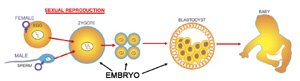
After fertilization of the egg, a zygote is formed. The zygote is the earliest form of the embryo. Over time the zygote grows as it continues to develop by cell division. In about five days the embryo has about 200 cells and is called a blastocyst.


Where do the embryonic stem cells come from?

Embryonic stem cells (ES cells) come from the inner cell mass of the blastocyst. These are the cells that will develop into all of the different tissues of the body.

What is so special about embryonic stem cells?

ES cells can develop into any type of cell depending on the conditions in which they are cultivated: nerve cells, muscle cells, etc. Furthermore, when cultivated in the laboratory, they continue to divide and reproduce themselves indefinitely.

Why haven’t embryonic cells been used to treat chronic diseases in people?

The only reported use of human ES cells to treat human disease was an attempt to cure Parkinson’s disease. This study showed some promise but many of the patients developed abnormal movements that could not be controlled with medicines. Some patients actually became worse. These studies were stopped and no further human uses of ES cells have been reported. Although scientists believe that embryonic stem cells may someday be useful in medical treatments, knowledge of the behavior of ES cells is incomplete. When implanted in experimental animals, ES cells continue to replicate and often develop into tumors called teratomas.

Are there ethical concerns in the use of adult (or somatic) stem cells?

No. Somatic stem cells are obtained from body tissues such as bone marrow, umbilical cord blood, fat cells, etc. Adult (somatic) stem cells can be obtained without damaging the donor and they cannot develop into an embryo.

Can adult stem cells be used for treatment of medical diseases?

Yes. Although adult stem cells may not be as flexible as embryonic stem cells, adult stem cells have been used for years to treat and cure human diseases. Every week scientists discover new ways to use adult stem cells to treat chronic diseases. Examples are sickle cell anemia and leukemia. Studies in animals have shown that there are possible cures for diabetes, heart disease and neurological diseases with adult stem cells

What is cloning?

In cloning, an egg (ovum) from a woman is surgically removed from her body and taken to the laboratory where the nucleus is removed. A body cell (somatic cell) is removed from any part of the body, commonly skin cells, and its nucleus is taken to the laboratory where it is inserted into the "empty" egg. The cell that is formed is a cloned zygote which then develops spontaneously into a cloned blastocyst, or cloned embryo.


What is SCNT?

SCNT (Somatic Cell Nuclear Transfer) is the scientific term for cloning. The term SCNT is sometimes confusing because it sounds like "somatic stem cell," but actually refers to the transfer of the nucleus from the somatic cell to the ovum (egg). SCNT results in a cloned embryo.

Are there concerns about removing eggs from healthy women?

Yes. Even women’s groups that support ES research have concerns about SCNT. Judy Norsigian wrote in the Boston Globe on February 25, 2005: "There is a disturbing lack of attention to the risks to women’s health posed by the advent of embryo cloning ... Omitted from the polarized debate is any discussion of the thousands of women who will need to undergo egg extraction procedures for such embryo cloning. A primary concern is the substantial risks to women’s health posed by the extraction procedure and the inability to obtain true informed consent from egg donors given the current lack of adequate safety data." Since women are paid to donate their eggs, some people believe that this process would exploit poor young women.

Can a cloned embryo continue to develop?

We know that cloned embryos of mice, cats, sheep and cattle have been allowed to develop into adult animals. As far as we know, no human cloned embryo has ever been allowed to develop beyond a blastocyst, but one could assume that what has been successful in other mammals could also work in humans. Further development would require implantation into a uterus and this has never been attempted, as far as we know.

Are cloned embryos genetically identical to the donor of the somatic cell?

Actually, no. While the nucleus of the donor somatic cell contains most of the genes, there are some genes outside the nucleus (mitochondrial genes) which are carried along with the transplanted nucleus (blue dots below). The egg with its nucleus removed also carries some mitochondrial genes (green dots below). The resulting cloned zygote contains nuclear genes from the donor somatic cell and mitochondrial genes from both the donor somatic cell and the egg. This combination of mitochondrial DNA from two individuals does not occur in nature.

Is it appropriate to regulate scientific research in the United States?

Yes. Modern society has appropriately restricted research in many ways. Since the atrocities in Nazi Germany, society has adopted rules about research on humans (the Nuremberg Code). Scientists left to their own discretion have not always done the right thing. In Tuskegee, Ala., black men were infected with syphilis and left untreated to see what happened. In Willowbrook, N.Y., retarded children were infected with hepatitis to see how the disease spread. In Germany, Jews were tortured and killed in medical experiments to test the limits of human physiology. By "dehumanizing" these groups of people (black men, retarded children, Jews) scientists of the time saw no ethical problem in doing these experiments.

Moreover, the promise of future benefit from the research was used to help justify the experiments. If a scientist does not consider the human embryo to be human, destroying it poses no moral or ethical problems. It is the right and responsibility of society to limit or regulate scientific research that is morally or ethically unacceptable.


A quick summary

Stem cells offer the potential for significant medical treatment. The use of adult stem cells has led to many medical breakthroughs and poses no ethical problem. However the production and destruction of human embryos required for embryonic stem cell research is a significant ethical and moral problem. Human beings, even the tiniest developing human beings, should not be used in experiments which result in their death.

###
Source


The compassion of safeguarding embryonic human life

Excerpts from Archbishop Burke's weekly column:
Opponents of the proposed Amendment 2, which guarantees constitutionally the right to clone human life in order to destroy it at the embryonic stage of development for the harvest of embryonic stem cells, are frequently accused of a lack of compassion. Faithful Catholics, in particular, are accused of adhering rigidly to a religious belief about the beginning of human life, while coldly permitting children and adults with dread diseases or with serious injuries to remain without the cure which supposedly embryonic stem cells would provide for them.

Former Sen. John Danforth, one of the most prominent and active supporters of Amendment 2, referring to the death of his brother Don from Lou Gehrig’s disease, declares:

"No religious doctrine, however earnestly formulated, will ever convince me that cells in a laboratory are so significant that my brother should be denied the benefits of medical research. The very notion goes against both my reason and my deepest feelings" (Faith and Politics, New York: Viking, 2006, p. 94).

A most serious question, however, is raised by Mr. Danforth’s declaration: Does compassion for the suffering of one human life justify the lack of compassion for another human life? To be clear, is it truly compassionate to destroy the tiniest of human lives in order to treat an illness in one of us who has developed to a bigger size? And, if the answer to the question is "Yes," then who judges which human life can be sacrificed for the sake of saving another?

Mr. Danforth, while arguing that the blastocyst is "pre-embryonic" human life, states that maintaining the legal protection of the right to life of the blastocyst is denying hope to "identifiable people" (Faith and Politics, p. 93). But what makes a human life identifiable? Is not the blastocyst, which is a 5- to 7-day-old human embryo, identifiable as human life?

Human compassion, that is, the compassion taught us by the natural moral law and confirmed by the teaching and life of our Lord, does not permit us to make distinctions of persons in what pertains to their fundamental right to life. Compassion as a human and Christian virtue extends to all human life, without borders.Because the blastocyst, which is truly human life, with its full identity, is, in the words of Mr. Danforth, "a pre-embryonic cluster of cells smaller than the period at the end of this sentence," does not take away its dignity and right to life.

The so-called compassion which excludes certain human lives, according to the criteria of size or age or intelligence or any other criterion, is not compassion at all. In fact, it opens the door to the denial of compassion to any class of persons who, according to those in power, are somehow "not human," even though they have a full human identity and are growing and developing, as we all have done and are doing.
The complete article can be read here.

USCCB - Lending Credibility to Papal Critics

Papal critics Margaret O'Brien Steinfels, David O'Brien among 8 featured speakers at US bishops' global poverty conference

Bishop Bruskewitz's words ("hapless bench of bishops") almost always comes to mind when I see or hear "USCCB"...

Oct 21-Fr. Eugene Morris & The Gospel of Life

Father C. Eugene Morris, faculty member of Kenrick-Glennon Seminary and director of St. Maximilian Kolbe House, will discuss "Who will speak the truth: a clarion call for the Gospel of Life" on Saturday, Oct. 21, at a "Candlelight Dinner of Hope" sponsored by Our Lady of Guadalupe Cenacle for Life at St. Anselm Parish.

The event will begin with Mass, with the Missionary Image of Our Lady of Guadalupe, at 5 p.m. in St. Louis Abbey Church, 500 S. Mason Road, followed by cocktails at 6 p.m. and dinner at 7 p.m. Proceeds benefit the new Birthright office at St. Patrick’s Partnership Center. Call (314) 878-2120 for information.

Nov 12 - Archbishop Burke, Polish Independence

On Sunday, Nov. 12, Archbishop Raymond L. Burke will celebrate 10 a.m. Mass at St. Agatha Church, 3239 S. Ninth St., to commemorate both Polish Independence Day and the U.S. holiday of Veterans Day. A luncheon will follow immediately featuring Polish and American food.

A Church of the People or a Church of the Elite? Verona’s Dilemma

The transmission of the faith and attention to its “quality” are at the center of a major conference of Italian Catholics. The key point will be an address from the pope. The controversy over “Christian distinctiveness”
by Sandro Magister
===========================

What takes place in Verona will determine the direction of the Italian Church in the coming years, but it will also have an effect on the worldwide Church, thanks to Italy’s link with the see of Peter.

Both the title of the meeting – “Witnesses of the Risen Jesus, the hope of the world” – and one of the five topics for discussion have at the center “tradition”: the proclamation, the transmission of the Christian faith to the generations of today and tomorrow.

But, naturally, there is not unanimous agreement in the Italian Church over what to do about “tradition.”

The dominant approach – personified by Benedict XVI, by his predecessor John Paul II, and by their cardinal vicar Camillo Ruini, for many years the leading figure in the bishops’ conference – is opposed by an approach whose leader is cardinal Carlo Maria Martini, a Jesuit and the former archbishop of Milan, now in retirement in Jerusalem but not out of the spotlight.

Gospel for Friday, 27th Week in Ordinary Time

From: Luke 11:15-26:

The Kingdom of God and the Kingdom of Satan


(Now Jesus was casting out a demon that was dumb; when the demon had gone out, the man spoke, and the people marvelled.) [15] But some of them said, "He casts out demons by Beelzebul, the prince of demons"; [16] while others, to test Him, sought from Him a sign from Heaven. [17] But He, knowing their thoughts, said to them, "Every kingdom divided against itself is laid waste, and house falls upon house. [18] And if Satan also is divided against himself, how will his kingdom stand? For you say that I cast out demons by Beelzebul. [19] And if I cast out demons by Beelzebul, by whom do your sons cast them out? Therefore they shall be your judges. [20] But if it is by the finger of God that I cast out demons, then the Kingdom of God has come upon you. [21] When a strong man, fully armed, guards his own palace, his goods are in peace; [22] but when one stronger than he assails him and overcomes him, he takes away his armor in which he trusted, and divides his spoil. [23] He who is not with Me is against Me, and He who does not gather with Me scatters."

[24] "When an unclean spirit has gone out of a man, he passes through waterless places seeking rest; and finding none he says, `I will return to my house from which I came.' [25] And when he comes he finds it swept and put in order. [26] Then he goes and brings seven other spirits more evil than himself, and they enter and dwell there; and the last state of that man becomes worse than the first."
_________________________

Commentary:

14-23. Jesus' enemies remain obstinate despite the evidence of the miracle. Since they cannot deny that He has done something quite extraordinary, they attribute it to the power of the devil, rather than admit that Jesus is the Messiah. Our Lord answers them with a clinching argument: the fact that He expels demons is proof that He has brought the Kingdom of God. The Second Vatican Council reminds us of this truth: The Lord Jesus inaugurated His Church by preaching the Good News, that is, the coming of the Kingdom of God, promised over the ages in the Scriptures [...]. The miracles of Jesus also demonstrate that the Kingdom has already come on earth: "If it is by the finger of God that I cast out demons, then the Kingdom of God has come upon you (Luke 11:20); cf. Matthew 12:28). But principally the Kingdom is revealed in the person of Christ Himself, Son of God and Son of Man, who came `to serve and to give His life as a ransom for many' (Mark 10:45)" (Vatican II, "Lumen Gentium", 5).

The strong man well armed is the devil, who has enslaved man; but Jesus Christ, one stronger than he, has come and conquered him and is despoiling him. St. Paul will say that Christ "disarmed the principalities and powers and made a public example of them, triumphing over them" (Colossians 2:15).

After the victory of Christ the "stronger one", the words of verse 23 are addressed to mankind at large; even if people do not want to recognize it, Jesus Christ has conquered and from now on no one can adopt an attitude of neutrality towards Him: he who is not with Him is against Him.

18. Christ's argument is very clear. One of the worst evils that can overtake the Church is disunity among Christians, disunity among believers. We must make Jesus' prayer our own: "That they may be one; even as Thou, Father, art in Me, and I in Thee, that they may also be one in us, so that the world may believe that Thou hast sent Me" (John 17:21).

24-26. Our Lord shows us that the devil is relentless in his struggle against man; despite man rejecting him with the help of grace, he still lays his traps, still tries to overpower him. Knowing all this, St. Peter advises us to be sober and vigilant, because "your adversary the devil prowls around like a roaring lion, seeking some one to devour. Resist him, firm in your faith" (1 Peter 5:8-9).

Jesus also forewarns us about the danger of being once more defeated by Satan--which would leave us worse off than were before. The Latin proverb puts it very well: "corruptio optimi, pessima" (the corruption of the best is the worst.) And St. Peter, in his inspired text, inveighs against corrupt Christians, whom he compares in a graphic and frightening way to "the dog turning back to his own vomit and the sow being washed and then wallowing in the mire" (cf. 2 Peter 2:22).
___________________________
Source: "The Navarre Bible: Text and Commentaries". Biblical text taken from the Revised Standard Version and New Vulgate. Commentaries made by members of the Faculty of Theology of the University of Navarre, Spain. Published by Four Courts Press, Kill Lane, Blackrock, Co. Dublin, Ireland. Reprinted with permission from Four Courts Press and Scepter Publishers, the U.S. publisher.

Thursday, October 12, 2006

Mental Prayer for October 13-Sex and Sex Pleasure

Mental Prayer Meditation Helps

Presence of God

Grace I Ask: Lord, give me light to see and understand your view of sex and the strength to live chastely.

The Idea: Anyone who would baptize in mockery of God's sacrament of supernatural life commits a sinful irreverence toward God. Baptism is not to be tampered with: it is God's plan for a man or woman's birth in sanctifying grace. Baptism, belonging to God, is sacred. Baptism means life.

Our sex powers are God's plan for co-creating human natural life. Whoever uses these powers when he has no right to use them is insulting God in a horrible way. Human life and the way it comes about are sacred, because they are such special gifts from God.

My Personal Application: Viewing it in this way, I can easily see how I should use the creature, sex, for the purpose God proposes. When I am married, I should use my sexual gifts chastely and gratefully as a wonderful gift. When I am not married, I should not use them at all or do anything that might lead me into misusing or abusing them. To misuse this gift from God would be to insult God, risk missing my goal in life, and bring unhappiness on myself and others.

I Speak to God: O God, help us to understand chastity and the proper view of sex in our lives.

Thought for Today: I will think often of Mary, who shows how highly God esteems both purity and parenthood.
__________________
Adapted from Mental Prayer, Challenge to the Lay Apostle
by The Queen's Work,(© 1958)

Missouri Nickname to Change to "The Snow-Me" State?

Credit for this observation goes to Jeff Miller (The Curt Jester) who posted this the other day: Trying to Make It the "Snow Me" State

Such would be one of the results of the proposed Cloning Amendment (Amendment 2) being touted as a panacea by the likes of "Jack" Danforth, the Stowers Institute, and others wishing to have unrestricted access to public funds for diabolic research.

Who can adequately answer Jill Stanek's question?

Why would Show Me State voters – of all voters in the land – agree to drastically alter their own Constitution to ends no one can predict, all to force speculative science experiments on themselves forever? Even without knowing Amendment Two's specifics, doing so would seem schizophrenic.

Well, if one actually looks at Amendment 2, it is "loaded" with language which one would rightly expect from an individual with schizophrenic tendencies. And Jill nails it for what it is:

Amendment Two is full of lies. Here are four whoppers:

1. "No person may clone or attempt to clone a human being."

In actuality, Amendment Two would force cloning on Missourians.

Crafters knew people overwhelmingly oppose cloning. So to authorize cloning while maintaining they were not, they simply changed the definition of cloning to say a clone isn't a clone unless implanted in a mother's uterus.

This is like saying you are not you unless you are in your house...This is like banning the killing of humans but endorsing the killing of Homo sapiens.

So why the push to pass this proposed Amendment? Jill lists three of many - the three most likely to be the real driving force behind this deceitful effort:
Amendment Two paves the way for Missouri public funding of embryonic stem cell/cloning research. This would:

1. Let researchers keep patents for themselves, which they would have to share with private investors;

2. Eliminate the need for results, which private investors demand (and is why they're not investing), and force accountability for wild promises;

3. Let researchers keep any profits for themselves, which they would have to share with private investors.


Amendment Two also forbids legislators from overturning it.
Are we to really believe that those promoting the passage of Amendment 2 are really overcome with such altruism when these facts are staring us in the face? Are we to really believe them when every effort seems to have been made to deceive the voting public of the true facts of this amendment?

We all know that some people will do anything for money, especially if that money can be obtained from the public trough absent any and all oversight and governance.

Hopefully, despite the efforts of Danforth and his cronies, the people of Missouri won't be buying the "snake oil" these people are trying to sell.

Hopefully, Missouri voters will remind us all that we are still from the "Show Me" state, not the "Snow Me" (*) state.

(*) Credit to Jeff Miller for his valuable insight for the "Some Me State" reference.


SNAP Disappointed No Evidence Found Against Priest

A criminal investigation of allegations that the Rev. Robert Osborne, the former president of Vianney High School, molested two students has ended with no criminal charges.

Based on the conviction that priests are guilty until proven innocent, SNAP expresses disappointment that St. Louis County Prosecuting Attorney Robert McCulloch concluded that "there was no evidence at all of criminal conduct [by Fr. Osborne]."

"We are disappointed that no criminal charges are being filed against Osborne now, but hope that others who he manipulated and exploited will come forward soon," said Barbara Dorris, a SNAP member.

Perhaps, SNAP can find someone who can be "manipulated" by an expert at planting "repressed memories"?

[Fr.] Osborne, 73, has always denied the accusations. He remains a defendant in a civil suit filed in February by one of the alleged victims. That case is set for trial in April.
...
Speaking for Osborne, his attorney, J. Martin Hadican said Wednesday, "Father Osborne is elated with the outcome and grateful for the thorough investigation."
SNAP, unable to deal with facts that support priests and their claims of innocence, has to spin the issue to save face while continuing to blame the priests:
SNAP National Director David Clohessy said prosecutors must meet a high bar to file criminal charges, and added, "It's really tempting but naive and reckless to assume this is an exoneration."

We can be thankful that prosecutors must deal with facts. SNAP, however, is satisfied to condemn and convict others based on unproven allegations. It seems that the qualities of objectivity, fairness and justice are absent in many SNAP members, yet they demand these same qualities from others...


Gospel for Thursday, 27th Week in Ordinary Time

From: Luke 11:5-13

Effective Prayer

[5] And He (Jesus) said to them (the disciples), "Which of you who has a friend will go to him at midnight and say to him, 'Friend, lend me three loaves; [6] for a friend of mine has arrived on a journey, and I have nothing to set before him'; [7] and he will answer from within, 'Do not bother me; the door is now shut, and my children are with me in bed; I cannot get up and give you anything'? [8] I tell you, though he will not get up and give him anything because he is his friend, yet because of his importunity he will rise and give him whatever he needs. [9] And I tell you, Ask, and it will be given to you; seek, and you will find; knock, and it will be opened to you. [10] For every one who asks receives, and he who seeks find, and to him who knocks it will be opened. [11] What father among you, if his son asks for a fish, will instead of a fish give him a serpent; [12] or if he asks for an egg, will give him a scorpion? [13] If you then, who are evil, know how to give good gifts to your children, how much more will the Heavenly Father give the Holy Spirit to those who ask Him!"
_________________________

Commentary:

5-10. One of the essential features of prayer is trusting perseverance. By this simple example and others like it (cf. Luke 18:1-7) our Lord encourages us not to desist in asking God to hear us. "Persevere in prayer. Persevere even when your efforts seem barren. Prayer is always fruitful" ([St] J. Escriva, "The Way", 101).

9-10. Do you see the effectiveness of prayer when it is done properly? Are you not convinced like me that, if we do not obtain what we ask God for, it is because we are not praying with faith, with a heart pure enough, with enough confidence, or that we are not persevering in prayer the way we should? God has never refused nor will ever refuse anything to those who ask for His graces in the way they should. Prayer is the great recourse available to us to get out of sin, to persevere in grace, to move God's heart and to draw upon us all kinds of blessing from Heaven, whether for the soul or to meet our temporal needs" (St. John Mary Vianney, "Selected Sermons", Fifth Sunday after Easter).

11-13. Our Lord uses the example of human parenthood as a comparison to stress again the wonderful fact that God is our Father, for God's fatherhood is the source of parenthood in Heaven and on earth (cf. Ephesians 3:15). "The God of our faith is not a distant Being who contemplates indifferently the fate of men--their desires, their struggles, their sufferings. He is a Father who loves His children so much that He sends the Word, the Second Person of the Most Blessed Trinity, so that by taking on the nature of man He may die to redeem us. He is the loving Father who now leads us gently to Himself, through the action of the Holy Spirit who dwells in our hearts" ([St] J. Escriva, "Christ Is Passing By", p. 84).

13. The Holy Spirit is God's best gift to us, the great promise Christ gives His disciples (cf. John 5:26), the divine fire which descends on the Apostles at Pentecost, filling them with fortitude and freedom to proclaim Christ's message (Acts 2). "The profound reality which we see in the texts of Holy Scripture is not a remembrance from the past, from some golden age of the Church which has since been buried in history. Despite the weaknesses and the sins of every one of us, it is the reality of today's Church and the Church in all times. 'I will pray to the Father,' our Lord told His disciples, 'and He will give you another Counsellor to be with you for ever.' Jesus has kept His promise. He has risen from the dead and, in union with the eternal Father, He sends us the Holy Spirit to sanctify us and to give us life" ([St] J. Escriva, "Christ Is Passing By", 12).
___________________________
Source: "The Navarre Bible: Text and Commentaries". Biblical text taken from the Revised Standard Version and New Vulgate. Commentaries made by members of the Faculty of Theology of the University of Navarre, Spain. Published by Four Courts Press, Kill Lane, Blackrock, Co. Dublin, Ireland. Reprinted with permission from Four Courts Press and Scepter Publishers, the U.S. publisher.
Wednesday, October 11, 2006

Mental Prayer for October 12-Drink

Mental Prayer Meditation Helps

Presence of God

Grace I Ask: To form an intelligent, Christlike attitude toward drink.

The Idea: No reasonable Catholic would say that alcohol in any beverage form is evil in itself. It is a creature of God and, therefore, good in itself.

But it can be evil when wrongly used. A man or woman who always drinks to the point of intoxi­cation certainly uses alcohol wrongly. One who always drinks moderately certainly uses it cor­rectly.

For instance, a man who knows that even one bottle of beer makes him lose some self-control and therefore avoids even that one beer uses alcohol correctly. Likewise, a man who knows that he can safely drink two highballs or cocktails and stops there uses it correctly also.

My Personal Application: A good, sound idea, worked out by experienced persons, is that young people should avoid alcohol until they are at an age when they can safely and wisely determine how to use this creature. The emotional upsets of the teen years make it impossible for an indi­vidual to face this creature in the right way. Too much group pressure, being one of the "crowd," the advertising of today - these, are just a few of the other obstacles that young people have to overcome in arriving at a correct choice about alcohol.

I Speak to God: Facing this question calmly helps me drive away any fears I may have had about drink. Grant me grace to understand the best use of this creature of yours, Lord. I will use it or bypass it according as I see its usefulness in my life.

Thought for Today: Drink is a creature; use it if it helps, avoid it if it hinders.
__________________
Adapted from Mental Prayer, Challenge to the Lay Apostle
by The Queen's Work,(© 1958)

Update: Pope will broaden use of Latin Mass

Vatican, Oct. 11 (CWNews.com) - Pope Benedict XVI is preparing to release a motu proprio extending permission for priests to celebrate the traditional Latin Mass, Vatican sources have confirmed.

The new papal document-- for which a publication date has not yet been set-- would give all priests permission to celebrate the Mass of St. Pius V. This permission, a "universal indult," would replace the existing indult that dates back to 1988, when Ecclesia Dei authorized use of the Tridentine rite until more restricted conditions, requiring the permission of the local bishop.


Good news, indeed!


How is this for a headline?

From the Times Online:
Pope set to bring back Latin Mass that divided the Church

The "Latin Mass" divided the Church?

I was actually alive during the Second Vatican Council and I don't seem to recall that the Tridentine Mass was, in any way, the cause for the subsequent turmoil and division in the Church. But why let the facts get in the way of journalism?

The Pope is taking steps to revive the ancient tradition of the Latin Tridentine Mass in Catholic churches worldwide, according to sources in Rome.

Pope Benedict XVI is understood to have signed a universal indult — or permission — for priests to celebrate again the Mass used throughout the Church for nearly 1,500 years. The indult could be published in the next few weeks, sources told The Times.

We've heard these rumors before...I'm a bit skeptical since it would appear to me, at least, that a reputable Catholic news organization would have some corroboration of this "rumor".

By bringing back Mass in Latin, Pope Benedict is signalling that his sympathies lie with conservatives in the Catholic Church.

Reading Catholic "news reports" from the secular press is both sad and funny - these folk seem completely unable to understand what they say...Injecting political terms likes "conservative" and "liberal" into the Curch serves no purpose except to foster division. One is either a faithful Catholic or one is not.

The new indult would permit any priest to introduce the Tridentine Mass to his church, anywhere in the world, unless his bishop has explicitly forbidden it in writing.

Then how is this different from the current indult, except in procedure or policy - explicitly forbidding as opposed to explicitly granting?

Hopefully, this universal permission will come to pass.

Gospel for Wednesday, 27th Week in Ordinary Time

From: Luke 11:1-4

The Our Father

[1] He (Jesus) was praying in a certain place, and when He ceased, one of His disciples said to Him, "Lord, teach us to pray, as John taught His disciples." [2] And He said to them, "When you pray, say: `Our Father, hallowed be Thy name. Thy Kingdom come. [3] Give us each day our daily bread; [4] and forgive us our sins, for we ourselves forgive every one who is indebted to us; and lead us not into temptation.'"
_____________________________

Commentary:

1-4. St. Luke gives us a shorter form of the Lord's Prayer, or Our Father, than St. Matthew (6:9-13). In Matthew there are seven petitions, in Luke only four. Moreover, St. Matthew's version is given in the context of the Sermon on the Mount and specifically as part of Jesus' teaching on how to pray; St. Luke's is set in one of those occasions just after our Lord has been at prayer--two different contexts. There is nothing surprising about our Lord teaching the same thing on different occasions, not always using exactly the same words, not always at the same length, but always stressing the same basic points. Naturally, the Church uses the longer form of the Lord's Prayer, that of St. Matthew.

"When the disciples asked the Lord Jesus, `Teach us to pray', He replied by saying the words of the `Our Father', thereby giving a concrete model which is also a universal model. In fact, everything that can and must be said to the Father is contained in those seven requests which we all know by heart. There is such simplicity in them that even a child can learn them, but at the same time such depth that a whole life can be spent meditating on their meaning. Isn't that so? Does not each of those petitions deal with something essential to our life, directing it totally towards God the Father? Doesn't this prayer speak to us about `our daily bread', `forgiveness of our sins, since we forgive others' and about protecting us from `temptation' and `delivering us from evil?'" ([Pope] John Paul II, "General Audience", 14 March 1979).

The first thing our Lord teaches us to ask for is the glorification of God and the coming of His Kingdom. That is what is really important--the Kingdom of God and His justice (cf. Matthew 6:33). Our Lord also wants us to pray confident that our Father will look after our material needs, for "your Heavenly Father knows that you need them all" (Matthew 6:32). However, the Our Father makes us aspire especially to possess the goods of the Holy Spirit, and invites us to seek forgiveness (and to forgive others) and to avoid the danger of sinning. Finally the Our Father emphasizes the importance of vocal prayer. "`Domine, doce nos orare. Lord teach us to pray!' And our Lord replied: `When you pray say: "Pater noster, qui es in coelis"... Our Father, who art in Heaven...'. What importance we must attach to vocal prayer!" ([St] J. Escriva, "The Way", 84).

1. Jesus often went away to pray (cf. Luke 6:12; 22:39ff). This practice of the Master causes His disciples to want to learn how to pray. Jesus teaches them to do what He Himself does. Thus, when our Lord prays, He begins with the Word "Father!": "Father, into Thy hands I commit My spirit" (Luke 23:46); see also Matthew 11:25; 26:42, 53; Luke 23:34; John 11:41; etc.). His prayer on the Cross, "My God, My God,..." (Matthew 27:46), is not really an exception to this rule, because there He is quoting Psalm 22, the desperate prayer of the persecuted just man.

Therefore, we can say that the first characteristic prayer should have is the simplicity of a son speaking to his Father. "You write: `To pray is to talk with God. But about what?' About what? About Him, about yourself: joys, sorrows, successes, failures, noble ambitions, daily worries, weaknesses! And acts of thanksgiving and petition: and love and reparation. In a word: to get to know Him and to get to know yourself: `to get acquainted!'" ([St] J. Escriva, "The Way", 91).

2. "Hallowed be Thy name": in this first petition of the Our Father "we pray that God may be known, loved, honored and served by everyone and by ourselves in particular." This means that we want "unbelievers to come to a knowledge of the true God, heretics to recognize their errors, schismatics to return to the unity of the Church, sinners to be converted and the righteous to persevere in doing good." By this first petition, our Lord is teaching us that `we must desire God's glory more than our own interest and advantage." This hallowing of God's name is attained "by prayer and good example and by directing all our thoughts, affections and actions towards Him" ("St. Pius X Catechism", 290-293).

"Thy Kingdom come": "By the Kingdom of God we understand a triple spiritual kingdom--the Kingdom of God in us, which is grace; the Kingdom of God on earth, which is the Catholic Church; and the Kingdom of God in Heaven, which is eternal bliss [...]. As regards grace, we pray that God reign in us with His sanctifying grace, by which He is pleased to dwell in us as a king in his throne-room, and that He keeps us united to Him by the virtues of faith, hope and charity, by which He reigns in our intellect, in our heart and in our will [...]. As regards the Church, we pray that it extend and spread all over the world for the salvation of men [...]. As regards Heaven, we pray that one day we be admitted to that eternal bliss for which we have been created, where we will be totally happy" ("ibid.", 294-297).

3. The Tradition of the Church usually interprets the "bread" as not only material bread, since "man does not live by bread alone, but by every word that proceeds from the mouth of God" (Matthew 4:4; Deuteronomy 8:3). Here Jesus wants us to ask God for "what we need each day for soul and body [...]. For our soul we ask God to sustain our spiritual life, that is, we beg Him to give us His grace, of which we are continually in need [...]. The life of our soul is sustained mainly by the divine word and by the Blessed Sacrament of the Altar [...]. For our bodies we pray for what is needed to maintain us" ("St. Pius X Catechism", 302-305).

Christian doctrine stresses two ideas in this petition of the Our Father: the first is trust in Divine Providence, which frees us from excessive desire to accumulate possessions to insure us against the future (cf. Luke 12:16-21); the other idea is that we should take a brotherly interest in other people's needs, thereby moderating our selfish tendencies.

4. "So rigorously does God exact from us forgetfulness of injuries and mutual affection and love, that He rejects and despises the gifts and sacrifices of those who are not reconciled to one another" ("St. Pius V Catechism", IV, 14, 16).

"This sisters, is something which we should consider carefully; it is such a serious and important matter that God should pardon us our sins, which have merited eternal fire, that we must pardon all trifling things which have been done to us. As I have so few, Lord, even of these trifling things, to offer Thee, Thy pardoning of me must be a free gift: there is abundant scope here for Thy mercy. Blessed be Thou, who endurest one that is so poor" (St. Teresa of Avila, "Way of Perfection", Chapter 36).

"And lead us not into temptation": it is not a sin to "feel" temptation but to "consent" to temptation. It is also a sin to put oneself voluntarily into a situation which can easily lead one to sin. God allows us to be tempted, in order to test our fidelity, to exercise us in virtue and to increase our merits with the help of grace. In this petition we ask the Lord to give us His grace not to be overcome when put to the test, or to free us from temptation if we cannot cope with it.
___________________________
Source: "The Navarre Bible: Text and Commentaries". Biblical text taken from the Revised Standard Version and New Vulgate. Commentaries made by members of the Faculty of Theology of the University of Navarre, Spain. Published by Four Courts Press, Kill Lane, Blackrock, Co. Dublin, Ireland. Reprinted with permission from Four Courts Press and Scepter Publishers, the U.S. publisher.