Sunday, May 25, 2008

Gospel for Sunday, Solemnity: Most Holy Body and Blood of Christ (Corpus Christi)

From: John 6:51-58

The Discourse on the Bread of Life (Continuation)

(Jesus said to the Jews,) [51] "I am the living bread which came down from Heaven; if any one eats of this bread, he will live for ever; and the bread which I shall give for the life of the world is My flesh." [52] The Jews disputed among themselves, saying, "How can this Man give us His flesh to eat?" [53] So Jesus said to them, "Truly, truly, I say to you, unless you eat the flesh of the Son of Man and drink His blood, you have no life in you; [54] he who eats My flesh and drinks My blood has eternal life, and I will raise him up on the last day. [55] For My flesh is food indeed, and My blood is drink indeed. [56] He who eats My flesh and drinks My blood abides in Me, and I in him. [57] As the living Father sent Me, and I live because of the Father, so he who eats Me will live because of Me. [58] This is the bread which came from Heaven, not such as the fathers ate and died; he who eats this bread will live for ever."
________________

Commentary:

49-51. The manna during the Exodus was a figure of this bread--Christ Himself--which nourishes Christians on their pilgrimage through this world. Communion is the wonderful banquet at which Christ gives Himself to us: "the bread which I shall give for the life of the world is My flesh". These words promise the manifestation of the Eucharist at the Last Supper: "This is My body which is for you" (1 Corinthians 11:24). The words "for the life of the world" and "for you" refer tothe redemptive value of the sacrifice of Christ on the cross. In some sacrifices of the Old Testament, which were a figure of the sacrifice of Christ, part of the animal offered up was later used for food, signifying participation in the sacred rite (cf. Exodus 11:3-4). So, by receiving Holy Communion, we are sharing in the sacrifice of Christ: which is why the Church sings in the Liturgy of the Hours on the Feast of Corpus Christi: "O sacred feast in which we partake of Christ: His sufferings are remembered, our minds are filled with His grace and we receive a pledge of the glory that is to be ours" ("Magnificat Antiphon", Evening Prayer II).

52. Christ's hearers understand perfectly well that He means exactly what He says; but they cannot believe that what He says could be true; if they had understood Him in a metaphorical, figurative or symbolic sense there would be no reason for them to be surprised and nothing to cause an argument. Later, Jesus reaffirms what He has said--confirming what they have understood Him to say (cf. verses 54-56).

53. Once again Jesus stresses very forcefully that it is necessary to receive Him in the Blessed Eucharist in order to share in divine life and develop the life of grace received in Baptism. No parent is content to bring children into the world: they have to be nourished and looked after to enable them to reach maturity. "We receive Jesus Christ in Holy Communion to nourish our souls and to give us an increase of grace and the gift of eternal life" ("St. Pius X Catechism", 289).

54. Jesus clearly states that His body and blood are a pledge of eternal life and a guarantee of the resurrection of the body. St. Thomas Aquinas gives this explanation: "The Word gives life to our souls, but the Word made flesh nourishes our bodies. In this Sacrament is contained the Word not only in His divinity but also in His humanity; therefore, it is the cause not only of the glorification of our souls but also of that of our bodies" ("Commentary on St. John, in loc.").

Our Lord uses a stronger word than just "eating" (the original verb could be translated as "chewing") which shows that Communion is a real meal. There is no room for saying that He was speaking only symbolically, which would mean that Communion was only a metaphor and not really eating and drinking the Body and Blood of Christ.

"All these invitations, promises and threats sprang from the great desire which (Jesus) had of giving us Himself in the holy Sacrament of the altar. But why should Jesus so ardently desire us to receive Him in Holy Communion? It is because love always sighs for, and tends to a union with, the object beloved. True friends wish to be united in such a manner as to become only one. The love of God for us being immense, He destined us to possess Him not only in Heaven, but also here below, by the most intimate union, under the appearance of bread in the Eucharist. It is true we do not see Him; but He beholds us, and is really present; yes, He is present in order that we may possess Him and He conceals Himself, that we may desire Him, and until we reach our true homeland Jesus Christ wishes in this way to be entirely ours, and to be perfectly united to us" (St. Alphonsus Liguori, "The Love of Our Lord Jesus Christ Reduced to Practice", Chapter 2).

55. In the same way as bodily food is necessary for life on earth, Holy Communion is necessary for maintaining the life of the soul, which is why the Church exhorts us to receive this Sacrament frequently: "Every day, as is desirable, and in the greatest possible numbers, the faithful must take an active part in the sacrifice of the Mass, avail themselves of the pure, holy refreshment of Holy Communion and make a suitable thanksgiving in return for this great gift of Christ the Lord. Here are the words they should keep in mind: `Jesus Christ and the Church desire all Christ's faithful to approach the sacred banquet every day. The basis of this desire is that they should be united to God by the sacrament and draw strength from it to restrain lust, to wash away the slight faults of daily occurrence and to take precautions against the more serious sins to which human frailty is liable' (Decree of the S.C. of the Council, 20 December 1905)" ([Pope] Paul VI, "Mysterium Fidei").

"The Savior has instituted the most august sacrament of the Eucharist, which truly contains His flesh and His blood, so that he who eats this bread may live forever; whosoever, therefore, makes use of it often with devotion so strengthens the health and the life of his soul, that it is almost impossible for him to be poisoned by any kind of evil affection. We cannot be nourished with this flesh of life, and live with the affections of death. [...]. Christians who are damned will be unable to make any reply when the just Judge shows them how much they are to blame for dying spiritually, since it was so easy for them to maintain themselves in life and in health by eating His Body which He had left them for this purpose. Unhappy souls, He will say, why did you die, seeing that you had at your command the fruit and the food of life?" (St. Francis de Sales, "Introduction to the Devout Life", II, 20, 1).

56. The most important effect of the Blessed Eucharist is intimate union with Jesus Christ. The very word "communion" suggests sharing in the life of our Lord and becoming one with Him; if our union with Jesus is promoted by all the sacraments through the grace which they give us, this happens more intensely in the Eucharist, for in it we receive not only grace but the very Author of grace: "Really sharing in the body of the Lord in the breaking of the eucharistic bread, we are taken up into communion with Him and with one another. `Because the bread is one, we, though many, are one body, all of us who partake of the one bread' (1 Corinthians 10:17)" (Vatican II, "Lumen Gentium", 7). Precisely because the Eucharist is the sacrament which best signifies and effects our union with Christ, it is there that the whole Church manifests and effects its unity: Jesus Christ "instituted in His Church the wonderful sacrament of the Eucharist, by which the unity of the Church is both signified and brought about" (Vatican II, "Unitatis Reditegratio", 2).

57. In Christ, the Incarnate Word sent to mankind, "the whole fullness of deity, dwells bodily (Colossians 2:9) through the ineffable union of His human nature and His divine nature in the Person of the Word. By receiving in this sacrament the body and blood of Christ indissolubly united to His divinity, we share in the divine life of the second Person of the Blessed Trinity. We will never be able to appreciate enough the intimacy with God Himself--Father, Son and Holy Spirit--that we are offered in the eucharistic banquet.

"We can therefore do nothing more agreeable to Jesus Christ than to go to Communion with the dispositions suitable to so great an action, since we are then united to Jesus Christ, according to the desire of this all-loving God. I have said with `suitable' and not `worthy' disposition, for who could communicate if it was necessary to be worthy of so great a Savior? No one but a God would be worthy to receive a God. But by this word suitable, or convenient, I mean such a disposition as becomes a miserable creature, who is clothed with the unhappy flesh of Adam. Ordinarily speaking, it is sufficient that we communicate in a state of grace and with an anxious desire of advancing in the love of Jesus Christ" (St. Alphonsus Liguori, "The Love of Our Lord Jesus Christ Reduced to Practice", Chapter 2).

58. For the third time (cf. 6:31-32 and 6:49) Jesus compares the true bread of life, His own body, with the manna God used to feed the Israelites every day during their forty years in the wilderness--thereby, inviting us to nourish our soul frequently with the food of His body.

"`Going to Communion every day for so many years! Anybody else would be a saint by now, you told me, and I...I'm always the same!' Son, I replied, keep up your daily Communion, and think: what would I be if I had not gone'" ([St] J. Escriva, "The Way", 534).
___________________________
Source: "The Navarre Bible: Text and Commentaries". Biblical text taken from the Revised Standard Version and New Vulgate. Commentaries made by members of the Faculty of Theology of the University of Navarre, Spain. Published by Four Courts Press, Kill Lane, Blackrock, Co. Dublin, Ireland. Reprinted with permission from Four Courts Press and Scepter Publishers, the U.S. publisher.

2nd Reading for Sunday, Solemnity: Most Holy Body and Blood of Christ (Corpus Christi)

From: 1 Corinthians 10:16-17

Idolatry and the Eucharist, Incompatible


[16] The cup of blessing which we bless, is it not a participation in the blood of Christ? The bread which we break, is it not a participation in the body of Christ? [17] Because there is one bread, we who are many are one body, for we all partake of the one bread.
_______________________

Commentary:

14-22. After illustrating the general principles by reference to what himself does and the lessons of the history of Israel (cf. note on chaps. 8-10), St Paul returns to the subject of food sacrificed to idols. Christians may not attend the banquets which take place at pagan shrines, for that would amount to idolatry. By eating the meat of animals offered to Yahweh, Jews participated in the sacrifice and worship in his honor; and, by receiving the body and blood of the Lord, Christians unite themselves to Christ; similarly, those who take part in idolatrous banquets are associating themselves not with false gods-- which have no existence--but with demons. In the Old Testament it is pointed out that things sacrificed to idols are in fact being offered to demons, who enemies of the worship of God (cf. Deut 32:17; Ps 106: 36-38; Bar 4:7).

St Paul's words confirm basic truths of faith connected with the sublime mystery of the Eucharist--its sacrificial character, adverted to here by drawing a parallel between it and pagan sacrifices (cf. v. 21; Council of Trent, "De SS. Missae Sacrificio", chap. 1), and the real presence of Christ, as can be seen by the reference to the body and blood of Christ (v. 16). The Church's faith has always maintained that the holy sacrifice of the Mass is the renewal of the divine sacrifice of Calvary; in every Mass Christ once again offers God the Father His body and blood, as a sacrifice for all men, with the difference that what was offered on the cross in a bloody manner is offered on the altar in an unbloody manner. "In the divine sacrifice that is offered in the Mass, the same Christ who offered himself once in a bloody manner on the altar of the cross is present and is offered in an unbloody manner (cf. Heb 9: 27). [...] For it is one and the same victim--He who now makes the offering through the ministry of priests and He who then offered Him- self on the cross; the only difference is in the manner of the offering" ("De SS. Missae Sacrificio", chap. 2). "The Eucharist is above all a sacrifice--the sacrifice of Redemption and at the same time the sacrifice of the New Covenant" (John Paul II, "Letter To All Bishops", 24 February 1980). See also the notes on Mt 26:26-29 and par.

On the real presence of Jesus in the Eucharist, see the note on 1 Cor 11:27-32.

16-17. The principal effect of the Blessed Eucharist is intimate union with Jesus. The very name "communion"--taken from this passage of St Paul (cf. "St Pius V Catechism", II, 4, 4)--points to becoming one with our Lord by receiving his body and blood. "What in fact is the bread? The body of Christ. What do they become who receive Communion? The body of Christ" (Chrysostom, "Hom. on 1 Cor, 24, ad loc.").

St Augustine places these words on Jesus' lips to describe what happens at Holy Communion: "You will not change me into you as happens with bodily food; rather, you will be changed into me" ("Confessions", VII, 10, 16).

Due to this intimate union with Christ, the Eucharist is at one and the same time the sacrament where the entire Church demonstrates and achieves its unity, and where a very special kind of solidarity is developed among Christians. That is why it is called a "symbol of unity" and a "bond of love;" (Council of Trent, "De SS. Eucharistia", chap. 8; cf. "Lumen Gentium", 7; "Unitatis Redintegratio", 2). The Fathers of the Church have seen a symbol of this union in the very materials-- bread and wine--used to make the Eucharist. The "St Pius V Catechism" sums up this as follows: "the body of Christ, which is one, consists of many members (cf. Rom 12:4-5; 1 Cor 10:17; 12:12), and of this union nothing is more strikingly illustrative than the elements of bread and wine; for bread is made from many grains and wine is pressed from many clusters of grapes. Thus they signify that we, though many, are most closely bound together by the bond of the divine mystery and made, as it were, one body" (II, 4,18).

"We who are many ...": the literal translation would be "We the many ...". The text derives from a Hebrew expression indicating plurality or even totality as distinct from a single entity or a minority; the RSV catches this idea. The same turn of phrase is found, for example, in Mt 20:28; Mk 10:45; Is 53:11.
___________________________
Source: "The Navarre Bible: Text and Commentaries". Biblical text taken from the Revised Standard Version and New Vulgate. Commentaries made by members of the Faculty of Theology of the University of Navarre, Spain. Published by Four Courts Press, Kill Lane, Blackrock, Co. Dublin, Ireland. Reprinted with permission from Four Courts Press and Scepter Publishers, the U.S. publisher.
1st Reading for Sunday, Solemnity: Most Holy Body and Blood of Christ (Corpus Christi)

From: Deuteronomy 8:2-3, 14-16

Israel's Character Forged in the Desert (Continuation)


[2] "And you shall remember all the way which the LORD your God has led you these forty years in the wilderness, that he might humble you, testing you to know what was in your heart, whether you would keep his commandments, or not. [3] And he humbled you and let you hunger and fed you with manna, which you did not know, nor did your fathers know; that he might make you know that man does not live by bread alone, but that man lives by everything that proceeds out of the mouth of the LORD. [4] Your clothing did not wear out upon you, and your foot did not swell, these forty years.

God Not To Be Forgotten in the Time of Plenty (Continuation)

[14] "Then your heart be lifted up, and you forget the LORD your God, who brought you out of the land of Egypt, out of the house of bondage, [15] who led you through the great and terrible wilderness, with its fiery serpents and scorpions and thirsty ground where there was no water, who brought you water out of the flinty rock, [16] who fed you in the wilderness with manna which your fathers did not know, that he might humble you and test you, to do you good in the end."
___________________

Commentary:

8:1-6. The Israelites are reminded about the way they were tested in the wilderness and how God gave them special protection and fatherly care; and they are once again exhorted to fidelity. This context needs to be borne in mind when considering v, 4: it need not be taken literally as some rabbinical fables did, which took it to mean that in those desert years the Israelites' clothes did not wear out and their children's clothes increased in size as they grew tip.

"Man does not live by bread alone" (v. 3): Jesus will quote these words when rejecting Satan's first temptation in the desert (cf. Mt 4:4).

The relationship between Israel and God, which is compared to that of father and son (v. 5) was central to Jesus' thinking and teaching. Some other Old Testament passages, though not many, speak of this relationship (cf., e.g., Hos 11:1); a greater number of passages apply this idea to the relationship between the Lord and the King (cf., e.g., 2 Sam 7:14-15; Ps 2:7; 89:27).

8:7-20. This passage is more profound than might appear at first reading, because the sacred writer is using the theme of the Land to show the salvific dimension of God's actions. Israel's "departure from Egypt" marked the beginning of God's salvific action on behalf of his chosen people. The "wilderness", described as "terrible", helped to make that people realize that they needed God and helped them to hope in him. The "promised land", a "good land", particularly when compared with the wilderness, shows God's kindness towards Israel: in it they will find rest, peace and happiness. The only thing they need to guard against is glorying in it, as if they merited this good fortune. If ever they did give in to that temptation, they would be lost. Clearly, this theological-moral lesson should be taken to heart by everyone in his relations with God, whatever his or her circumstances.

The Canaanites went in for coarse and disgusting fertility rites to win the favor of the gods that protected agriculture and livestock. The Israelites must do no such thing. They should show their gratitude to the Lord who sends rain, sun and dew, by offering sober and sensible sacrifices from field and flock. The Deuteronomic Code (chaps- 12-26) in fact deals with agriculture-based festivals such as "Weeks" (Deut 16:9-12), "unleavened bread" (16:3-4), "tithes" (14:22-29), etc. It is through this, and above all, though living up to the moral demands of the Law, that Israel will show its fidelity to Yahweh.

The ease with which men (and nations) forget God once they become rich and prosperous is something readily proved from history. And when that happens the threat contained in Deuteronomy in vv. 19-20 inevitably becomes a reality, for "without a creator there can be no creature. [...] Besides, once God is forgotten the creature is lost sight of as well" (Vatican II, "Gaudium Et Spes", 36); hence the need not to put one's heart on material things. "You need to realize," St Gre- gory of Nyssa urges, "the origin of your life, your mind, your wisdom and, what is more important still, the fact that you know God, your hope in the kingdom of heaven and your expectation of seeing God [...], being a son of God, a co-heir of Christ and (dare I say it) becoming divinized: where do all these things come from; who causes them to happen?" ("De Pauperum Amore", 23).

Christian writers often apply the benefits the Israelites received during the Exodus to the graces of Baptism and the Eucharist (cf, e.g., 1 Cor 1.0:1-11). And the Church's liturgy, after recalling, the pillar of fire, the voice of Moses on Sinai, the manna and the water that flowed from the rock, prays that our Lord should be for us, through his Resurrection, the light of life, the word and bread of life (cf. Liturgy of the Hours, Prayer, Lauds, Tuesday of Week 6, Eastertide).
___________________________
Source: "The Navarre Bible: Text and Commentaries". Biblical text taken from the Revised Standard Version and New Vulgate. Commentaries made by members of the Faculty of Theology of the University of Navarre, Spain. Published by Four Courts Press, Kill Lane, Blackrock, Co. Dublin, Ireland. Reprinted with permission from Four Courts Press and Scepter Publishers, the U.S. publisher.

Saturday, May 24, 2008

Just for Today, May 25

A good and devout man first disposes his works in­wardly, which he is to do outwardly. Neither do they draw him to the desires of an inordinate inclination: but he bends them to the rule of right reason.

- Bk. I, ch. iii.

Keep thyself first in peace, and then thou wilt be able to bring others to peace.

- Bk. II, ch. iii.
____________

She taught that the best way to avoid giving way to anger, was to aim at "softening one's heart in advance".

-Esprit de Sainte Therese.
__________________
For more information, see this post.
Adapted from Just For Today(©1943 Burns & Oates)
Nihil Obstat: Reginaldus Phillips, S.T.L.,Censor deputatus
Imprimatur: Edwardus Myers, Vic. Cap.

Thoughts and Counsels - May 25

As a mother feels no disgust in dressing the sores of her child, so Mary, the heavenly infirma­rian, never refuses to care for sinners who have recourse to her.

-St. Alphonsus.
________________________
From Mary, Help of Christians
Part VI, Thoughts and Counsels of the Saints for Every Day of the Year
Compiled by Fr. Bonaventure Hammer, OFM (© 1909, Benziger Brothers)

Meditation for May 25, Corpus Christi - Tantum Ergo

Tantum ergo sacramentum veneremur cernui.

Yes, let us venerate profoundly such a Sacrament!

Sacrament means "secret," something hidden, mysterious, and the Eucharist bears out this root meaning of the word. It seems such a great secret, that many when suddenly confronted with an explanation of it, fail to comprehend its significance. I have only to recall the well-known Gospel scene in which Our Lord an­nounced for the first time that He would give His flesh as food and His blood as drink. At least half of those who heard Him went away unable to believe it, unable to penetrate the secret.

I know. I believe. The secret, however, still remains, and at the climax of the Mass the Church does not fail to recall it. Bend­ing low for the words of consecration, the priest uses the words Mysterium fidei, Mystery of Faith. Truly, there is nothing to appeal to the senses. The will alone clings, enlightened by the Gospel and the testimony of the Church. Prostrate, I adore You, my Lord in Your great Sacrament.

Sacrament also means a sensible sign of grace. The species reveal a little bread, but it is merely the screen for something else. The bread is no longer bread, it is Christ, Christ, come to give me invisible strength.

"Oh, let me receive You, Lord Jesus with an ever increasing faith. Let me contemplate You in the monstrance with a love that grows ever more ardent and more radiant."
_________________
Adapted from Meditations for Religious
by Father Raoul Plus, S.J. (© 1939, Frederick Pustet Co.)

Some Corpus Christi Reflections

The Feast of Corpus Christi

Preparing for Corpus Christi - Feast of God

Marcellino D'Ambrosio: Feast of Corpus Christi

Gospel for Saturday, 7th Week in Ordinary Time

From: Mark 10:13-16

Jesus and the Children

[13] And they were bringing children to Him, that He might touch them; and the disciples rebuked them. [14] But when Jesus saw it He was indignant, and said to them, "Let the children come to Me, do not hinder them; for to such belongs the Kingdom of God. [15] Truly, I say to you, whoever does not receive the Kingdom of God like a child shall not enter it." [16] And He took them in His arms and blessed them, laying His hands upon them.
_______________________

Commentary:

13-16. This Gospel account has an attractive freshness and vividness about it which may be connected with St. Peter, from whom St. Mark would have taken the story. It is one of the few occasions when the Gospels tell us that Christ became angry. What provoked His anger was the disciples' intolerance: they felt that these people bringing children to Jesus were a nuisance: it meant a waste of His time; Christ had more serious things to do than be involved with little children. The disciples were well-intentioned; it was just that they were applying the wrong criteria. What Jesus had told them quite recently had not registered: "Whoever receives one such child in My name receives Me; and whoever receives Me, receives not Me but Him who sent Me" (Mark 9:37).

Our Lord also stresses that a Christian has to become like a child to enter the Kingdom of Heaven. "To be little you have to believe as children believe, to love as children love, to abandon yourself as children do..., to pray as children pray" ([St] J. Escriva, "Holy Rosary", Prologue).

Our Lord's words express simply and graphically the key doctrine of man's divine sonship: God is our Father and we are His sons and daughters, His children; the whole of religion is summed up in the relationship of a son with His good Father. This awareness of God as Father involves a sense of dependence on our Father in Heaven and trusting abandonment to His loving providence--in the way a child trusts its father or mother; the humility of recognizing that we can do nothing by ourselves; simplicity and sincerity, which make us straightforward and honest in our dealings with God and man.
_____________________

Source: "The Navarre Bible: Text and Commentaries". Biblical text taken from the Revised Standard Version and New Vulgate. Commentaries made by members of the Faculty of Theology of the University of Navarre, Spain. Published by Four Courts Press, Kill Lane, Blackrock, Co. Dublin, Ireland. Reprinted with permission from Four Courts Press and Scepter Publishers, the U.S. publisher.

Friday, May 23, 2008

Just for Today, May 24

The humble man God protects and delivers: the humble He loves and comforts: to the humble He inclines Himself: to the humble He gives grace; and after he has been depressed, raises him to glory.
To the humble He reveals His secrets, and sweetly draws and invites him to Himself.

-Bk. II, ch. ii.
_________________

When, in order to make it bear before the season, a gardener lavishes care on a tree, he does not leave the fruit upon the branches, but sends it to the Master's table. It was with this intention that Jesus lavished graces upon His little flower. He wished to manifest His mercy in me; He who cried out, rejoicing, in the days of His mortal life: I confess to thee, O Pather, Lord of heaven and earth, because thou hast hidden these things from the wise and prudent, ~and hast revealed them to little, ones (Luke x, 21). Because I was little and weak, He stooped down and taught me the secrets of His love.

-The Story of a Soul (L'Histoire d'une Âme)
_________________
For more information, see this post.
Adapted from Just For Today(©1943 Burns & Oates)
Nihil Obstat: Reginaldus Phillips, S.T.L.,Censor deputatus
Imprimatur: Edwardus Myers, Vic. Cap.

Thoughts and Counsels - May 24

Let us highly esteem devotion to the Blessed Virgin, and let us lose no opportunity of inspir­ing others with it.

-St. Alphonsus.
________________________
From Mary, Help of Christians
Part VI, Thoughts and Counsels of the Saints for Every Day of the Year
Compiled by Fr. Bonaventure Hammer, OFM (© 1909, Benziger Brothers)

Meditation for May 24, Sisterly Love

Speaking of the spirit of fraternal charity that St. John of the Cross excelled in developing in the communities around him, an author smilingly offers this objection: "Yes, they love one another in the convents; and evidently, if we compare the peace that reigns there with the peace that reigns in other places, we would say that they love one another a great deaL"

Slight praise, indeed! When the standard of comparison is very low, to say that one object surpasses another does not indicate a very remarkable degree of attainment. To say that they love one another more in the convent than is the general practice in the world is not saying very much. Ordinarily people love each other very little in the world.

Let us seek another criterion and aspire to a somewhat more elevated ideal, otherwise we shall scarcely surpass the low-water mark of the commonplace which is devoid of any grandeur.

Let us speak of the friendship that our vocation clearly supposes, a friendship sealed by ardent devotion to the same sublime cause, capable of forgetting pettiness, and of surmounting miseries in­herent in all community life; of the friendship whose only bond is that holy passion of saving souls for Jesus Christ, and of loving Him as He has loved us, a purely supernatural friendship where all hearts are united and fixed in the Charity of the One Friend, united with and absorbed in the exclusive love of the Divine Heart who has so loved us and wants us to be loved by all.

"O Jesus, permit me to love all my sisters with this affection, and grant that I may love without faltering, without lessening my love, without excluding anyone from my affection, without however becoming familiar, that I may truly love my Sisters as sisters."
_________________
Adapted from Meditations for Religious
by Father Raoul Plus, S.J. (© 1939, Frederick Pustet Co.)

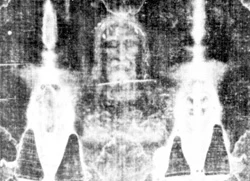
Oxford lab to revisit carbon dating of Shroud of Turin

Colorado Springs, May 23, 2008 / 05:01 am (CNA).- A physics professor has persuaded an Oxford laboratory to revisit the question of the age of the Shroud of Turin, the reputed burial shroud of Jesus Christ. The professor argues that carbon monoxide contaminating the shroud could have distorted its radiocarbon dating results by more than 1,000 years....

The Denver Post reports that John Jackson, a physics lecturer at the University of Colorado at Colorado Springs, has hypothesized that even minimal contamination of the shroud by environmental carbon monoxide could have skewed the dating by 1,300 years....


Junk Science...

Some of us are waiting for the eco-nuts to come down on our candles and incense...but, perhaps, there is hope. That is, if the media would ever begin to present the truth.

There’s a new global warming consensus in town....

The Oregon Institute of Science and Medicine this week announced that 31,072 U.S. scientists signed a petition stating that "...There is no convincing scientific evidence that human release of carbon dioxide, methane or other greenhouse gases is causing, or will cause in the future, catastrophic heating of the Earth’s atmosphere and disruption of the Earth’s climate..."

The OISM petition represents a direct challenge to the Al Gore-touted notion that a consensus of scientists has determined that catastrophic manmade global warming is real and that any debate over the science is pointless.


Cardinal Castrillón Hoyos to ordain four priests for FSSP

Denton, NE, May 23, 2008 / 01:18 am (CNA).- Cardinal Darío Castrillón Hoyos, President of the Pontifical Commission Ecclesia Dei, will ordain four men to the priesthood for the Priestly Fraternity of St. Peter on Friday, May 30.

The Priestly Fraternity of St. Peter (FSSP) was established in 1988 under Pope John Paul II and has nearly 200 priests and over 100 seminarians studying in Bavaria and Nebraska....

The men will be ordained at the Cathedral of the Risen Christ in Lincoln, Nebraska. The ordination Mass will be broadcast on EWTN at 11 a.m. (EST).
More great news! Let's not forget to keep these men in our prayers!


Transgender “man” weds transgender “woman” in Mexico City

...Mario Sánchez (formerly María Sánchez), a 55-year-old retired female prison guard, and Diana Guerrero (formerly José Guerrero), an electrical engineer, 45, were legally married, with all the rights and obligations of a heterosexual marriage.

To avoid violating the law, the judge who performed the ceremony permitted the wedding only if “Mario” was married as María -- her birth name, and “Diana” was married as José, his original name. Thus, under the law, “Diana” will be the husband, and “Mario” the wife....

Confused? But wait, there's even more!

According to “Diana,” the couple plans to persist in efforts to get married in the Catholic Church. In Mexico, civil law does not recognize Church marriages, and the Church does not recognize civil marriages, so it has long been customary for couples to wed twice. “We will exhaust all avenues, but if the Catholic hierarchy refuses to marry us, we will resort to other churches, such as the Anglican [or] the Unitarian, which don’t have so many prejudges [prejudices?]. The most important thing is to have God’s blessings,” said “Diana.”

God's blessings? For real? I'm certain that He is showering them with graces for a much needed repentance and conversion, but, alas, it does require the exercise of free will to accept this gift of grace. Someone should tell them to avoid wasting time with getting the Church to approve such an arrangement and go straight to some Unitarian sect which, it seems, approves just about anything. But will God bless this "union?"

Catholic "Left" Hangs Itself

William Donohue writes:

The Catholic Left is hanging itself right before our eyes. Having never come to grips with the Church's teachings on sexuality, they are now tightening the noose on themselves in public. It is not a pretty sight. This month alone they have embroiled themselves in a debate with three separate archbishops, with no end in sight.

Archbishop Joseph Naumann of Kansas City recently rebuked Catholic Kansas governor Kathleen Sebelius for vetoing a bill imposing new restrictions on abortion providers. Indeed, he publicly urged her not to go to Communion. The archbishop was not shooting from the hip: He has met with Sebelius on several occasions regarding her pro-abortion position.

Catholic Left apologists like Catholic Democrats have blasted Archbishop Naumann for doing his job. But in doing so, they have exposed themselves as lining up behind a public official whose record on abortion makes a mockery of their game plan to reduce abortions....
Haven't these so-called Catholics simply rejected the Faith?

"Roman Catholics for Obama '08" is another group on the Catholic Left that now looks rather enfeebled. They deliberately took Denver archbishop Charles Chaput's words out of context, making it look like he was in the tank for Obama. Nothing could be further from the truth.....

Groups like this could just as easily call themselves "Roman Catholics for Abortion" or "Roman Catholics for Tyranny & Slavery" or "Roman Catholics for Hitler" (were he still living). Again, some of us find it impossible to refer to them as "Catholic", let alone Christian.

The third archbishop to become embroiled in a fight with the Catholic Left is Roger Cardinal Mahony of Los Angeles. Mahony has denied Australian bishop Geoffrey Robinson permission to speak in his archdiocese, citing his dissident positions. The Aussie bishop disagrees with the Catholic Church's teachings on adultery, women priests, homosexuality, and "papal power." And who is sponsoring Bishop Robinson in his grand tour of the United States? Voice of the Faithful (VOTF)....
More accurately, "Voice of the UNFaithful." But so few seem to care. The good part is that the membership numbers of such dissident groups have been in decline for years and they continue to decline due to death or, thank God, miraculous awakenings to the truth.

At bottom, it is not the Catholic Left's quarrel with three archbishops that is doing them in; it is their total failure to convince Catholics (as well as non-Catholics) that it is okay to vote for NARAL-approved candidates for public office and then claim with a straight face that this adequately represents the Catholic position. Everyone knows this is bunk.

Since neither the Catholic Left nor its 'agendas' are from God, we know that they will not survive. We are saddened, however, at the confusion they cause and loss of souls that they leave in their wake.

Christ told us that we would always have the poor with us. Is there any doubt that this would include, not only those who suffer from not having even the barest necessities of life, but also those whose poverty of mind and spirit needs to be fed by truth and charity? Let us continue to pray for and educate these confused souls so that, perhaps one day if it be God's will, this country may be governed by morally upright people with common sense and and a deep, abiding respect for the sanctity of all human life.

of Donohue's article.

Nothing New Here...

The Telegraph posts an article about Hans Kung which is nothing more than a rehash of his constant complaints...

Pope Benedict attacked by Catholic Church’s most senior theologians

One of the Catholic Church’s most senior theologians, and former mentor to Pope

Benedict XVI, has launched a stinging attack on the Vatican.
Father Hans Küng, 80, a Swiss priest and professor at Tübingen university said it was a “tragedy” for the Catholic Church that Rome had failed to follow the path of liberalisation set out by the Vatican II council in 1965.
I'm not certain than any faithful Catholic would dare suggest that Kung is one of the Church's "most senior theologians" unless he was referring to his 'age' - it certainly isn't doctrinal fidelity.

And where did Vatican 2 establish a "path of liberalisation"? This is what can happen when one fails to read, with the mind of the Church, the documents of any council. It's no different, really, than reading Scripture. He who reads the Scriptures after dismissing the Church's (or the Fathers') understanding can easily succumb to error or erroneous interpretations - as evidenced by the thousands upon thousands of 'Sola Scriptura' denominations. Kung seems to be no different in this regard.

...In an interview with La Repubblica, however, he said: “Rome continues to block every sort of renewal, and is blocking any ecumenical unification with the protestant and orthodox churches. This pope has made serious mistakes.”
Kung, a pope in his own mind - we need to pray for him and for those who minds and hearts have been infected by his dissent, pride and rebellion.


Gospel for Friday, 7th Week in Ordinary Time

From: Mark 10:1-12

The Indissolubility of Marriage

[1] And He (Jesus) left there and went to the region of Judea and beyond the Jordan, and crowds gathered to Him again; and again, as His custom was, He taught them.
[2] And Pharisees came up and in order to test Him asked, "Is it lawful for a man to divorce his wife?" [3] He answered them, "What did Moses command you?" [4] They said, "Moses allowed a man to write a certificate of divorce, and to put her away." [5] But Jesus said to them, "For your hardness of heart he wrote this commandment. [6] But from the beginning of creation, 'God made them male and female.'; [7] `For this reason a man shall leave his father and mother and be joined to his wife, [8] and the two shall become one.' So they are no longer two but one. [9] What therefore God has joined together, let not man put asunder."

[10] And in the house the disciples asked Him about this matter. [11] And He said to them, "Whoever divorces his wife and marries another, commits adultery against her; 12] and if she divorces her husband and marries another, she commits adultery."
_______________

Commentary:

1-12. This kind of scene occurs often in the Gospel. The malice of the Pharisees contrasts with the simplicity of the crowd, who listen attentively to Jesus' teaching. The Pharisees' question aimed at tricking Jesus into going against the Law of Moses. But Jesus Christ, Messiah and Son of God, has perfect understanding of that Law. Moses had permitted divorce because of the hardness of that ancient people: women had an ignominious position in those primitive tribes (they were regarded almost as animals or slaves); Moses, therefore, protected women's dignity against these abuses by devising the certificate of divorce; this was a real social advance. It was a document by which the husband repudiated his wife and she obtained freedom. Jesus restores to its original purity the dignity of man and woman in marriage, as instituted by God at the beginning of creation. "A man leaves his father and his mother and cleaves to his wife, and they become one flesh" (Genesis 2:24): in this way God established from the very beginning the unity and indissolubility of marriage. The Church's Magisterium, the only authorized interpreter of the Gospel and of the natural law, has constantly guarded and defended this teaching and has proclaimed it solemnly in countless documents (Council of Florence, "Pro Armeniis"; Council of Trent, "De Sacram. Matr."; Pius XI, "Casti Connubi"; Vatican II, "Gaudium Et Spes", 48; etc.).

Here is a good summary of this doctrine: "The indissolubility of marriage is not a caprice of the Church nor is it merely a positive ecclesiastical law. It is a precept of natural law, of divine law, and responds perfectly to our nature and to the supernatural order of grace" (St J. Escriva, "Conversations", 97). Cf. note on Matthew 5:31-32.

5-9. When a Christian realizes that this teaching applies to everyone at all times, he should not be afraid of people reacting against it: "It is a fundamental duty of the Church to reaffirm strongly [...] the doctrine of the indissolubility of marriage. To all those who, in our times, consider it too difficult, or indeed impossible, to be bound to one person for the whole of life, and to those caught up in a culture that rejects the indissolubility of marriage and openly mocks the commitment of spouses to fidelity, it is necessary to reaffirm the good news of the definitive nature of that conjugal love that has in Christ its foundation and strength (cf. Ephesians 5:25).

"Being rooted in the personal and total self-giving of the couple, and being required by the good of the children, the indissolubility of marriage finds its ultimate truth in the plan that God has manifested in His revelation: He wills and He communicates the indissolubility of marriage as a fruit, a sign and a requirement of the absolutely faithful love that God has for man and that the Lord Jesus has for the Church.

"Christ renews the first plan that the Creator inscribed in the hearts of man and woman, and in the celebration of the sacrament of matrimony offers `a new heart': thus the couples are not only able to overcome `hardness of heart' (Matthew 19:8), but also and above all they are able to share the full and definitive love of Christ, the new and eternal Covenant made flesh. Just as the Lord Jesus is the `faithful witness' (Revelation 3:14), the `yes' of the promises of God (cf. 2 Corinthians 1:20) and thus the supreme realization of the unconditional faithfulness with which God loves His people, so Christian couples are called to participate truly in the irrevocable indissolubility that binds Christ to the Church, His bride, loved by Him to the end (cf. John 13:1).

"To bear witness to the inestimable value of the indissolubility and fidelity of marriage is one of the most precious and most urgent tasks of Christian couples in our time" (John Paul II, "Familiaris Consortio", 20).
___________________________
Source: "The Navarre Bible: Text and Commentaries". Biblical text taken from the Revised Standard Version and New Vulgate. Commentaries made by members of the Faculty of Theology of the University of Navarre, Spain. Published by Four Courts Press, Kill Lane, Blackrock, Co. Dublin, Ireland. Reprinted with permission from Four Courts Press and Scepter Publishers, the U.S. publisher.

Thursday, May 22, 2008

Thoughts and Counsels - May 23

Whatsoever we do, we can never be true chil­dren of Mary, unless we are humble.

-St. Alphonsus.
________________________
From Mary, Help of Christians
Part VI, Thoughts and Counsels of the Saints for Every Day of the Year
Compiled by Fr. Bonaventure Hammer, OFM (© 1909, Benziger Brothers)

Just for Today, May 23

There is then no sanctity, if Thou, O Lord, withdraw Thy hand. No chastity is secure without Thy protec­tion. No guard that we can keep upon ourselves will profit us, if Thy ho1y providence watch not over us.

Oh! how humbly and lowly ought I to think of myself: how little ought I to esteem whatever good I may seem to have!

-Bk. III, ch. xiv.
______________

The lilies of my soul would droop,
And fade, if Jesus went;
The Lily of the Valley, He,
Preserves their spotless purity,
The fragrance of their scent.

-Poems.
__________________
For more information, see this post.
Adapted from Just For Today(©1943 Burns & Oates)
Nihil Obstat: Reginaldus Phillips, S.T.L.,Censor deputatus
Imprimatur: Edwardus Myers, Vic. Cap.