From: John 3:13-17
The Visit of Nicodemus (Continuation)
(Jesus said to Nicodemus,) [13] "No one has ascended into Heaven but He who descended from Heaven, the Son of Man. [14] And as Moses lifted up the serpent in the wilderness, so must the Son of Man be lifted up, [15] that whoever believes in Him may have eternal life." [16] For God so loved the world that He gave His only Son, that whoever believes in Him should not perish but have eternal life. [17] For God sent the Son into world, not to condemn the world, but that the world might be saved through Him.
______________________
Commentary:
13. This is a formal declaration of the divinity of Jesus. No one has gone up into Heaven and, therefore, no one can have perfect knowledge of God's secrets, except God Himself who became man and came down from Heaven--Jesus, the second Person of the Blessed Trinity, the Son of Man foretold in the Old Testament (cf. Daniel 7:13), to whom has been given eternal lordship over all peoples.
The Word does not stop being God on becoming man: even when He is on earth as man, He is in Heaven as God. It is only after the Resurrection and the Ascension that Christ is in Heaven as man also.
14-15. The bronze serpent which Moses set up on a pole was established by God to cure those who had been bitten by the poisonous serpents in the desert (cf. Numbers 21:8-9). Jesus compares this with His crucifixion, to show the value of His being raised up on the cross: those who look on Him with faith can obtain salvation. We could say that the good thief was the first to experience the saving power of Christ on the cross: he saw the crucified Jesus, the King of Israel, the Messiah, and was immediately promised that he would be in Paradise that very day (cf. Luke 23:39-43).
The Son of God took on our human nature to make known the hidden mystery of God's own life (cf. Mark 4:11; John 1:18; 3:1-13; Ephesians 3:9) and to free from sin and death those who look at Him with faith and love and who accept the cross of every day.
The faith of which our Lord speaks is not just intellectual acceptance of the truths He has taught: it involves recognizing Him as Son of God (cf. 1 John 5:1), sharing His very life (cf. John 1:12) and surrendering ourselves out of love and therefore becoming like Him (cf. John 10:27; 1 John 3:2). But this faith is a gift of God (cf. John 3:3, 5-8), and we should ask Him to strengthen it and increase it as the Apostles did: Lord "increase our faith!" (Luke 17:5). While faith is a supernatural, free gift, it is also a virtue, a good habit, which a person can practise and thereby develop: so the Christian, who already has the divine gift of faith, needs with the help of grace to make explicit acts of faith in order to make this virtue grow.
16-21. These words, so charged with meaning, summarize how Christ's death is the supreme sign of God's love for men (cf. the section on charity in the "Introduction to the Gospel according to St. John": pp. 31ff above). "For God so loved the world that He gave His only Son for its salvation. All our religion is a revelation of God's kindness, mercy and love for us. `God is love' (1 John 4:16), that is, love poured forth unsparingly. All is summed up in this supreme truth, which explains and illuminates everything. The story of Jesus must be seen in this light. `(He) loved me, St. Paul writes. Each of us can and must repeat it for himself--`He loved me, and gave Himself for me'(Galatians 2:20)" (Paul VI, "Homily on Corpus Christi", 13 June 1976).
Christ's self-surrender is a pressing call to respond to His great love for us: "If it is true that God has created us, that He has redeemed us, that He loves us so much that He has given up His only-begotten Son for us (John 3:16), that He waits for us--every day!--as eagerly as the father of the prodigal son did (cf. Luke 15:11-32), how can we doubt that He wants us to respond to Him with all love? The strange thing would be not to talk to God, to draw away and forget Him, and busy ourselves in activities which are closed to the constant promptings of His grace" ([St] J. Escriva, "Friends of God", 251).
"Man cannot live without love. He remains a being that is incomprehensible for himself, his life is senseless, if love is not revealed to him, if he does not encounter love, if he does not experience it and make it his own, if he does not participate intimately in it. This [...] is why Christ the Redeemer `fully reveals man to himself'. If we may use the __expression, this is the human dimension of the mystery of the Redemption. In this dimension man finds again the greatness, dignity and value that belong to his humanity.[...] The one who wishes to understand himself thoroughly [...] must, with his unrest and uncertainty and even his weakness and sinfulness, with his life and death, draw near to Christ. He must, so to speak, enter into Him with all his own self, he must `appropriate' and assimilate the whole of the reality of the Incarnation and Redemption in order to find himself. If this profound process takes place within him, he then bears fruit not only of adoration of God but also of deep wonder at himself.
How precious must man be in the eyes of the Creator, if he `gained so great a Redeemer', ("Roman Missal, Exultet" at Easter Vigil), and if God `gave His only Son' in order that man `should not perish but have eternal life'. [...]
`Increasingly contemplating the whole of Christ's mystery, the Church knows with all the certainty of faith that the Redemption that took place through the Cross has definitively restored his dignity to man and given back meaning to his life in the world, a meaning that was lost to a considerable extent because of sin. And for that reason, the Redemption was accomplished in the paschal mystery, leading through the Cross and death to Resurrection" (John Paul II, "Redemptor Hominis", 10).
Jesus demands that we have faith in Him as a first prerequisite to sharing in His love. Faith brings us out of darkness into the light, and sets us on the road to salvation. "He who does not believe is condemned already" (verse 18).
"The words of Christ are at once words of judgment and grace, of life and death. For it is only by putting to death that which is old that we can come to newness of life. Now, although this refers primarily to people, it is also true of various worldly goods which bear the mark both of man's sin and the blessing of God.[...] No one is freed from sin by himself or by his own efforts, no one is raised above himself or completely delivered from his own weakness, solitude or slavery; all have need of Christ, who is the model, master, liberator, savior, and giver of life. Even in the secular history of mankind the Gospel has acted as a leaven in the interests of liberty and progress, and it always offers itself as a leaven with regard to brotherhood, unity and peace" (Vatican II, "Ad Gentes", 8).
___________________________
Source: "The Navarre Bible: Text and Commentaries". Biblical text taken from the Revised Standard Version and New Vulgate. Commentaries made by members of the Faculty of Theology of the University of Navarre, Spain. Published by Four Courts Press, Kill Lane, Blackrock, Co. Dublin, Ireland. Reprinted with permission from Four Courts Press and Scepter Publishers, the U.S. publisher.
Friday, September 14, 2007


Thursday, September 13, 2007
Thoughts and Counsels - September 14
Raise thy heart and thy love toward the sweet and most holy cross, which soothes every pain!
-St. Catherine of Siena
_________________________
From Mary, Help of Christians
Part VI, Thoughts and Counsels of the Saints for Every Day of the Year
Compiled by Fr. Bonaventure Hammer, OFM (© 1909, Benziger Brothers)
-St. Catherine of Siena
_________________________
From Mary, Help of Christians
Part VI, Thoughts and Counsels of the Saints for Every Day of the Year
Compiled by Fr. Bonaventure Hammer, OFM (© 1909, Benziger Brothers)
Meditation for September 14, My Cross and Christ's Cross
In my difficulties I ought to take my crucifix. It is not without reason that, on the day of my vows, I received the image of my sorrowful Savior. The Church foresaw that to keep my Rule which I received that day, the image of Christ nailed to the wood would not be too much. And then besides how many trials both from health and from my apostolate can spring up!
When the Arabs invaded Cordova, they built a mosque in the city. They attached to one of its pillars a former Spanish nobleman reduced to slavery; he remained steadfast in his faith until death, but in order to support his faith in the frightful struggle, he had by dint of effort dug with his nails a cross on the stone column to which he was chained. This mosque has since become a Catholic Church; and the cross dug into the pillar can still be seen.
In order to encourage himself to suffer, the tortured prisoner wished to have near him the sight of the cross. He thus felt less alone. He remembered all that Christ had suffered and that helped him to endure, for love of his Savior, all that the tormentors inflicted on him.
"My Jesus who suffered so much for me, encourage me in my difficult moments. You know how weak and cowardly I am before sacrifice. May my crucifix help me in necessary renunciations, help me as much as the cross on the pillar helped the Spanish prisoner of the Arabs. May the thought of Your suffering help me offer You my suffering and may Your love stimulate mine."
_________________
Adapted from Meditations for Religious
by Father Raoul Plus, S.J. (© 1939, Frederick Pustet Co.)
When the Arabs invaded Cordova, they built a mosque in the city. They attached to one of its pillars a former Spanish nobleman reduced to slavery; he remained steadfast in his faith until death, but in order to support his faith in the frightful struggle, he had by dint of effort dug with his nails a cross on the stone column to which he was chained. This mosque has since become a Catholic Church; and the cross dug into the pillar can still be seen.
In order to encourage himself to suffer, the tortured prisoner wished to have near him the sight of the cross. He thus felt less alone. He remembered all that Christ had suffered and that helped him to endure, for love of his Savior, all that the tormentors inflicted on him.
"My Jesus who suffered so much for me, encourage me in my difficult moments. You know how weak and cowardly I am before sacrifice. May my crucifix help me in necessary renunciations, help me as much as the cross on the pillar helped the Spanish prisoner of the Arabs. May the thought of Your suffering help me offer You my suffering and may Your love stimulate mine."
_________________
Adapted from Meditations for Religious
by Father Raoul Plus, S.J. (© 1939, Frederick Pustet Co.)
Gospel for Sep 13, Memorial: St John Chrysostom, Bishop and Doctor
Thursday, 23rd Week in Ordinary Time
From: Luke 6:27-38
Love of Enemies
[27] "But I say to you that hear, Love your enemies, do good to those who hate you, [28] bless those who curse you, pray for those who abuse you. [29] To him who strikes you on the cheek, offer the other also; and from him who takes away your cloak do not withhold your coat as well. [30] Give to every one who begs from you; and of him who takes away your goods do not ask them again. [31] And as you wish that men would do to you, do so to them.
[32] "If you love those who love you, what credit is that to you? For even sinners love those who love them. [33] And if you do good to those who do good to you, what credit is that to you? For even sinners do the same. [34] And if you lend to those from whom you hope to receive, what credit is that to you? Even sinners lend to sinners, to receive as much again. [35] But love your enemies, and do good, and lend, expecting nothing in return; and your reward will be great, and you will be sons of the Most High, for he is kind to the ungrateful and the selfish. [36] Be merciful, even as your Father is merciful.
[37] "Judge not, and you will not be judged; condemn not, and you will not be condemned; forgive, and you will be forgiven; [38] give, and it will be given to you; good measure, pressed down, shaken together, running over, will be put into your lap. For the measure you give will be the measure you get back."
_____________________
Commentary:
27. "In loving our enemies there shines forth in us some likeness to God our Father, who, by the death of His Son, ransomed from everlasting perdition and reconciled to Himself the human race, which previously was most unfriendly and hostile to Him" ("St. Pius V Catechism", IV, 14, 19). Following the example of God our Father, we must desire for everyone (even those who say they are our enemies) eternal life, in the first place; additionally, a Christian has a duty to respect and understand everyone without exception, because of his or her intrinsic dignity as a human person, made in the image and likeness of the Creator.
28. Jesus Christ teaches us by example that this is a real precept and not just a pious recommendation; even when nailed to the cross He prayed to His Father for those who had brought Him to such a pass: "Father, forgive them, for they know not what they do" (Lk 23:34). In imitation of the Master, St Stephen, the first martyr of the Church, when he was being stoned, prayed to our Lord not to hold the sin against his persecutors (cf. Acts 7:60). In the liturgy of Good Friday the Church offers prayers and suffrages to God on behalf of those outside the Church, asking Him to give them the grace of faith; to release from their ignorance those who do not know Him; to give Jews the light to the truth; to bring non-Catholic Christians, linked by true charity, into full communion with our Mother the Church.
29. Our Lord gives us more examples to show us how we should act if we want to imitate the mercy of God. The first has to do with one of what are traditionally called the "spiritual works of mercy"--forgiving injuries and being patient with other people's defects. This is what He means in the first instance about turning the other cheek.
To understand what our Lord is saying here, St. Thomas comments that "Sacred Scripture needs to be understood in the light of the example of Christ and the saints. Christ did not offer the cheek to be struck in the house of Annas (Jn 18:22ff), nor did St. Paul when, as we are told in the Acts of the Apostles, he was beaten in Philippi (Acts 16:22f). Therefore, we should not take it that Christ literally meant that you should offer the other cheek to some to hit you; what He was referring to was your interior disposition; that is, if necessary we should be ready not to be intolerant of anyone who hurts us, and we should be ready to put up with this kind of treatment, or worse than that. That was how the Lord acted when He surrendered His body to death" ("Commentary on St John", 18, 37).
36. The model of mercy which Christ sets before us is God Himself, of whom St. Paul says, 'Blessed be the God and Father of our Lord Jesus Christ, the Father of mercies and God of all comfort, who comforts us in all our afflictions" (2 Cor 1:3-4). "The first quality of this virtue", Fray Luis de Granada explains, "is that it makes men like God and like the most glorious thing in Him, His mercy (Lk 6:36). For certainly the greatest perfection a creature can have is to be like his Creator, and the more like Him he is, the more perfect he is. Certainly one of the things which is most appropriate to God is mercy, which is what the Church means when it says that prayer: 'Lord God, to whom it is proper to be merciful and forgiving...'. It says that this is proper to God, because just as a creature, as creature, is characteristically poor and needy (and therefore characteristically receives and does not give), so, on the contrary, since God is infinitely rich and powerful, to Him alone does it belong to give and not to receive, and therefore it is appropriate for Him to be merciful and forgiving" ("Book of Prayer and Meditation", third part, third treatise).
This is the rule a Christian should apply: be compassionate towards other people's afflictions as if they were one's own, and try to remedy them. The Church spells out this rule by giving us a series of corporal works of mercy (visiting and caring for the sick, giving food to the hungry, drink to the thirsty...) and spiritual works of mercy (teaching the ignorant, correcting the person who has erred, forgiving injuries...): cf. "St Pius X Catechism", 944f.
We should also show understanding towards people who are in error: "Love and courtesy of this kind should not, of course, make us indifferent to truth and goodness. Love, in fact, impels the followers of Christ to proclaim to all men the truth which saves. But we must distinguish between the error (which must always be rejected) and the person in error, who never loses his dignity as a person even though he flounders amid false or inadequate religious ideas. God alone is the judge and searcher of hearts; He forbids us to pass judgment on the inner guilt of others" (Vatican II, "Gaudium Et Spes", 28).
38. We read in Sacred Scripture of the generosity of the widow of Zarephath, whom God asked to give food to Elijah the prophet even though she had very little left; He then rewarded her generosity by constantly renewing her supply of meal and oil (1 Kings 17:9ff). The same sort of thing happened when the boy supplied the five loaves and two fish which our Lord multiplied to feed a huge crowd of people (cf. Jn 6:9)--a vivid example of what God does when we give Him whatever we have, even if it does not amount to much.
God does not let Himself be outdone in generosity: "Go, generously and like a child ask Him, 'What can You mean to give me when You ask me for "this"?'" ([St] J. Escriva, "The Way", 153). However much we give God in this life, He will give us more in life eternal.
___________________________
Source: "The Navarre Bible: Text and Commentaries". Biblical text taken from the Revised Standard Version and New Vulgate. Commentaries made by members of the Faculty of Theology of the University of Navarre, Spain. Published by Four Courts Press, Kill Lane, Blackrock, Co. Dublin, Ireland. Reprinted with permission from Four Courts Press and Scepter Publishers, the U.S. publisher.
From: Luke 6:27-38
Love of Enemies
[27] "But I say to you that hear, Love your enemies, do good to those who hate you, [28] bless those who curse you, pray for those who abuse you. [29] To him who strikes you on the cheek, offer the other also; and from him who takes away your cloak do not withhold your coat as well. [30] Give to every one who begs from you; and of him who takes away your goods do not ask them again. [31] And as you wish that men would do to you, do so to them.
[32] "If you love those who love you, what credit is that to you? For even sinners love those who love them. [33] And if you do good to those who do good to you, what credit is that to you? For even sinners do the same. [34] And if you lend to those from whom you hope to receive, what credit is that to you? Even sinners lend to sinners, to receive as much again. [35] But love your enemies, and do good, and lend, expecting nothing in return; and your reward will be great, and you will be sons of the Most High, for he is kind to the ungrateful and the selfish. [36] Be merciful, even as your Father is merciful.
[37] "Judge not, and you will not be judged; condemn not, and you will not be condemned; forgive, and you will be forgiven; [38] give, and it will be given to you; good measure, pressed down, shaken together, running over, will be put into your lap. For the measure you give will be the measure you get back."
_____________________
Commentary:
27. "In loving our enemies there shines forth in us some likeness to God our Father, who, by the death of His Son, ransomed from everlasting perdition and reconciled to Himself the human race, which previously was most unfriendly and hostile to Him" ("St. Pius V Catechism", IV, 14, 19). Following the example of God our Father, we must desire for everyone (even those who say they are our enemies) eternal life, in the first place; additionally, a Christian has a duty to respect and understand everyone without exception, because of his or her intrinsic dignity as a human person, made in the image and likeness of the Creator.
28. Jesus Christ teaches us by example that this is a real precept and not just a pious recommendation; even when nailed to the cross He prayed to His Father for those who had brought Him to such a pass: "Father, forgive them, for they know not what they do" (Lk 23:34). In imitation of the Master, St Stephen, the first martyr of the Church, when he was being stoned, prayed to our Lord not to hold the sin against his persecutors (cf. Acts 7:60). In the liturgy of Good Friday the Church offers prayers and suffrages to God on behalf of those outside the Church, asking Him to give them the grace of faith; to release from their ignorance those who do not know Him; to give Jews the light to the truth; to bring non-Catholic Christians, linked by true charity, into full communion with our Mother the Church.
29. Our Lord gives us more examples to show us how we should act if we want to imitate the mercy of God. The first has to do with one of what are traditionally called the "spiritual works of mercy"--forgiving injuries and being patient with other people's defects. This is what He means in the first instance about turning the other cheek.
To understand what our Lord is saying here, St. Thomas comments that "Sacred Scripture needs to be understood in the light of the example of Christ and the saints. Christ did not offer the cheek to be struck in the house of Annas (Jn 18:22ff), nor did St. Paul when, as we are told in the Acts of the Apostles, he was beaten in Philippi (Acts 16:22f). Therefore, we should not take it that Christ literally meant that you should offer the other cheek to some to hit you; what He was referring to was your interior disposition; that is, if necessary we should be ready not to be intolerant of anyone who hurts us, and we should be ready to put up with this kind of treatment, or worse than that. That was how the Lord acted when He surrendered His body to death" ("Commentary on St John", 18, 37).
36. The model of mercy which Christ sets before us is God Himself, of whom St. Paul says, 'Blessed be the God and Father of our Lord Jesus Christ, the Father of mercies and God of all comfort, who comforts us in all our afflictions" (2 Cor 1:3-4). "The first quality of this virtue", Fray Luis de Granada explains, "is that it makes men like God and like the most glorious thing in Him, His mercy (Lk 6:36). For certainly the greatest perfection a creature can have is to be like his Creator, and the more like Him he is, the more perfect he is. Certainly one of the things which is most appropriate to God is mercy, which is what the Church means when it says that prayer: 'Lord God, to whom it is proper to be merciful and forgiving...'. It says that this is proper to God, because just as a creature, as creature, is characteristically poor and needy (and therefore characteristically receives and does not give), so, on the contrary, since God is infinitely rich and powerful, to Him alone does it belong to give and not to receive, and therefore it is appropriate for Him to be merciful and forgiving" ("Book of Prayer and Meditation", third part, third treatise).
This is the rule a Christian should apply: be compassionate towards other people's afflictions as if they were one's own, and try to remedy them. The Church spells out this rule by giving us a series of corporal works of mercy (visiting and caring for the sick, giving food to the hungry, drink to the thirsty...) and spiritual works of mercy (teaching the ignorant, correcting the person who has erred, forgiving injuries...): cf. "St Pius X Catechism", 944f.
We should also show understanding towards people who are in error: "Love and courtesy of this kind should not, of course, make us indifferent to truth and goodness. Love, in fact, impels the followers of Christ to proclaim to all men the truth which saves. But we must distinguish between the error (which must always be rejected) and the person in error, who never loses his dignity as a person even though he flounders amid false or inadequate religious ideas. God alone is the judge and searcher of hearts; He forbids us to pass judgment on the inner guilt of others" (Vatican II, "Gaudium Et Spes", 28).
38. We read in Sacred Scripture of the generosity of the widow of Zarephath, whom God asked to give food to Elijah the prophet even though she had very little left; He then rewarded her generosity by constantly renewing her supply of meal and oil (1 Kings 17:9ff). The same sort of thing happened when the boy supplied the five loaves and two fish which our Lord multiplied to feed a huge crowd of people (cf. Jn 6:9)--a vivid example of what God does when we give Him whatever we have, even if it does not amount to much.
God does not let Himself be outdone in generosity: "Go, generously and like a child ask Him, 'What can You mean to give me when You ask me for "this"?'" ([St] J. Escriva, "The Way", 153). However much we give God in this life, He will give us more in life eternal.
___________________________
Source: "The Navarre Bible: Text and Commentaries". Biblical text taken from the Revised Standard Version and New Vulgate. Commentaries made by members of the Faculty of Theology of the University of Navarre, Spain. Published by Four Courts Press, Kill Lane, Blackrock, Co. Dublin, Ireland. Reprinted with permission from Four Courts Press and Scepter Publishers, the U.S. publisher.
Wednesday, September 12, 2007
Thoughts and Counsels -
It ordinarily happens that God permits those who judge others, to fall into the same or even greater faults.
-St. Vincent Ferrer
_________________________
From Mary, Help of Christians
Part VI, Thoughts and Counsels of the Saints for Every Day of the Year
Compiled by Fr. Bonaventure Hammer, OFM (© 1909, Benziger Brothers)
-St. Vincent Ferrer
_________________________
From Mary, Help of Christians
Part VI, Thoughts and Counsels of the Saints for Every Day of the Year
Compiled by Fr. Bonaventure Hammer, OFM (© 1909, Benziger Brothers)
Meditation for September 13, The Consciousness of My Weakness
"We must not let the consciousness of our weaknesses make us lose the consciousness of our strength." (Vauvenargues.) That compares with what another moralist, La Rochefoucauld, once said, "We would do many more things if we believed them less impossible."
The victory belongs to those who think they can win. Do I mistrust myself too much?
Perhaps I have experienced that I am not capable of much. In my examens each day, I come face to face with evidence which is not very encouraging. How can I possess, after that, the beautiful self-confidence that some persons enjoy?
If I must have confidence, it is not so much by leaning on my own possibilities, scanty as they are in truth, but by leaning, rather, on the strength of God. Father Charles de Foucauld used to say, God is the master of the impossible, and without doubt the hermit of the Sahara was referring to events, but I can apply the truth to my wretchedness.
What I cannot realize with my own strength, which is after all only weakness, I can realize with the strength of God. I can do all things in Him who strengthens me, said St. Paul. I must trust more to Divine help in fulfilling the duties of my state; in my efforts for sanctification; in difficulties of whatever nature they may be.
"O God, Omnipotent Master of the impossible, help me to triumph over my impressions, and over the paralyzing consciousness of my weakness. Grant that in the knowledge of my incapability for many things, I apply myself the more to complete confidence in You."
_________________
Adapted from Meditations for Religious
by Father Raoul Plus, S.J. (© 1939, Frederick Pustet Co.)
The victory belongs to those who think they can win. Do I mistrust myself too much?
Perhaps I have experienced that I am not capable of much. In my examens each day, I come face to face with evidence which is not very encouraging. How can I possess, after that, the beautiful self-confidence that some persons enjoy?
If I must have confidence, it is not so much by leaning on my own possibilities, scanty as they are in truth, but by leaning, rather, on the strength of God. Father Charles de Foucauld used to say, God is the master of the impossible, and without doubt the hermit of the Sahara was referring to events, but I can apply the truth to my wretchedness.
What I cannot realize with my own strength, which is after all only weakness, I can realize with the strength of God. I can do all things in Him who strengthens me, said St. Paul. I must trust more to Divine help in fulfilling the duties of my state; in my efforts for sanctification; in difficulties of whatever nature they may be.
"O God, Omnipotent Master of the impossible, help me to triumph over my impressions, and over the paralyzing consciousness of my weakness. Grant that in the knowledge of my incapability for many things, I apply myself the more to complete confidence in You."
_________________
Adapted from Meditations for Religious
by Father Raoul Plus, S.J. (© 1939, Frederick Pustet Co.)
From Vienna, a Lesson on How to Sing the Mass (Chiesa)

Gospel for Sep 12, The Most Holy Name of the Blessed Virgin Mary
(Optional Memorial)
Wednesday, 23rd Week in Ordinary Time
From: Luke 6:20-26
The Beatitudes and the Curses
[20] And He (Jesus) lifted up His eyes on His disciples, and said: "Blessed are you poor, for yours is the Kingdom of God. [21] Blessed are you that hunger now, for you shall be satisfied. Blessed are you that weep now, for you shall laugh. [22] Blessed are you when men hate you, and when they exclude you and revile you, and cast out your name as evil, on account of the Son of Man! [23] Rejoice in that day, and leap for joy, for behold, your reward is great in Heaven; for so their fathers did to the prophets. [24] But woe to you that are rich, for you have received your consolation. [25] Woe to you that are full now, for you shall hunger. Woe to you that laugh now, for you shall mourn and weep. [26] Woe to you, when all men speak well of you, for so their fathers did to the false prophets."
_________________________
Commentary:
20-49. These thirty verses of St. Luke correspond to some extent to the Sermon on the Mount, an extensive account of which St. Matthew gives us in Chapters 5 to 7 in his Gospel. It is very likely that in the course of His public ministry in different regions and towns of Israel Jesus preached the same things, using different words on different occasions. Under the inspiration of the Holy Spirit each evangelist would have chosen to report those things which he considered most useful for the instruction of his immediate readers--Christians of Jewish origin in the case of Matthew, Gentile converts in the case of Luke. There is no reason why one evangelist should not have selected certain items and another different ones, depending on his readership, or why one should not have laid special stress on some subjects and shortened or omitted accounts of others.
In this present discourse, we might distinguish three parts--the Beatitudes and the curses (6:20-26); love of one's enemies (6:27-38); and teaching on uprightness of heart (6:39-49).
Some Christians may find it difficult to grasp the need of practicing the moral teaching of the Gospel so radically, in particular Christ's teaching in the Sermon on the Mount. Jesus is very demanding in what He says, but He is saying it to everyone, and not just to His Apostles or to those disciples who followed Him closely. We are told expressly that "when Jesus finished these sayings, the crowds were astonished at His teaching" (Matthew 7:28). It is quite clear that the Master calls everyone to holiness, making no distinction of state-in-life, race or personal circumstances. This teaching on the universal call to holiness was a central point of the teaching of (Blessed) Monsignor Escriva de Balaguer. The Second Vatican Council expressed the same teaching with the full weight of its authority: everyone is called to Christian holiness; consider, for example, just one reference it makes, in "Lumen Gentium", 11: "Strengthened by so many and such great means of salvation, all the faithful, whatever their condition or state--though each in his or her own way--are called by the Lord to that perfection of sanctity by which the Father Himself is perfect."
In the Sermon on the Mount Jesus is not proposing an unattainable ideal, useful though that might be to make us feel humble in the light of our inability to reach it. No. Christian teaching in this regard is quite clear: what Christ commands, He commands in order to have us do what He says. Along with His commandment comes grace to enable us to fulfill it. Therefore, every Christian is capable of practising the moral teaching of Christ and of attaining the full height of his calling -- holiness --not by his own efforts alone but by means of the grace which Christ has won for us, and with the abiding help of the means of sanctification which He left to His Church. "If anyone plead human weakness to excuse Himself for not loving God, it should be explained that He who demands our love pours into our hearts by the Holy Spirit the fervor of His love, and this good Spirit our Heavenly Father gives to those that ask Him. With reason, therefore, did St. Augustine pray:
`Give Me what Thou command, and command what You please.' As, then, God is ever ready to help us, especially since the death of Christ our Lord, by which the prince of this world was cast out, there is no reason why anyone should be disheartened by the difficulty of the undertaking. To him who loves, nothing is difficult" ("St. Pius V Catechism", III, 1, 7).
20-26. The eight Beatitudes which St. Matthew gives (5:3-12) are summed up in four by St. Luke, but with four opposite curses. We can say, with St. Ambrose, that Matthew's eight are included in Luke's four (cf. "Expositio Evangelii Sec. Lucam, in loc."). In St. Luke they are in some cases stated in a more incisive, more direct form than in the First Gospel, where they are given with more explanation: for example, the first beatitude says simply "Blessed are you poor", whereas in Matthew we read, "Blessed are the poor in spirit", which contains a brief explanation of the virtue of poverty.
20. "The ordinary Christian has to reconcile two aspects of this life that can at first seem contradictory. There is on the one hand "true poverty", which is obvious and tangible and made up of definite things. This poverty should be an _expression of faith in God and a sign that the heart is not satisfied with created things and aspires to the Creator; that it wants to be filled with love of God so as to be able to give this same love to everyone. On the other hand, an ordinary Christian is and wants to be "one more among his fellow men", sharing their way of life, their joys and happiness; working with them, loving the world and all the good things that exist in it; using all created things to solve the problems of human life and to establish a spiritual and material environment which will foster personal and social development [...].
"To my way of thinking the best examples of poverty are those mothers and fathers of large and poor families who spend their lives for their children and who with their effort and constancy--often without complaining of their needs--bring up their family, creating a cheerful home in which everyone learns to love, to serve and to work" ([Blessed] J. Escriva, "Conversations" , 110f).
24-26. Our Lord here condemns four things: avarice and attachment to the things of the world; excessive care of the body, gluttony; empty-headed joy and general self-indulgence; flattery, and disordered desire for human glory--four very common vices which a Christian needs to be on guard against.
24. In the same kind of way as in verse 20, which refers to the poor in the sense of those who love poverty, seeking to please God better, so in this verse the "rich" are to be understood as those who strive to accumulate possessions heedless of whether or not they are doing so lawfully, and who seek their happiness in those possessions, as if they were their ultimate goal. But people who inherit wealth or acquire it through honest work can be really poor provided they are detached from these things and are led by that detachment to use them to help others, as God inspires them. We can find in Sacred Scriptures a number of people to whom the beatitude of the poor can be applied although they possessed considerable wealth--Abraham, Isaac, Moses, David, Job, for example.
As early as St. Augustine's time there were people who failed to understand poverty and riches properly: they reasoned as follows: The Kingdom of Heaven belongs to the poor, the Lazaruses of this world, the hungry; all the rich are bad, like this rich man here. This sort of thinking led St. Augustine to explain the deep meaning of wealth and poverty according to the spirit of the Gospel: "Listen, poor man, to my comments on your words. When you refer to yourself as Lazarus, that holy man covered with wounds, I am afraid your pride makes you describe yourself incorrectly. Do not despise rich men who are merciful, who are humble: or, to put it briefly, do not despise poor rich men. Oh, poor man, be poor yourself; poor, that is, humble [...]. Listen to me, then. Be truly poor, be devout, be humble; if you glory in your ragged and ulcerous poverty, if you glory in likening yourself to that beggar lying outside the rich man's house, then you are only noticing his poverty, and nothing else. What should I notice you ask? Read the Scriptures and you will understand what I mean. Lazarus was poor, but he to whose bosom he was brought was rich. `It came to pass, it is written, that the poor man died and he was brought by the angels to Abraham's bosom.' To where? To Abraham's bosom, or let us say, to that mysterious place where Abraham was resting. Read [...] and remember that Abraham was a very wealthy man when he was on earth: he had abundance of money, a large family, flocks, land; yet that rich man was poor, because he was humble. `Abraham believed God and he was reckoned righteous.' [...] He was faithful, he did good, received the commandment to offer his son in sacrifice, and he did not refuse to offer what he had received to Him from whom he had received it. He was approved in God's sight and set before us as an example of faith" ("Sermon", 14).
To sum up: poverty does not consist in something purely external, in having or not having material goods, but in something that goes far deeper, affecting a person's heart and soul; it consists in having a humble attitude to God, in being devout, in having total faith. If a Christian has these virtues and also has an abundance of material possessions, he should be detached from his wealth and act charitably towards others and thus be pleasing to God. On the other hand, if someone is not well-off he is not justified in God's sight on that account, if he fails to strive to acquire those virtues in which true poverty consists.
___________________________
Source: "The Navarre Bible: Text and Commentaries". Biblical text taken from the Revised Standard Version and New Vulgate. Commentaries made by members of the Faculty of Theology of the University of Navarre, Spain. Published by Four Courts Press, Kill Lane, Blackrock, Co. Dublin, Ireland. Reprinted with permission from Four Courts Press and Scepter Publishers, the U.S. publisher.
Wednesday, 23rd Week in Ordinary Time
From: Luke 6:20-26
The Beatitudes and the Curses
[20] And He (Jesus) lifted up His eyes on His disciples, and said: "Blessed are you poor, for yours is the Kingdom of God. [21] Blessed are you that hunger now, for you shall be satisfied. Blessed are you that weep now, for you shall laugh. [22] Blessed are you when men hate you, and when they exclude you and revile you, and cast out your name as evil, on account of the Son of Man! [23] Rejoice in that day, and leap for joy, for behold, your reward is great in Heaven; for so their fathers did to the prophets. [24] But woe to you that are rich, for you have received your consolation. [25] Woe to you that are full now, for you shall hunger. Woe to you that laugh now, for you shall mourn and weep. [26] Woe to you, when all men speak well of you, for so their fathers did to the false prophets."
_________________________
Commentary:
20-49. These thirty verses of St. Luke correspond to some extent to the Sermon on the Mount, an extensive account of which St. Matthew gives us in Chapters 5 to 7 in his Gospel. It is very likely that in the course of His public ministry in different regions and towns of Israel Jesus preached the same things, using different words on different occasions. Under the inspiration of the Holy Spirit each evangelist would have chosen to report those things which he considered most useful for the instruction of his immediate readers--Christians of Jewish origin in the case of Matthew, Gentile converts in the case of Luke. There is no reason why one evangelist should not have selected certain items and another different ones, depending on his readership, or why one should not have laid special stress on some subjects and shortened or omitted accounts of others.
In this present discourse, we might distinguish three parts--the Beatitudes and the curses (6:20-26); love of one's enemies (6:27-38); and teaching on uprightness of heart (6:39-49).
Some Christians may find it difficult to grasp the need of practicing the moral teaching of the Gospel so radically, in particular Christ's teaching in the Sermon on the Mount. Jesus is very demanding in what He says, but He is saying it to everyone, and not just to His Apostles or to those disciples who followed Him closely. We are told expressly that "when Jesus finished these sayings, the crowds were astonished at His teaching" (Matthew 7:28). It is quite clear that the Master calls everyone to holiness, making no distinction of state-in-life, race or personal circumstances. This teaching on the universal call to holiness was a central point of the teaching of (Blessed) Monsignor Escriva de Balaguer. The Second Vatican Council expressed the same teaching with the full weight of its authority: everyone is called to Christian holiness; consider, for example, just one reference it makes, in "Lumen Gentium", 11: "Strengthened by so many and such great means of salvation, all the faithful, whatever their condition or state--though each in his or her own way--are called by the Lord to that perfection of sanctity by which the Father Himself is perfect."
In the Sermon on the Mount Jesus is not proposing an unattainable ideal, useful though that might be to make us feel humble in the light of our inability to reach it. No. Christian teaching in this regard is quite clear: what Christ commands, He commands in order to have us do what He says. Along with His commandment comes grace to enable us to fulfill it. Therefore, every Christian is capable of practising the moral teaching of Christ and of attaining the full height of his calling -- holiness --not by his own efforts alone but by means of the grace which Christ has won for us, and with the abiding help of the means of sanctification which He left to His Church. "If anyone plead human weakness to excuse Himself for not loving God, it should be explained that He who demands our love pours into our hearts by the Holy Spirit the fervor of His love, and this good Spirit our Heavenly Father gives to those that ask Him. With reason, therefore, did St. Augustine pray:
`Give Me what Thou command, and command what You please.' As, then, God is ever ready to help us, especially since the death of Christ our Lord, by which the prince of this world was cast out, there is no reason why anyone should be disheartened by the difficulty of the undertaking. To him who loves, nothing is difficult" ("St. Pius V Catechism", III, 1, 7).
20-26. The eight Beatitudes which St. Matthew gives (5:3-12) are summed up in four by St. Luke, but with four opposite curses. We can say, with St. Ambrose, that Matthew's eight are included in Luke's four (cf. "Expositio Evangelii Sec. Lucam, in loc."). In St. Luke they are in some cases stated in a more incisive, more direct form than in the First Gospel, where they are given with more explanation: for example, the first beatitude says simply "Blessed are you poor", whereas in Matthew we read, "Blessed are the poor in spirit", which contains a brief explanation of the virtue of poverty.
20. "The ordinary Christian has to reconcile two aspects of this life that can at first seem contradictory. There is on the one hand "true poverty", which is obvious and tangible and made up of definite things. This poverty should be an _expression of faith in God and a sign that the heart is not satisfied with created things and aspires to the Creator; that it wants to be filled with love of God so as to be able to give this same love to everyone. On the other hand, an ordinary Christian is and wants to be "one more among his fellow men", sharing their way of life, their joys and happiness; working with them, loving the world and all the good things that exist in it; using all created things to solve the problems of human life and to establish a spiritual and material environment which will foster personal and social development [...].
"To my way of thinking the best examples of poverty are those mothers and fathers of large and poor families who spend their lives for their children and who with their effort and constancy--often without complaining of their needs--bring up their family, creating a cheerful home in which everyone learns to love, to serve and to work" ([Blessed] J. Escriva, "Conversations" , 110f).
24-26. Our Lord here condemns four things: avarice and attachment to the things of the world; excessive care of the body, gluttony; empty-headed joy and general self-indulgence; flattery, and disordered desire for human glory--four very common vices which a Christian needs to be on guard against.
24. In the same kind of way as in verse 20, which refers to the poor in the sense of those who love poverty, seeking to please God better, so in this verse the "rich" are to be understood as those who strive to accumulate possessions heedless of whether or not they are doing so lawfully, and who seek their happiness in those possessions, as if they were their ultimate goal. But people who inherit wealth or acquire it through honest work can be really poor provided they are detached from these things and are led by that detachment to use them to help others, as God inspires them. We can find in Sacred Scriptures a number of people to whom the beatitude of the poor can be applied although they possessed considerable wealth--Abraham, Isaac, Moses, David, Job, for example.
As early as St. Augustine's time there were people who failed to understand poverty and riches properly: they reasoned as follows: The Kingdom of Heaven belongs to the poor, the Lazaruses of this world, the hungry; all the rich are bad, like this rich man here. This sort of thinking led St. Augustine to explain the deep meaning of wealth and poverty according to the spirit of the Gospel: "Listen, poor man, to my comments on your words. When you refer to yourself as Lazarus, that holy man covered with wounds, I am afraid your pride makes you describe yourself incorrectly. Do not despise rich men who are merciful, who are humble: or, to put it briefly, do not despise poor rich men. Oh, poor man, be poor yourself; poor, that is, humble [...]. Listen to me, then. Be truly poor, be devout, be humble; if you glory in your ragged and ulcerous poverty, if you glory in likening yourself to that beggar lying outside the rich man's house, then you are only noticing his poverty, and nothing else. What should I notice you ask? Read the Scriptures and you will understand what I mean. Lazarus was poor, but he to whose bosom he was brought was rich. `It came to pass, it is written, that the poor man died and he was brought by the angels to Abraham's bosom.' To where? To Abraham's bosom, or let us say, to that mysterious place where Abraham was resting. Read [...] and remember that Abraham was a very wealthy man when he was on earth: he had abundance of money, a large family, flocks, land; yet that rich man was poor, because he was humble. `Abraham believed God and he was reckoned righteous.' [...] He was faithful, he did good, received the commandment to offer his son in sacrifice, and he did not refuse to offer what he had received to Him from whom he had received it. He was approved in God's sight and set before us as an example of faith" ("Sermon", 14).
To sum up: poverty does not consist in something purely external, in having or not having material goods, but in something that goes far deeper, affecting a person's heart and soul; it consists in having a humble attitude to God, in being devout, in having total faith. If a Christian has these virtues and also has an abundance of material possessions, he should be detached from his wealth and act charitably towards others and thus be pleasing to God. On the other hand, if someone is not well-off he is not justified in God's sight on that account, if he fails to strive to acquire those virtues in which true poverty consists.
___________________________
Source: "The Navarre Bible: Text and Commentaries". Biblical text taken from the Revised Standard Version and New Vulgate. Commentaries made by members of the Faculty of Theology of the University of Navarre, Spain. Published by Four Courts Press, Kill Lane, Blackrock, Co. Dublin, Ireland. Reprinted with permission from Four Courts Press and Scepter Publishers, the U.S. publisher.
Tuesday, September 11, 2007
Thoughts and Counsels - September 12
Meditation for September 12, The Name of Mary
And the name of the Virgin was Mary.
St. Bernard in the homily that the Church has chosen as a lesson for the second Nocturn of today's feast gives us this triple counsel: Call upon Mary; Look at Mary; Think of Mary.
Call on Mary every time a difficulty arises or sorrow strikes. St. Bernard says that as the sailor when he has lost his way and his compass during a storm at sea, seeks to guide himself by the arch of the heavens which from time to time reveals a star, so ought we, when the tempest lets loose upon us, seek in the heights her whom the Church calls Stella Maris, Star of the Sea.
We must not only call on Mary when all goes wrong, but try to look upon her when all goes well, to seek her presence; to claim encouragement; to offer her our effort; to unite our love with hers. What occupation could be sweeter than to gaze on Mary? Is there any creature in the world, after Jesus, who has such appealing beauty?
And when I say look, I do not mean merely to gaze upon her features, but to measure all her inward wealth. What splendor in her immaculate perfection; what magnificence in the plenitude of the divine life she encompasses from her birth; what grandeur in her attitude of loving service throughout her life; in her heroic oblation at the foot of the cross! Look, consider all that in long and quiet contemplation.
And what does it mean to think of Mary?
It means that when I do not have her benign image to look at, her memory at least will encompass me. Quite naturally, then, her memory will evoke her person, and her name will come to my lips.
O Mary, give me devotion to your Name!
_________________
Adapted from Meditations for Religious
by Father Raoul Plus, S.J. (© 1939, Frederick Pustet Co.)
St. Bernard in the homily that the Church has chosen as a lesson for the second Nocturn of today's feast gives us this triple counsel: Call upon Mary; Look at Mary; Think of Mary.
Call on Mary every time a difficulty arises or sorrow strikes. St. Bernard says that as the sailor when he has lost his way and his compass during a storm at sea, seeks to guide himself by the arch of the heavens which from time to time reveals a star, so ought we, when the tempest lets loose upon us, seek in the heights her whom the Church calls Stella Maris, Star of the Sea.
We must not only call on Mary when all goes wrong, but try to look upon her when all goes well, to seek her presence; to claim encouragement; to offer her our effort; to unite our love with hers. What occupation could be sweeter than to gaze on Mary? Is there any creature in the world, after Jesus, who has such appealing beauty?
And when I say look, I do not mean merely to gaze upon her features, but to measure all her inward wealth. What splendor in her immaculate perfection; what magnificence in the plenitude of the divine life she encompasses from her birth; what grandeur in her attitude of loving service throughout her life; in her heroic oblation at the foot of the cross! Look, consider all that in long and quiet contemplation.
And what does it mean to think of Mary?
It means that when I do not have her benign image to look at, her memory at least will encompass me. Quite naturally, then, her memory will evoke her person, and her name will come to my lips.
O Mary, give me devotion to your Name!
_________________
Adapted from Meditations for Religious
by Father Raoul Plus, S.J. (© 1939, Frederick Pustet Co.)
Missourians Against Human Cloning Update
An update from Jaci Winship of MAHC:
Missourians Against Human Cloning is pleased to assist the Cures without Cloning campaign. We will begin to collect signatures very soon to place this important initiative on the ballot in 2008.
Many volunteers are needed! There are numerous places you can circulate petitions and collect signatures. You can participate in the venues where you are most comfortable.
Please plan to attend a training session to learn more about the petition process and the campaign to prohibit human cloning in our state.
Thursday September 13 7:00 pm:
Buder Branch St. Louis Public Library 4401 Hampton Ave. St. Louis Mo 63109
Saturday September 15 11:00 am:
St. Louis County Public Library 5430 Telegraph Rd. St. Louis, MO 63129
Sunday September 16 7:00 pm:
Zion Lutheran Social Hall 3866 Harvester, St. Charles
Monday September 17 7:00 pm:
MAHC Office, 229 Chesterfield Business Parkway, Chesterfield, MO 63005
Monday September 17 7:00 pm:
Julia Davis Library, 4415 Natural Bridge St. Louis, MO
Thursday September 20 7:00 pm:
Hope Lutheran Church Neosho @ Brannon, St. Louis, MO
Saturday September 22 11:00 am:
Hope Lutheran Church Neosho @ Brannon, St. Louis, MO
Monday September 24 7:00 pm:
MAHC Office, 229 Chesterfield Business Parkway Chesterfield, MO 63005
Contact Kathy at 636-536-9877 or email to Kathy@nocloning.org if you plan on attending a session.
Thank you,
Jaci Winship
Executive Director
Gospel for Tuesday, 23rd Week in Ordinary Time
Old Calendar: Sts. Protus and Hyacinth, martyrs
From: Luke 6:12-19
The Calling of the Apostles
[12] In these days He (Jesus) went out into the hills to pray; and all night He continued in prayer to God. [13] And when it was day, He called His disciples, and chose from them twelve, whom He named Apostles: [14] Simon, whom He named Peter, and Andrew, his brother, and James and John, and Philip and Bartholomew, [15] and Matthew, and Thomas, and James the son of Alphaeus, and Simon who was called the Zealot, [16] and Judas the son of James, and Judas Iscariot, who became a traitor.
The Sermon on the Mount
[17] And He came down with them and stood on a level place, with a great crowd of His disciples and a great multitude of people from all Judea and Jerusalem and the sea coast of Tyre and Sidon, who came to hear Him and to be healed of their diseases; [18] and those who were troubled with unclean spirits were cured. [19] And all the crowd sought to touch Him, for power came forth from Him and healed them all.
______________________________
Commentary:
12-13. The evangelist writes with a certain formality when describing this important occasion on which Jesus chooses the Twelve, constituting them as the apostolic college: "The Lord Jesus, having prayed at length to the Father, called to Himself those whom He willed and appointed twelve to be with Him, whom He might send to preach the King dom of God (cf. Mark 2:13-19; Matthew 10:1-42). These Apostles (cf. Luke 6:13) He constituted in the form of a college or permanent assembly, at the head of which He placed Peter, chosen from among them (cf. John 21:15-17). He sent them first of all to the children of Israel and then to all peoples (cf. Romans 1:16), so that, sharing in His power, they might make all peoples His disciples and sanctify and govern them (cf. Matthew 28:16-20; and par.) and thus spread the Church and, administering it under the guidance of the Lord, shepherd it all days until the end of the world (cf. Matthew 28:20). They were fully confirmed in this mission on the day of Pentecost (cf. Act 2:1-26) [...]. Through their preaching the Gospel everywhere (cf. Mark 16:20), and through its being welcomed and received under the influence of the Holy Spirit by those who hear it, the Apostles gather together the universal Church, which the Lord founded upon the Apostles and built upon Blessed Peter their leader, the chief cornerstone being Christ Jesus Himself (cf. Revelation 21:14; Matthew 16:18; Ephesians 2:20). That divine mission, which was committed by Christ to the Apostles, is destined to last until the end of the world (cf. Matthew 28:20), since the Gospel, which they were charged to hand on, is, for the Church, the principle of all its life for all time. For that very reason the Apostles were careful to appoint successors in this hierarchically constituted society" (Vatican II, "Lumen Gentium", 19-20).
Before establishing the apostolic college, Jesus spent the whole night in prayer. He often made special prayer for His Church (Luke 9:18; John 17:1ff), thereby preparing His Apostles to be its pillars (cf. Galatians 2:9). As His Passion approaches, He will pray to the Father for Simon Peter, the head of the Church, and solemnly tell Peter that He has done so: "But I have prayed for you that your faith may not fail" (Luke 22:32). Following Christ's example, the Church stipulates that on many occasions liturgical prayer should be offered for the pastors of the Church (the Pope, the bishops in general, and priests) asking God to give them grace to fulfill their ministry faithfully.
Christ is continually teaching us that we need to pray always (Luke 18:1). Here He shows us by His example that we should pray with special intensity at important moments in our lives. "`Pernoctans in oratione Dei. He spent the whole night in prayer to God.' So St.Luke tells of our Lord. And you? How often have you persevered like that? Well, then...." ([Blessed] J. Escriva, "The Way", 104).
On the need for prayer and the qualities our prayer should have, see the notes on Matthew 6:5-6; 7:7-11; 14:22-23; Mark 1:35; Luke 5:16; 11:1-4; 22:41-42.
12. Since Jesus is God, why does He pray? There were two wills in Christ, one divine and one human (cf. "St. Pius X Catechism", 91), and although by virtue of His divine will He was omnipotent, His human will was not omnipotent. When we pray, what we do is make our will known to God; therefore Christ, who is like us in all things but sin (Hebrews 4:15), also had to pray in a human way (cf. "Summa Theologiae", III, q. 21, a. 1). Reflecting on Jesus at prayer, St. Ambrose comments: "The Lord prays not to ask things for Himself, but to intercede on my behalf; for although the Father has put everything into the hands of the Son, still the Son, in order to behave in accordance with His condition as man, considers it appropriate to implore the Father for our sake, for He is our Advocate [...]. A Master of obedience, by His example He instructs us concerning the precepts of virtue: `We have an advocate with the Father' (1 John 2:1)" ("Expositio Evangelii sec. Lucam, in loc.").
14-16. Jesus chose for Apostles very ordinary people, most of them poor and uneducated; apparently only Matthew and the brothers James and John had social positions of any consequence. But all of them gave up whatever they had, little or much as it was, and all of them, bar Judas, put their faith in the Lord, overcame their shortcomings and eventually proved faithful to grace and became saints, veritable pillars of the Church. We should not feel uneasy when we realize that we too are low in human qualities; what matters is being faithful to the grace God gives us.
19. God became man to save us. The divine person of the Word acts through the human nature which He took on. The cures and casting out of devils which He performed during His life on earth are also proof that Christ actually brings redemption and not just hope of redemption. The crowds of people from Judea and other parts of Israel who flock to Him, seeking even to touch Him, anticipate, in a way, Christians' devotion to the holy Humanity of Christ.
___________________________
Source: "The Navarre Bible: Text and Commentaries". Biblical text taken from the Revised Standard Version and New Vulgate. Commentaries made by members of the Faculty of Theology of the University of Navarre, Spain. Published by Four Courts Press, Kill Lane, Blackrock, Co. Dublin, Ireland. Reprinted with permission from Four Courts Press and Scepter Publishers, the U.S. publisher.
From: Luke 6:12-19
The Calling of the Apostles
[12] In these days He (Jesus) went out into the hills to pray; and all night He continued in prayer to God. [13] And when it was day, He called His disciples, and chose from them twelve, whom He named Apostles: [14] Simon, whom He named Peter, and Andrew, his brother, and James and John, and Philip and Bartholomew, [15] and Matthew, and Thomas, and James the son of Alphaeus, and Simon who was called the Zealot, [16] and Judas the son of James, and Judas Iscariot, who became a traitor.
The Sermon on the Mount
[17] And He came down with them and stood on a level place, with a great crowd of His disciples and a great multitude of people from all Judea and Jerusalem and the sea coast of Tyre and Sidon, who came to hear Him and to be healed of their diseases; [18] and those who were troubled with unclean spirits were cured. [19] And all the crowd sought to touch Him, for power came forth from Him and healed them all.
______________________________
Commentary:
12-13. The evangelist writes with a certain formality when describing this important occasion on which Jesus chooses the Twelve, constituting them as the apostolic college: "The Lord Jesus, having prayed at length to the Father, called to Himself those whom He willed and appointed twelve to be with Him, whom He might send to preach the King dom of God (cf. Mark 2:13-19; Matthew 10:1-42). These Apostles (cf. Luke 6:13) He constituted in the form of a college or permanent assembly, at the head of which He placed Peter, chosen from among them (cf. John 21:15-17). He sent them first of all to the children of Israel and then to all peoples (cf. Romans 1:16), so that, sharing in His power, they might make all peoples His disciples and sanctify and govern them (cf. Matthew 28:16-20; and par.) and thus spread the Church and, administering it under the guidance of the Lord, shepherd it all days until the end of the world (cf. Matthew 28:20). They were fully confirmed in this mission on the day of Pentecost (cf. Act 2:1-26) [...]. Through their preaching the Gospel everywhere (cf. Mark 16:20), and through its being welcomed and received under the influence of the Holy Spirit by those who hear it, the Apostles gather together the universal Church, which the Lord founded upon the Apostles and built upon Blessed Peter their leader, the chief cornerstone being Christ Jesus Himself (cf. Revelation 21:14; Matthew 16:18; Ephesians 2:20). That divine mission, which was committed by Christ to the Apostles, is destined to last until the end of the world (cf. Matthew 28:20), since the Gospel, which they were charged to hand on, is, for the Church, the principle of all its life for all time. For that very reason the Apostles were careful to appoint successors in this hierarchically constituted society" (Vatican II, "Lumen Gentium", 19-20).
Before establishing the apostolic college, Jesus spent the whole night in prayer. He often made special prayer for His Church (Luke 9:18; John 17:1ff), thereby preparing His Apostles to be its pillars (cf. Galatians 2:9). As His Passion approaches, He will pray to the Father for Simon Peter, the head of the Church, and solemnly tell Peter that He has done so: "But I have prayed for you that your faith may not fail" (Luke 22:32). Following Christ's example, the Church stipulates that on many occasions liturgical prayer should be offered for the pastors of the Church (the Pope, the bishops in general, and priests) asking God to give them grace to fulfill their ministry faithfully.
Christ is continually teaching us that we need to pray always (Luke 18:1). Here He shows us by His example that we should pray with special intensity at important moments in our lives. "`Pernoctans in oratione Dei. He spent the whole night in prayer to God.' So St.Luke tells of our Lord. And you? How often have you persevered like that? Well, then...." ([Blessed] J. Escriva, "The Way", 104).
On the need for prayer and the qualities our prayer should have, see the notes on Matthew 6:5-6; 7:7-11; 14:22-23; Mark 1:35; Luke 5:16; 11:1-4; 22:41-42.
12. Since Jesus is God, why does He pray? There were two wills in Christ, one divine and one human (cf. "St. Pius X Catechism", 91), and although by virtue of His divine will He was omnipotent, His human will was not omnipotent. When we pray, what we do is make our will known to God; therefore Christ, who is like us in all things but sin (Hebrews 4:15), also had to pray in a human way (cf. "Summa Theologiae", III, q. 21, a. 1). Reflecting on Jesus at prayer, St. Ambrose comments: "The Lord prays not to ask things for Himself, but to intercede on my behalf; for although the Father has put everything into the hands of the Son, still the Son, in order to behave in accordance with His condition as man, considers it appropriate to implore the Father for our sake, for He is our Advocate [...]. A Master of obedience, by His example He instructs us concerning the precepts of virtue: `We have an advocate with the Father' (1 John 2:1)" ("Expositio Evangelii sec. Lucam, in loc.").
14-16. Jesus chose for Apostles very ordinary people, most of them poor and uneducated; apparently only Matthew and the brothers James and John had social positions of any consequence. But all of them gave up whatever they had, little or much as it was, and all of them, bar Judas, put their faith in the Lord, overcame their shortcomings and eventually proved faithful to grace and became saints, veritable pillars of the Church. We should not feel uneasy when we realize that we too are low in human qualities; what matters is being faithful to the grace God gives us.
19. God became man to save us. The divine person of the Word acts through the human nature which He took on. The cures and casting out of devils which He performed during His life on earth are also proof that Christ actually brings redemption and not just hope of redemption. The crowds of people from Judea and other parts of Israel who flock to Him, seeking even to touch Him, anticipate, in a way, Christians' devotion to the holy Humanity of Christ.
___________________________
Source: "The Navarre Bible: Text and Commentaries". Biblical text taken from the Revised Standard Version and New Vulgate. Commentaries made by members of the Faculty of Theology of the University of Navarre, Spain. Published by Four Courts Press, Kill Lane, Blackrock, Co. Dublin, Ireland. Reprinted with permission from Four Courts Press and Scepter Publishers, the U.S. publisher.
Monday, September 10, 2007
Thoughts and Counsels - September 11
Your heart is not so narrow that the world can satisfy it entirely; nothing but God can fill it.
- St. Ignatius
_________________________
From Mary, Help of Christians
Part VI, Thoughts and Counsels of the Saints for Every Day of the Year
Compiled by Fr. Bonaventure Hammer, OFM (© 1909, Benziger Brothers)
- St. Ignatius
_________________________
From Mary, Help of Christians
Part VI, Thoughts and Counsels of the Saints for Every Day of the Year
Compiled by Fr. Bonaventure Hammer, OFM (© 1909, Benziger Brothers)
Meditation for September 11, Antipathy
The Venerable Marie of the Incarnation, an Ursuline of Canada, gives this excellent advice, "Exercise yourself in pious, charitable affection towards those for whom you have a natural antipathy; take their actions in good part and judge of their intentions according to the order of charity."
That's lovely advice, but difficult to practice.
There can be some very perverse characters in a community. One can easily see, and above all sense in various ways, those who differ. Such differences come from temperament; from early formation; from different types of educations received or acquired; from heredity; and from difference in age which separates one generation from another.
Practically speaking, some individuals are out of harmony with nearly everything. All these things are mere nothings, of course, but mere nothings have a power of accumulating and finally create among souls, if not barriers, at least occasions of irritation, manifested at first by a lack of sympathy, which grows little, by little, if one does not watch, into a veritable antipathy.
There is nothing intentional in it. One would not consent really to do wrong for anything, or to wound anyone at all in the community. But it happens more quickly than one thinks. "She is so irritating! How can a person say such a thing? How could anyone think of acting that way? It was she, again, who must have thought of that, made that complaint, pushed that measure ahead. She never misses a chance." And thus we arouse ourselves and then bristle up.
We must above all not give expression to any of this, but keep these unseasonable agitations to ourselves. It is much better always to try to put the best interpretation on the actions of others. The height of charity, if we can reach it, is to endeavor in a natural way, of course, avoiding all artificiality or anything stilted, to render service to someone who irritates us, and to associate more with those persons whose companionship costs us something.
_________________
Adapted from Meditations for Religious
by Father Raoul Plus, S.J. (© 1939, Frederick Pustet Co.)
That's lovely advice, but difficult to practice.
There can be some very perverse characters in a community. One can easily see, and above all sense in various ways, those who differ. Such differences come from temperament; from early formation; from different types of educations received or acquired; from heredity; and from difference in age which separates one generation from another.
Practically speaking, some individuals are out of harmony with nearly everything. All these things are mere nothings, of course, but mere nothings have a power of accumulating and finally create among souls, if not barriers, at least occasions of irritation, manifested at first by a lack of sympathy, which grows little, by little, if one does not watch, into a veritable antipathy.
There is nothing intentional in it. One would not consent really to do wrong for anything, or to wound anyone at all in the community. But it happens more quickly than one thinks. "She is so irritating! How can a person say such a thing? How could anyone think of acting that way? It was she, again, who must have thought of that, made that complaint, pushed that measure ahead. She never misses a chance." And thus we arouse ourselves and then bristle up.
We must above all not give expression to any of this, but keep these unseasonable agitations to ourselves. It is much better always to try to put the best interpretation on the actions of others. The height of charity, if we can reach it, is to endeavor in a natural way, of course, avoiding all artificiality or anything stilted, to render service to someone who irritates us, and to associate more with those persons whose companionship costs us something.
_________________
Adapted from Meditations for Religious
by Father Raoul Plus, S.J. (© 1939, Frederick Pustet Co.)
Archbishop Burke on Canon 915
From Dr. Ed Peters:
One of America 's sharpest canon lawyer bishops (Abp. Raymond Burke of St. Louis ), has just published a terrific article in perhaps the world's most prestigious canon law journal (Periodica de re Canonica in Rome ), on a topic of vital interest to the Church in the world (the correct application of Canon 915 on denial of Holy Communion). Best of all, it's available on-line here.Read his introduction to Archbishop Burke’s article here: http://www.canonlaw.info/2007/09/abp-raymond-burke-on-canon-915.html
Creighton U.'s Unfortunate History of Dissent
From Thomas Peters at AmericanPapist:
Most of you have probably heard about Jesuit-run Creighton U.’s recent invitation (and subsequent dis-invitation) of pro-euthanasia, pro-abortion speaker/writer Anne Lamott.In many so-called Catholic universities, the Faith has been replaced by something else, something worldly...would some of these institutions return to their Catholic roots, if more Catholics, having become better informed, were to withhold funds and support from such institutions, many of which have become breeding grounds of dissent and rebellion?
Some of you have probably heard that the President John Schlegel of Creighton then circulated a memo claiming that his change of heart happened, to quote him, “well before the bloggers latched upon the invitation.”
Instead, he claims, he came to his decision as a result of “prayerful reflection upon reading her latest book.”
Taking him at his word, I ask why the same course of prayerful reflection didn’t raise any red flags for him when he invited the speakers previous to Anne Lamott. The last two speakers – while not equally offensive – are certainly far from appropriate choices for a Catholic University to invite and have speak to Catholic faithful on the topic of “Women & Ethics”.
I reflect upon the situation and present some unfortunate facts regarding Creighton U.’s previous track record of invited speakers:
http://www.americanpapist.com/2007/08/creighton-us-unfortunate-history-of.html
Oct 13-Mark Your Calendars!
Please mark your calendars for Saturday October 13, from Noon to 2PM and join your fellow St. Louis area Catholics for a “Public Square Rosary” underneath the Gateway Arch!
In commemoration of the 90th anniversary of Our Lady’s appearance and the Miracle of the Sun at Fatima, America Needs Fatima is sponsoring over 2000 Public Square Rosary Campaigns across the country.
Cick here for more information: http://www.tfp.org/rosarycampaign/welcome.htm
Here is a sample for a bulletin announcement that you can use to help promote this event around the diocese. If you cannot make it to the Arch on October 13th, perhaps you can go to another site around town. There cannot be TOO many Public Square Rosary events in our city on that day!
If you know that you CAN make it that day, please drop me a line. It would be nice to get somewhat of a ‘headcount’ in advance…
Please pray for a large crowd and MANY Public Rosaries in St. Louis and ask that our efforts are only and always pleasing to Our Lord.
HT to Mark S for the info!
In commemoration of the 90th anniversary of Our Lady’s appearance and the Miracle of the Sun at Fatima, America Needs Fatima is sponsoring over 2000 Public Square Rosary Campaigns across the country.
Cick here for more information: http://www.tfp.org/rosarycampaign/welcome.htm
Here is a sample for a bulletin announcement that you can use to help promote this event around the diocese. If you cannot make it to the Arch on October 13th, perhaps you can go to another site around town. There cannot be TOO many Public Square Rosary events in our city on that day!
Public Square Rosary - America Needs Fatima is sponsoring a “Public Square Rosary” on Saturday October 13th to commemorate the 90th anniversary of the Our Lady’s appearance and the Miracle of the Sun at Fatima. This is part of a nationwide campaign to fulfill Our Lady’s wish to pray the Rosary in a public way; over 2000 events are being planned across the country. Our main location for praying the Rosary in St. Louis will be in front of the Gateway Arch from 12 Noon to 2PM on October 13th. Anyone interested in participating or leading a Public Square Rosary of their own should contact Mark Serafino 573-459-5531, valmark5(at)fidnet.comPlease feel free to circulate this announcement within your parish, on Catholic Blogs, in book stores etc. If you have any questions, please do not hesitate to call me at the number listed above.
If you know that you CAN make it that day, please drop me a line. It would be nice to get somewhat of a ‘headcount’ in advance…
Please pray for a large crowd and MANY Public Rosaries in St. Louis and ask that our efforts are only and always pleasing to Our Lord.
HT to Mark S for the info!
Gospel for Monday, 23rd Week in Ordinary Time
Old Calendar: St. Nicholas of Tolentino, confessor
From: Luke 6:6-11
The Cure of a Man with a Withered Hand
[6] On another Sabbath, when He (Jesus) entered the synagogue and taught, a man was there whose right hand was withered. [7] And the scribes and the Pharisees watched Him, to see whether He would heal on the Sabbath, so that they might find an accusation against Him. [8] But He knew their thoughts, and He said to the man who had the withered hand, "Come and stand here." And he rose and stood there. [9] And Jesus said to them, "I ask you, is it lawful on the Sabbath to do good or to do harm, to save life or to destroy it?" [10] And He looked around on them all, and said to him, "Stretch out your hand." And he did so, and his hand was restored. [11] But they were filled with fury and discussed with one another what they might do to Jesus.
______________________________
Commentary:
10. The Fathers teach us how to discover a deep spiritual meaning in apparently casual things Jesus says. St. Ambrose, for example, commenting on the phrase "Stretch out your hand," says: "This form of medicine is common and general. Offer it often, in benefit of your neighbor; defend from injury anyone who seems to be suffering as a result of calumny; stretch your hand out also to the poor man who asks for your help; stretch it out also to the Lord asking Him to forgive your sins; that is how you should stretch your hand out, and that is the way to be cured" ("Expositio Evangelii sec. Lucam, in loc".).
11. The Pharisees do not want to reply to Jesus' question and do not know how to react to the miracle which He goes on to work. It should have converted them, but their hearts were in darkness and they were full of jealousy and anger. Later on, these people, who kept quiet in our Lord's presence, began to discuss Him among themselves, not with a view to approaching Him again but with the purpose of doing away with Him. In this connection St. Cyril comments: "O Pharisee, you see Him working wonders and healing the sick by using a higher power, yet out of envy you plot His death" ("Commentarium in Lucam, in loc.").
___________________________
Source: "The Navarre Bible: Text and Commentaries". Biblical text taken from the Revised Standard Version and New Vulgate. Commentaries made by members of the Faculty of Theology of the University of Navarre, Spain. Published by Four Courts Press, Kill Lane, Blackrock, Co. Dublin, Ireland. Reprinted with permission from Four Courts Press and Scepter Publishers, the U.S. publisher.
From: Luke 6:6-11
The Cure of a Man with a Withered Hand
[6] On another Sabbath, when He (Jesus) entered the synagogue and taught, a man was there whose right hand was withered. [7] And the scribes and the Pharisees watched Him, to see whether He would heal on the Sabbath, so that they might find an accusation against Him. [8] But He knew their thoughts, and He said to the man who had the withered hand, "Come and stand here." And he rose and stood there. [9] And Jesus said to them, "I ask you, is it lawful on the Sabbath to do good or to do harm, to save life or to destroy it?" [10] And He looked around on them all, and said to him, "Stretch out your hand." And he did so, and his hand was restored. [11] But they were filled with fury and discussed with one another what they might do to Jesus.
______________________________
Commentary:
10. The Fathers teach us how to discover a deep spiritual meaning in apparently casual things Jesus says. St. Ambrose, for example, commenting on the phrase "Stretch out your hand," says: "This form of medicine is common and general. Offer it often, in benefit of your neighbor; defend from injury anyone who seems to be suffering as a result of calumny; stretch your hand out also to the poor man who asks for your help; stretch it out also to the Lord asking Him to forgive your sins; that is how you should stretch your hand out, and that is the way to be cured" ("Expositio Evangelii sec. Lucam, in loc".).
11. The Pharisees do not want to reply to Jesus' question and do not know how to react to the miracle which He goes on to work. It should have converted them, but their hearts were in darkness and they were full of jealousy and anger. Later on, these people, who kept quiet in our Lord's presence, began to discuss Him among themselves, not with a view to approaching Him again but with the purpose of doing away with Him. In this connection St. Cyril comments: "O Pharisee, you see Him working wonders and healing the sick by using a higher power, yet out of envy you plot His death" ("Commentarium in Lucam, in loc.").
___________________________
Source: "The Navarre Bible: Text and Commentaries". Biblical text taken from the Revised Standard Version and New Vulgate. Commentaries made by members of the Faculty of Theology of the University of Navarre, Spain. Published by Four Courts Press, Kill Lane, Blackrock, Co. Dublin, Ireland. Reprinted with permission from Four Courts Press and Scepter Publishers, the U.S. publisher.
Sunday, September 09, 2007
Thoughts and Counsels - September 10
Look not to the qualities you may possess, which are wanting to others; but look to those which others possess and which are wanting to you, that you may acquire them.
-Ven. Lous De Granada
_________________________
From Mary, Help of Christians
Part VI, Thoughts and Counsels of the Saints for Every Day of the Year
Compiled by Fr. Bonaventure Hammer, OFM (© 1909, Benziger Brothers)
-Ven. Lous De Granada
_________________________
From Mary, Help of Christians
Part VI, Thoughts and Counsels of the Saints for Every Day of the Year
Compiled by Fr. Bonaventure Hammer, OFM (© 1909, Benziger Brothers)
Meditation for September 10, My Nothingness
"Every profound union or approach to intimacy with God, if real and founded in truth, involves, at first, an overwhelming realization of the distance which separates the creature from the Creator." - L. de Grandmaison.
There is in me at one and the same time splendor and nothingness.
Splendor: I carry the divine; God has His dwelling within me.
If anyone love me, said our Lord, My Father will love him, and we will come to him, and will make our abode with him. (John xiv, 23.) I know that; it is the whole doctrine of sanctifying grace. God grant that I may understand the incomparable beauty of it and that I may make of it the center and the soul of my spiritual life.
But, I carry all this divine life in a created reliquary, that is weak, made from nothingness. By nature, I am essentially a drop of nothingness, lost among other drops of nothingness which compose with me the world of nothing, the world of the created.
If the divine life within me ought to cause me unspeakable joy and boundless admiration, my nothingness ought to establish me in a humility of limitless depths.
The more a soul is elevated by the thought of the divine grandeur within it, the more does it realize its native misery and nothingness.
A crushing view? I should think so! What a distance between this nothing which is the human being and that All which is the divine! And what mercy God has showered on me for having condescended to set the rare pearl of His own life within the wretched setting of my insignificant life!
Admiration! Humility! I am nothing, yet bear All within me as my very own.
_________________
Adapted from Meditations for Religious
by Father Raoul Plus, S.J. (© 1939, Frederick Pustet Co.)
There is in me at one and the same time splendor and nothingness.
Splendor: I carry the divine; God has His dwelling within me.
If anyone love me, said our Lord, My Father will love him, and we will come to him, and will make our abode with him. (John xiv, 23.) I know that; it is the whole doctrine of sanctifying grace. God grant that I may understand the incomparable beauty of it and that I may make of it the center and the soul of my spiritual life.
But, I carry all this divine life in a created reliquary, that is weak, made from nothingness. By nature, I am essentially a drop of nothingness, lost among other drops of nothingness which compose with me the world of nothing, the world of the created.
If the divine life within me ought to cause me unspeakable joy and boundless admiration, my nothingness ought to establish me in a humility of limitless depths.
The more a soul is elevated by the thought of the divine grandeur within it, the more does it realize its native misery and nothingness.
A crushing view? I should think so! What a distance between this nothing which is the human being and that All which is the divine! And what mercy God has showered on me for having condescended to set the rare pearl of His own life within the wretched setting of my insignificant life!
Admiration! Humility! I am nothing, yet bear All within me as my very own.
_________________
Adapted from Meditations for Religious
by Father Raoul Plus, S.J. (© 1939, Frederick Pustet Co.)
Gospel for the 23rd Sunday in Ordinary Time
From: Luke 14:25-33
Conditions For Following Jesus
[25] Now great multitudes accompanied Him (Jesus); and He turned and said to them, [26] "If any one comes to Me and does not hate his own father and mother and wife and children and brothers and sisters, yes, and even his own life, he cannot be My disciple. [27] Whoever does not bear his own cross and come after Me, cannot be My disciple. [28] For which of you, desiring to build a tower, does not first sit down and count the cost, whether he has enough to complete it? [29] Otherwise, when he has laid a foundation, and is not able to finish, all who see it begin to mock him, [30] saying, `This man began to build, and was not able to finish.' [31] Or what king, going to encounter another king in a war, will not sit down first and take counsel whether he is able with ten thousand to meet him who comes against him with twenty thousand? [32] And if not, while the other is yet a great way off, he sends an embassy and asks terms of peace. [33] So therefore, whoever of you does not renounce all that he has cannot be My disciple."
_________________________
Commentary:
26. These words of our Lord should not disconcert us. Love for God and for Jesus should have pride of place in our lives and we should keep away from anything which obstructs this love: "In this world let us love everyone," St. Gregory the Great comments, "even though he be our enemy; but let us hate him who opposes us on our way to God, though he be our relative [...]. We should then, love, our neighbor; we should have charity towards all--towards relative and towards strangers--but without separating ourselves from the love of God out of love for them" ("In Evangelia Homiliae", 37, 3). In the last analysis, it is a matter of keeping the proper hierarchy of charity: God must take priority over everything.
This verse must be understood, therefore, in the context of all of our Lord's teachings (cf. Luke 6:27-35). These are "hard words. True, `hate' does not exactly express what Jesus meant. Yet He did put it very strongly, because He doesn't just mean `love less,' as some people interpret it in an attempt to tone down the sentence. The force behind these vigorous words does not lie in their implying a negative or pitiless attitude, for the Jesus who is speaking here is none other than that Jesus who commands us to love others as we love ourselves and who gives up His life for mankind. These words indicate simply that we cannot be half-hearted when it comes to loving God. Christ's words could be translated as `love more, love better', in the sense that a selfish or partial love is not enough: we have to love others with the love of God" ([St] J. Escriva, "Christ Is Passing By", 97). See the notes on Matthew 10:34-37; Luke 2:49.
As the Second Vatican Council explains, Christians "strive to please God rather than men, always ready to abandon everything for Christ" (Vatican II, "Apostolicam Actuositatem, 4).
27. Christ "by suffering for us not only gave us an example so that we might follow in His footsteps, but He also opened up a way. If we follow that way, life and death becomes holy and acquire a new meaning" (Vatican II, "Gaudium Et Spes", 22).
The way the Christian follows is that of imitating Christ. We can follow Him only if we help Him bear His cross. We all have experience of suffering, and suffering leads to unhappiness unless it is accepted with a Christian outlook. The Cross is not a tragedy: it is God's way of teaching us that through sin we can be sanctified, becoming one with Christ and winning Heaven as a reward. This is why it is so Christian to love pain: "Let us bless pain. Love pain. Sanctify pain....Glorify pain!" ([St] J. Escriva, "The Way", 208).
28-35. Our Lord uses different examples to show that if mere human prudence means that a person should try to work out in advance the risks he may run, with all the more reason should a Christian embrace the cross voluntarily and generously, because there is no other way he can follow Jesus Christ. "`Quia hic homo coepit aedificare et non potuit consummare! He started to build and was unable to finish!' A sad commentary which, if you don't want, need be made about you: for you possess everything necessary to crown the edifice of your sanctification--the grace of God and your own will." ([St] J. Escriva, "The Way", 324).
33. Earlier our Lord spoke about "hating" one's parents and one's very life; now He equally vigorously requires us to be completely detached from possessions. This verse is a direct application of the two foregoing parables: just as a king is imprudent if he goes to war with an inadequate army, so anyone is foolish who thinks he can follow our Lord without renouncing all his possessions. This renunciation should really bite: our heart has to be unencumbered by anything material if we are able to follow in our Lord's footsteps. The reason is, as He tells us later on, that it is impossible to "serve God and Mammon" (Luke 16:13). Not infrequently our Lord asks a person to practice total, voluntary poverty; and He asks everyone to practice genuine detachment and generosity in the use of material things. If a Christian has to be ready to give up even life itself, with all the more reason should he renounce possessions: If you are a man of God, you will seek to despise riches as intensely as men of the world seek to possess them" ([St] J. Escriva, "The Way", 633). See the note on Luke 12:33-34.
Besides, for a soul to become filled with God it must first be emptied of everything that could be an obstacle to God's indwelling: "The doctrine that the Son of God came to teach was contempt for all things in order to receive as a reward the Spirit of God in himself. For, as long as the soul does not reject all things, it has no capacity to receive the Spirit of God in pure transformation" (St. John of the Cross, "Ascent of Mount Carmel", Book 1, Chapter 5, 2).
___________________________
Source: "The Navarre Bible: Text and Commentaries". Biblical text taken from the Revised Standard Version and New Vulgate. Commentaries made by members of the Faculty of Theology of the University of Navarre, Spain. Published by Four Courts Press, Kill Lane, Blackrock, Co. Dublin, Ireland. Reprinted with permission from Four Courts Press and Scepter Publishers, the U.S. publisher.
Conditions For Following Jesus
[25] Now great multitudes accompanied Him (Jesus); and He turned and said to them, [26] "If any one comes to Me and does not hate his own father and mother and wife and children and brothers and sisters, yes, and even his own life, he cannot be My disciple. [27] Whoever does not bear his own cross and come after Me, cannot be My disciple. [28] For which of you, desiring to build a tower, does not first sit down and count the cost, whether he has enough to complete it? [29] Otherwise, when he has laid a foundation, and is not able to finish, all who see it begin to mock him, [30] saying, `This man began to build, and was not able to finish.' [31] Or what king, going to encounter another king in a war, will not sit down first and take counsel whether he is able with ten thousand to meet him who comes against him with twenty thousand? [32] And if not, while the other is yet a great way off, he sends an embassy and asks terms of peace. [33] So therefore, whoever of you does not renounce all that he has cannot be My disciple."
_________________________
Commentary:
26. These words of our Lord should not disconcert us. Love for God and for Jesus should have pride of place in our lives and we should keep away from anything which obstructs this love: "In this world let us love everyone," St. Gregory the Great comments, "even though he be our enemy; but let us hate him who opposes us on our way to God, though he be our relative [...]. We should then, love, our neighbor; we should have charity towards all--towards relative and towards strangers--but without separating ourselves from the love of God out of love for them" ("In Evangelia Homiliae", 37, 3). In the last analysis, it is a matter of keeping the proper hierarchy of charity: God must take priority over everything.
This verse must be understood, therefore, in the context of all of our Lord's teachings (cf. Luke 6:27-35). These are "hard words. True, `hate' does not exactly express what Jesus meant. Yet He did put it very strongly, because He doesn't just mean `love less,' as some people interpret it in an attempt to tone down the sentence. The force behind these vigorous words does not lie in their implying a negative or pitiless attitude, for the Jesus who is speaking here is none other than that Jesus who commands us to love others as we love ourselves and who gives up His life for mankind. These words indicate simply that we cannot be half-hearted when it comes to loving God. Christ's words could be translated as `love more, love better', in the sense that a selfish or partial love is not enough: we have to love others with the love of God" ([St] J. Escriva, "Christ Is Passing By", 97). See the notes on Matthew 10:34-37; Luke 2:49.
As the Second Vatican Council explains, Christians "strive to please God rather than men, always ready to abandon everything for Christ" (Vatican II, "Apostolicam Actuositatem, 4).
27. Christ "by suffering for us not only gave us an example so that we might follow in His footsteps, but He also opened up a way. If we follow that way, life and death becomes holy and acquire a new meaning" (Vatican II, "Gaudium Et Spes", 22).
The way the Christian follows is that of imitating Christ. We can follow Him only if we help Him bear His cross. We all have experience of suffering, and suffering leads to unhappiness unless it is accepted with a Christian outlook. The Cross is not a tragedy: it is God's way of teaching us that through sin we can be sanctified, becoming one with Christ and winning Heaven as a reward. This is why it is so Christian to love pain: "Let us bless pain. Love pain. Sanctify pain....Glorify pain!" ([St] J. Escriva, "The Way", 208).
28-35. Our Lord uses different examples to show that if mere human prudence means that a person should try to work out in advance the risks he may run, with all the more reason should a Christian embrace the cross voluntarily and generously, because there is no other way he can follow Jesus Christ. "`Quia hic homo coepit aedificare et non potuit consummare! He started to build and was unable to finish!' A sad commentary which, if you don't want, need be made about you: for you possess everything necessary to crown the edifice of your sanctification--the grace of God and your own will." ([St] J. Escriva, "The Way", 324).
33. Earlier our Lord spoke about "hating" one's parents and one's very life; now He equally vigorously requires us to be completely detached from possessions. This verse is a direct application of the two foregoing parables: just as a king is imprudent if he goes to war with an inadequate army, so anyone is foolish who thinks he can follow our Lord without renouncing all his possessions. This renunciation should really bite: our heart has to be unencumbered by anything material if we are able to follow in our Lord's footsteps. The reason is, as He tells us later on, that it is impossible to "serve God and Mammon" (Luke 16:13). Not infrequently our Lord asks a person to practice total, voluntary poverty; and He asks everyone to practice genuine detachment and generosity in the use of material things. If a Christian has to be ready to give up even life itself, with all the more reason should he renounce possessions: If you are a man of God, you will seek to despise riches as intensely as men of the world seek to possess them" ([St] J. Escriva, "The Way", 633). See the note on Luke 12:33-34.
Besides, for a soul to become filled with God it must first be emptied of everything that could be an obstacle to God's indwelling: "The doctrine that the Son of God came to teach was contempt for all things in order to receive as a reward the Spirit of God in himself. For, as long as the soul does not reject all things, it has no capacity to receive the Spirit of God in pure transformation" (St. John of the Cross, "Ascent of Mount Carmel", Book 1, Chapter 5, 2).
___________________________
Source: "The Navarre Bible: Text and Commentaries". Biblical text taken from the Revised Standard Version and New Vulgate. Commentaries made by members of the Faculty of Theology of the University of Navarre, Spain. Published by Four Courts Press, Kill Lane, Blackrock, Co. Dublin, Ireland. Reprinted with permission from Four Courts Press and Scepter Publishers, the U.S. publisher.
Saturday, September 08, 2007
Christian Morality
When speaking of faith and of the Credo, we should understand that the great reason for which we ought to believe all the truths of religion is that God Himself has revealed them by Jesus Christ His Son, who teaches them to us with infallible truth by the ministry of His Church.
The principle of morality is no less divine; and the reason for which we should faithfully observe the commandments of God, and of His Church, practise Christian virtues and live according to the rules of the Gospel, is that God Himself so wills it, and that this supreme holy will is made known to us most clearly through Jesus
Christ and His ministers.
The word morality means the moral law; in Latin, morum lex.
To be moral or righteous, is simply to live in accordance with that law which comes from God and which is the expression of His will; to be immoral or unrighteous, is to follow the natural inclinations in preference to the will of God, and to be ruled by the passions, and not by the divine law. Conscience is that inward light which reveals to us our duty, which reproaches us when we transgress, and applauds our obedience when we have the courage to listen to the voice of God, and to prove ourselves true Christians.
But just as there is, in this world, false or counterfeit money which is easily mistaken for good unless it is closely examined, so is there a false morality, which is very prevalent, and which entirely results from ignorance and unbelief; a counterfeit morality which does not suffice for the accomplishing of the will of God, and yet which many people content themselves with practising.
Ironically, it has been called the morality of the reasonable, the progressive, the enlightened - but it is very different from true Christian morality. Those who possess it, falsely imagine that they have all that is needed; and this deceiving tranquility is often the greatest obstacle to their return to the true service of God.
There is nothing more convenient nor more elastic than is this false morality. We might even add that there is nothing more immoral, or, at least, that there is nothing more powerless to render a man truly virtuous.
It might be summed up in two negative commands: Thou shalt not kill. - Thou shalt not steal. Two very desirable and praiseworthy requirements unquestionably, but such as do not go a great way, seeing that, beyond the cells of a prison, nearly all mankind, both bad and good, could quite conscientiously claim this remarkable title to the esteem of their fellow citizens. This mysterious moral law goes no farther, but leaves everything else wrapped in a vague uncertainty, which must be peculiarly soothing to those who are drawn by inclinations toward some action of doubtful morality.
It is true that it commands its devoted followers to be good fathers & mothers, good sons and daughters, good husbands and wives, and good citizens; but if we enter upon the question of the daily duties of life, and rules of conduct, morals, and temper, or methods of subduing vice, evil habits, selfish instincts, it has not a word to say; it forbids nothing and tolerates everything.
Having this law for his only rule of life, a man might be a gambler, a drunkard, and a profligate; he might be passionate, quarrelsome, and selfish, a spendthrift, or a miser, at will; he might be utterly destitute of love of anyone except himself, and devoured by idleness, pride, or sensuality.
Who does not see the hollowness of such a morality, and how impossible it is to find in such indeterminate maxims the necessary power to subdue the rebellion of the passions? It is, in fact, nothing but a deception, which enables men to do evil without burdening their consciences too heavily. Unfortunately for them, God is more
exacting, and who can say that He is wrong?
That pure Christian morality, which He Himself has given us, is the law by which He will hereafter judge us; and it is no more within our power to modify it than it is in our power to change the course of the stars, or to alter the laws of nature.
Very different from the morality of the rationalist is that Christian morality resting entirely upon the religion of which it is the practice. Its foundation, to which it refers everything, is the love and service of Our Lord Jesus Christ; the Gospel, with its divine maxims, is its code, and it teaches us first the necessity of penance, of self-renunciation, of brotherly love, of humility and gentleness, of purity of heart, and chastity; of detachment from the world, of obedience to God and to His Church; in one word, the practice of the Christian life and Christian virtues.
It must be acknowledged that there is some difference between this rule of conduct, and the unmeaning maxims of the good father or mother, the good son or daughter, the good husband or wife, and the good citizen. The most that such maxims as these are capable of, as was wittily said by St. Francis of Sales, is to save us from being needy, and to gain us the esteem of those who neither look below the surface nor scrutinize too closely.
As it is absolutely necessary for the salvation of our souls that we obey the law of God and live in accordance with His will, it is most important, it is even necessary, to have a clear knowledge of Christian morality in order to be able to practise it. Let us, therefore, study it together in all its principal teachings, and live our lives as God wills.
_________________________
Adapted from The Faith That Never Dies, or
The Priest of God in the Catholic home: How to Live an Ideal Christian Life as a True Follower of Christ
(© 1900 by J.C. Curtin)
The principle of morality is no less divine; and the reason for which we should faithfully observe the commandments of God, and of His Church, practise Christian virtues and live according to the rules of the Gospel, is that God Himself so wills it, and that this supreme holy will is made known to us most clearly through Jesus
Christ and His ministers.
The word morality means the moral law; in Latin, morum lex.
To be moral or righteous, is simply to live in accordance with that law which comes from God and which is the expression of His will; to be immoral or unrighteous, is to follow the natural inclinations in preference to the will of God, and to be ruled by the passions, and not by the divine law. Conscience is that inward light which reveals to us our duty, which reproaches us when we transgress, and applauds our obedience when we have the courage to listen to the voice of God, and to prove ourselves true Christians.
But just as there is, in this world, false or counterfeit money which is easily mistaken for good unless it is closely examined, so is there a false morality, which is very prevalent, and which entirely results from ignorance and unbelief; a counterfeit morality which does not suffice for the accomplishing of the will of God, and yet which many people content themselves with practising.
Ironically, it has been called the morality of the reasonable, the progressive, the enlightened - but it is very different from true Christian morality. Those who possess it, falsely imagine that they have all that is needed; and this deceiving tranquility is often the greatest obstacle to their return to the true service of God.
There is nothing more convenient nor more elastic than is this false morality. We might even add that there is nothing more immoral, or, at least, that there is nothing more powerless to render a man truly virtuous.
It might be summed up in two negative commands: Thou shalt not kill. - Thou shalt not steal. Two very desirable and praiseworthy requirements unquestionably, but such as do not go a great way, seeing that, beyond the cells of a prison, nearly all mankind, both bad and good, could quite conscientiously claim this remarkable title to the esteem of their fellow citizens. This mysterious moral law goes no farther, but leaves everything else wrapped in a vague uncertainty, which must be peculiarly soothing to those who are drawn by inclinations toward some action of doubtful morality.
It is true that it commands its devoted followers to be good fathers & mothers, good sons and daughters, good husbands and wives, and good citizens; but if we enter upon the question of the daily duties of life, and rules of conduct, morals, and temper, or methods of subduing vice, evil habits, selfish instincts, it has not a word to say; it forbids nothing and tolerates everything.
Having this law for his only rule of life, a man might be a gambler, a drunkard, and a profligate; he might be passionate, quarrelsome, and selfish, a spendthrift, or a miser, at will; he might be utterly destitute of love of anyone except himself, and devoured by idleness, pride, or sensuality.
Who does not see the hollowness of such a morality, and how impossible it is to find in such indeterminate maxims the necessary power to subdue the rebellion of the passions? It is, in fact, nothing but a deception, which enables men to do evil without burdening their consciences too heavily. Unfortunately for them, God is more
exacting, and who can say that He is wrong?
That pure Christian morality, which He Himself has given us, is the law by which He will hereafter judge us; and it is no more within our power to modify it than it is in our power to change the course of the stars, or to alter the laws of nature.
Very different from the morality of the rationalist is that Christian morality resting entirely upon the religion of which it is the practice. Its foundation, to which it refers everything, is the love and service of Our Lord Jesus Christ; the Gospel, with its divine maxims, is its code, and it teaches us first the necessity of penance, of self-renunciation, of brotherly love, of humility and gentleness, of purity of heart, and chastity; of detachment from the world, of obedience to God and to His Church; in one word, the practice of the Christian life and Christian virtues.
It must be acknowledged that there is some difference between this rule of conduct, and the unmeaning maxims of the good father or mother, the good son or daughter, the good husband or wife, and the good citizen. The most that such maxims as these are capable of, as was wittily said by St. Francis of Sales, is to save us from being needy, and to gain us the esteem of those who neither look below the surface nor scrutinize too closely.
As it is absolutely necessary for the salvation of our souls that we obey the law of God and live in accordance with His will, it is most important, it is even necessary, to have a clear knowledge of Christian morality in order to be able to practise it. Let us, therefore, study it together in all its principal teachings, and live our lives as God wills.
_________________________
Adapted from The Faith That Never Dies, or
The Priest of God in the Catholic home: How to Live an Ideal Christian Life as a True Follower of Christ
(© 1900 by J.C. Curtin)
Thoughts and Counsels - September 9
The saints owed to their confidence in God that unalterable tranquillity of soul, which procured their perpetual joy and peace, even in the midst of adversities.
-St. Alphonsus
_________________________
From Mary, Help of Christians
Part VI, Thoughts and Counsels of the Saints for Every Day of the Year
Compiled by Fr. Bonaventure Hammer, OFM (© 1909, Benziger Brothers)
-St. Alphonsus
_________________________
From Mary, Help of Christians
Part VI, Thoughts and Counsels of the Saints for Every Day of the Year
Compiled by Fr. Bonaventure Hammer, OFM (© 1909, Benziger Brothers)
Meditation for September 9, Community Life
A religious, the author of the Life of Marie Therese Noblet, servant of Our Lord in Padua, makes this comment in the biography.
It is a risk that religious communities cannot always avoid. And if every member does not take care in this regard, there can easily be many losses.
When these groups are composed of women it is necessary to be more vigilant. A woman is observant and particular, that is a gift; she becomes jealous and that is a fault; she compares, comments, attaches importance to details, and, being imaginative by nature, she embellishes or minimizes persons and actions, misrepresents intentions, and sometimes even creates all kinds of stories without foundation.
I have a new reason then for combating the petty spirit, that is, to make my superiors' duty of government as easy as possible; the exercise of authority is always a delicate thing, therefore I will never by my attitudes or interventions, or even by my silences, or my moodiness contribute to making a duty already difficult in itself, even more so.
_________________
Adapted from Meditations for Religious
by Father Raoul Plus, S.J. (© 1939, Frederick Pustet Co.)
"To direct a religious community has never passed for an easy or enviable lot. It is only too well known that some persons who have good qualities and charm, when considered individually, lose them as soon as they become a part of a common and corporate group."This comment expresses a psychological fact drawn from the study of human beings. Groups are always less perfect than the isolated individuals who compose it. In every association, accomplishments only are added; faults are multiplied.
It is a risk that religious communities cannot always avoid. And if every member does not take care in this regard, there can easily be many losses.
When these groups are composed of women it is necessary to be more vigilant. A woman is observant and particular, that is a gift; she becomes jealous and that is a fault; she compares, comments, attaches importance to details, and, being imaginative by nature, she embellishes or minimizes persons and actions, misrepresents intentions, and sometimes even creates all kinds of stories without foundation.
I have a new reason then for combating the petty spirit, that is, to make my superiors' duty of government as easy as possible; the exercise of authority is always a delicate thing, therefore I will never by my attitudes or interventions, or even by my silences, or my moodiness contribute to making a duty already difficult in itself, even more so.
_________________
Adapted from Meditations for Religious
by Father Raoul Plus, S.J. (© 1939, Frederick Pustet Co.)
Pascendi Dominici Gregis - 100th Anniversary Today
PASCENDI DOMINICI GREGIS
ON THE DOCTRINE OF THE MODERNISTS
ENCYCLICAL OF POPE PIUS X, SEPTEMBER 8, 1907
Venerable Brethren, Health and Apostolic Benediction
The office divinely committed to Us of feeding the Lord's flock has especially this duty assigned to it by Christ, namely, to guard with the greatest vigilance the deposit of the faith delivered to the saints, rejecting the profane novelties of words and oppositions of knowledge falsely so called. There has never been a time when this watchfulness of the supreme pastor was not necessary to the Catholic body; for, owing to the efforts of the enemy of the human race, there have never been lacking "men speaking perverse things" (Acts xx. 30), "vain talkers and seducers" (Tit. i. 10), "erring and driving into error" (2 Tim. iii. 13). Still it must be confessed that the number of the enemies of the cross of Christ has in these last days increased exceedingly, who are striving, by arts, entirely new and full of subtlety, to destroy the vital energy of the Church, and, if they can, to overthrow utterly Christ's kingdom itself. Wherefore We may no longer be silent, lest We should seem to fail in Our most sacred duty, and lest the kindness that, in the hope of wiser counsels, We have hitherto shown them, should be attributed to forgetfulness of Our office.
Gravity of the Situation
2. That We make no delay in this matter is rendered necessary especially by the fact that the partisans of error are to be sought not only among the Church's open enemies; they lie hid, a thing to be deeply deplored and feared, in her very bosom and heart, and are the more mischievous, the less conspicuously they appear. We allude, Venerable Brethren, to many who belong to the Catholic laity, nay, and this is far more lamentable, to the ranks of the priesthood itself, who, feigning a love for the Church, lacking the firm protection of philosophy and theology, nay more, thoroughly imbued with the poisonous doctrines taught by the enemies of the Church, and lost to all sense of modesty, vaunt themselves as reformers of the Church; and, forming more boldly into line of attack, assail all that is most sacred in the work of Christ, not sparing even the person of the Divine Redeemer, whom, with sacrilegious daring, they reduce to a simple, mere man.
3. Though they express astonishment themselves, no one can justly be surprised that We number such men among the enemies of the Church, if, leaving out of consideration the internal disposition of soul, of which God alone is the judge, he is acquainted with their tenets, their manner of speech, their conduct. Nor indeed will he err in accounting them the most pernicious of all the adversaries of the Church. For as We have said, they put their designs for her ruin into operation not from without but from within; hence, the danger is present almost in the very veins and heart of the Church, whose injury is the more certain, the more intimate is their knowledge of her. Moreover they lay the axe not to the branches and shoots, but to the very root, that is, to the faith and its deepest fires. And having struck at this root of immortality, they proceed to disseminate poison through the whole tree, so that there is no part of Catholic truth from which they hold their hand, none that they do not strive to corrupt. Further, none is more skilful, none more astute than they, in the employment of a thousand noxious arts; for they double the parts of rationalist and Catholic, and this so craftily that they easily lead the unwary into error; and since audacity is their chief characteristic, there is no conclusion of any kind from which they shrink or which they do not thrust forward with pertinacity and assurance. To this must be added the fact, which indeed is well calculated to deceive souls, that they lead a life of the greatest activity, of assiduous and ardent application to every branch of learning, and that they possess, as a rule, a reputation for the strictest morality. Finally, and this almost destroys all hope of cure, their very doctrines have given such a bent to their minds, that they disdain all authority and brook no restraint; and relying upon a false conscience, they attempt to ascribe to a love of truth that which is in reality the result of pride and obstinacy.
Once indeed We had hopes of recalling them to a better sense, and to this end we first of all showed them kindness as Our children, then we treated them with severity, and at last We have had recourse, though with great reluctance, to public reproof. But you know, Venerable Brethren, how fruitless has been Our action. They bowed their head for a moment, but it was soon uplifted more arrogantly than ever. If it were a matter which concerned them alone, We might perhaps have overlooked it: but the security of the Catholic name is at stake. Wherefore, as to maintain it longer would be a crime, We must now break silence, in order to expose before the whole Church in their true colours those men who have assumed this bad disguise.
Division of the Encyclical
4. But since the Modernists (as they are commonly and rightly called) employ a very clever artifice, namely, to present their doctrines without order and systematic arrangement into one whole, scattered and disjointed one from another, so as to appear to be in doubt and uncertainty, while they are in reality firm and steadfast, it will be of advantage, Venerable Brethren, to bring their teachings together here into one group, and to point out the connexion between them, and thus to pass to an examination of the sources of the errors, and to prescribe remedies for averting the evil. . .
==============
continued here...
This encyclical should be re-read, especially today, as the poison of modernism has not dissipated but seems to have flourished like some deadly unchecked disease.
ON THE DOCTRINE OF THE MODERNISTS
ENCYCLICAL OF POPE PIUS X, SEPTEMBER 8, 1907
Venerable Brethren, Health and Apostolic Benediction
The office divinely committed to Us of feeding the Lord's flock has especially this duty assigned to it by Christ, namely, to guard with the greatest vigilance the deposit of the faith delivered to the saints, rejecting the profane novelties of words and oppositions of knowledge falsely so called. There has never been a time when this watchfulness of the supreme pastor was not necessary to the Catholic body; for, owing to the efforts of the enemy of the human race, there have never been lacking "men speaking perverse things" (Acts xx. 30), "vain talkers and seducers" (Tit. i. 10), "erring and driving into error" (2 Tim. iii. 13). Still it must be confessed that the number of the enemies of the cross of Christ has in these last days increased exceedingly, who are striving, by arts, entirely new and full of subtlety, to destroy the vital energy of the Church, and, if they can, to overthrow utterly Christ's kingdom itself. Wherefore We may no longer be silent, lest We should seem to fail in Our most sacred duty, and lest the kindness that, in the hope of wiser counsels, We have hitherto shown them, should be attributed to forgetfulness of Our office.
Gravity of the Situation
2. That We make no delay in this matter is rendered necessary especially by the fact that the partisans of error are to be sought not only among the Church's open enemies; they lie hid, a thing to be deeply deplored and feared, in her very bosom and heart, and are the more mischievous, the less conspicuously they appear. We allude, Venerable Brethren, to many who belong to the Catholic laity, nay, and this is far more lamentable, to the ranks of the priesthood itself, who, feigning a love for the Church, lacking the firm protection of philosophy and theology, nay more, thoroughly imbued with the poisonous doctrines taught by the enemies of the Church, and lost to all sense of modesty, vaunt themselves as reformers of the Church; and, forming more boldly into line of attack, assail all that is most sacred in the work of Christ, not sparing even the person of the Divine Redeemer, whom, with sacrilegious daring, they reduce to a simple, mere man.
3. Though they express astonishment themselves, no one can justly be surprised that We number such men among the enemies of the Church, if, leaving out of consideration the internal disposition of soul, of which God alone is the judge, he is acquainted with their tenets, their manner of speech, their conduct. Nor indeed will he err in accounting them the most pernicious of all the adversaries of the Church. For as We have said, they put their designs for her ruin into operation not from without but from within; hence, the danger is present almost in the very veins and heart of the Church, whose injury is the more certain, the more intimate is their knowledge of her. Moreover they lay the axe not to the branches and shoots, but to the very root, that is, to the faith and its deepest fires. And having struck at this root of immortality, they proceed to disseminate poison through the whole tree, so that there is no part of Catholic truth from which they hold their hand, none that they do not strive to corrupt. Further, none is more skilful, none more astute than they, in the employment of a thousand noxious arts; for they double the parts of rationalist and Catholic, and this so craftily that they easily lead the unwary into error; and since audacity is their chief characteristic, there is no conclusion of any kind from which they shrink or which they do not thrust forward with pertinacity and assurance. To this must be added the fact, which indeed is well calculated to deceive souls, that they lead a life of the greatest activity, of assiduous and ardent application to every branch of learning, and that they possess, as a rule, a reputation for the strictest morality. Finally, and this almost destroys all hope of cure, their very doctrines have given such a bent to their minds, that they disdain all authority and brook no restraint; and relying upon a false conscience, they attempt to ascribe to a love of truth that which is in reality the result of pride and obstinacy.
Once indeed We had hopes of recalling them to a better sense, and to this end we first of all showed them kindness as Our children, then we treated them with severity, and at last We have had recourse, though with great reluctance, to public reproof. But you know, Venerable Brethren, how fruitless has been Our action. They bowed their head for a moment, but it was soon uplifted more arrogantly than ever. If it were a matter which concerned them alone, We might perhaps have overlooked it: but the security of the Catholic name is at stake. Wherefore, as to maintain it longer would be a crime, We must now break silence, in order to expose before the whole Church in their true colours those men who have assumed this bad disguise.
Division of the Encyclical
4. But since the Modernists (as they are commonly and rightly called) employ a very clever artifice, namely, to present their doctrines without order and systematic arrangement into one whole, scattered and disjointed one from another, so as to appear to be in doubt and uncertainty, while they are in reality firm and steadfast, it will be of advantage, Venerable Brethren, to bring their teachings together here into one group, and to point out the connexion between them, and thus to pass to an examination of the sources of the errors, and to prescribe remedies for averting the evil. . .
==============
continued here...
This encyclical should be re-read, especially today, as the poison of modernism has not dissipated but seems to have flourished like some deadly unchecked disease.
Gospel for Sept 8, Feast: The Nativity of the Blessed Virgin Mary
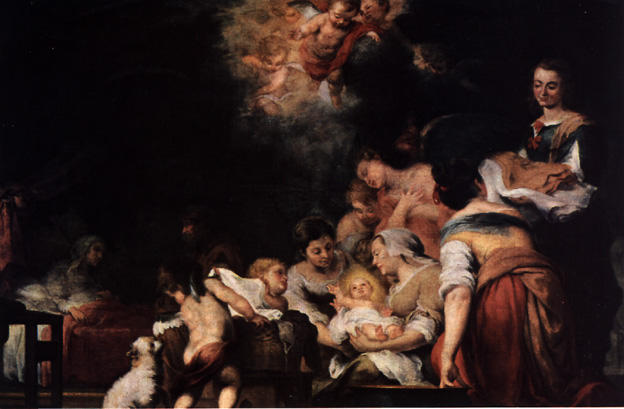 From: Matthew 1:1-16, 18-23
The Ancestry of Jesus Christ
[1] The book of the genealogy of Jesus Christ, the Son of David, the son of Abraham.[2] Abraham was the father of Isaac, and Isaac the father of Jacob, and Jacob the father of Judah and his brothers, [3] and Judah the father of Perez and Zerah by Tamar, and Perez the father of Hezron, and Hezron the father of Ram, [4] and Ram the father of Amminadab, and Amminadab the father of Nahson, and Nahson the father of Salmon, [5] and Salmon the father of Boaz by Rahab, and Boaz due father of Obed by Ruth, and Obed the father of Jesse, [6] and Jesse the father of David the king. And David was the father of Solomon by the wife of Uriah, [7] and Solomon the father of Rehoboam, and Rehoboam the father of Abijah, and Abijah the father of Asa, [8] and Asa the father of Jehoshaphat, and Jehoshaphat the father of Joram, and Joram the father of Uzziah, [9] and Uzziah the father of Jotham, and Jotham the father of Ahaz, and Ahaz the father of Hezekiah, [10] and Hezekiah the father of Manasseh, and Manasseh the father of Amos, and Amos the father of Josiah, [11] and Josiah the father of Jechoniah and his brothers, at the time of the deportation to Babylon.
[12] And after the deportation to Babylon: Jechoniah was the father of Shealtiel, and Shealtiel the father of Zerubbabel, [13] and Zerubbabel the father of Abiud, and Abiud the father of Eliakim, and Eliakim the father of Azor, [14] and Azor the father of Zadok, and Zadok the father of Aching and Achim the father of Eliud, [15] and Eliud the father of Eleazar, and Eleazar the father of Matthan, and Matthan the father of Jacob, [16] and Jacob the father of Joseph the husband of Mary, of whom Jesus was born, who is called Christ.
The Virginal Conception of Jesus, and His Birth
[18] Now the birth of Jesus Christ took place in this way. When His mother Mary had been betrothed to Joseph, before they came together she was found to be with child of the Holy Spirit; [19] and her husband Joseph, being a just man and unwilling to put her to shame, resolved to send her away quietly. [20] But as he considered this, behold, an angel of the Lord appeared to him in a dream, saying, "Joseph, son of David, do not fear to take Mary your wife, for that which is conceived in her is of the Holy Spirit; [21] she will bear a son, and you shall call His name Jesus, for He will save His people from their sins." [22] All this took place to fulfill what the Lord had spoken by the prophet: [23] "Behold, a virgin shall conceive and bear a son and His name shall be called Emmanuel" (which means God with us).
___________________________
Commentary:
1. This verse is a kind of title to St Matthew's entire Gospel. The promises God made to Abraham for the salvation of mankind (Gen 12:3) are fulfilled in Jesus Christ, as is Nathan's prophecy to King David of an everlasting kingdom (2 Sam 7:12-16).
The genealogy presented here by St Matthew shows Jesus' human ancestry and also indicates that salvation history has reached its climax with the birth of the Son of God through the working of the Holy Spirit. Jesus Christ, true God and true man, is the expected Messiah.
The genealogy is presented in a framework of three series, each consisting of fourteen links which show the progressive development of salvation history.
For the Jews (and for other Eastern peoples of nomadic origin) genealogical trees were of great importance because a person's identity was especially linked to family and tribe, with place of birth taking secondary importance. In the case of the Jewish people there was the added religious significance of belonging by blood to the chosen people.
In Christ's time each family still kept a careful record of its genealogical tree, since because of it people acquired rights and duties.
6. Four women are named in these genealogies--Tamar (cf. Gen 38; 1 Chron 2:4), Rahab (cf. Josh 2:6,17), Bathsheba (cf. 2 Sam 11:12, 24) and Ruth (cf. Book of Ruth). These four foreign women, who in one way or another are brought into the history of Israel, are one sign among many others of God's design to save all men.
By mentioning sinful people, God's ways are shown to be different from man's. God will sometimes carry out his plan of salvation by means of people whose conduct has not been just. God saves us, sanctifies us and chooses us to do good despite our sins and infidelities--and he chose to leave evidence of this at various stages in the history of our salvation.
11. The deportation to Babylon, described in 2 Kings 24-25, fulfilled the prophets' warning to the people of Israel and their kings that they would be punished for their infidelity to the commandments of the Law of God, especially the first commandment.
16. Jewish genealogies followed the male line. Joseph, being Mary's husband, was the legal father of Jesus. The legal father is on a par with the real father as regards rights and duties. This fact provides a sound basis for recognizing St Joseph as Patron of the whole Church, since he was chosen to play a very special role in God's plan for our salvation; with St Joseph as his legal father, Jesus the Messiah has David as his ancestor.
Since it was quite usual for people to marry within their clan, it can be concluded that Mary belonged to the house of David. Several early Fathers of the Church testify to this--for example, St Ignatius of Antioch, St Irenaeus, St Justin and Tertullian, who base their testimony on an unbroken oral tradition.
It should also be pointed out that when St Matthew comes to speak of the birth of Jesus, he uses an __expression which is completely different from that used for the other people in the genealogy. With these words the text positively teaches that Mary conceived Jesus while still a virgin, without the intervention of man.
18. St. Matthew relates here how Christ was conceived (cf. Luke 1:25-38): "We truly honor and venerate (Mary) as Mother of God, because she gave birth to a person who is at the same time both God and man" ("St. Pius V Catechism", I, 4, 7).
According to the provisions of the Law of Moses, engagement took place about one year before marriage and enjoyed almost the same legal validity. The marriage proper consisted, among other ceremonies, in the bride being brought solemnly and joyously to her husband's house (cf. Deuteronomy 20:7).
From the moment of engagement onwards, a certificate of divorce was needed in the event of a break in the relationship between the couple.
The entire account of Jesus' birth teaches, through the fulfillment of the prophecy of Isaiah 7:14 (which is expressly quoted in verses 22-23) that: 1) Jesus has David as His ancestor since Joseph is His legal father; 2) Mary is the Virgin who gives birth according to the prophecy; 3) the Child's conception without the intervention of man was miraculous.
19. "St. Joseph was an ordinary sort of man on whom God relied to do great things. He did exactly what the Lord wanted him to do, in each and every event that went to make up his life. That is why Scripture praises Joseph as `a just man'. In Hebrew a just man means a good and faithful servant of God, someone who fulfills the divine will (cf. Genesis 7:1; 18:23-32; Ezekiel 18:5ff.; Proverbs 12:10), or who is honorable and charitable toward his neighbor (cf. Tobias 7:6; 9:6). So a just man is someone who loves God and proves his love by keeping God's commandments and directing his whole life towards the service of his brothers, his fellow men" ([St] J. Escriva, "Christ Is Passing By", 40).
Joseph considered his spouse to be holy despite the signs that she was going to have a child. He was therefore faced with a situation he could not explain. Precisely because he was trying to do God's will, he felt obliged to put her away; but to shield her from public shame he decided to send her away quietly.
Mary's silence is admirable. Her perfect surrender to God even leads her to the extreme of not defending her honor or innocence. She prefers to suffer suspicion and shame rather than reveal the work of grace in her. Faced with a fact which was inexplicable in human terms she abandons herself confidently to the love and providence of God. God certainly submitted the holy souls of Joseph and Mary to a severe trial. We ought not to be surprised if we also undergo difficult trials in the course of our lives. We ought to trust in God during them, and remain faithful to Him, following the example they gave us.
20. God gives His light to those who act in an upright way and who trust in His power and wisdom when faced with situations which exceed human understanding. By calling him the son of David, the angel reminds Joseph that he is the providential link which joins Jesus with the family of David, according to Nathan's messianic prophecy (cf. 2 Samuel 7:12). As St. John Chrysostom says: "At the very start he straightaway reminds him of David, of whom the Christ was to spring, and he does not wish him to be worried from the moment he reminds him, through naming his most illustrious ancestor, of the promise made to all his lineage" ("Hom. on St. Matthew", 4).
"The same Jesus Christ, our only Lord, the Son of God, when He assumed human flesh for us in the womb of the Virgin, was not conceived like other men, from the seed of man, but in a manner transcending the order of nature, that is, by the power of the Holy Spirit, so that the same person, remaining God as He was from eternity, became man, which He was not before" ("St. Pius V Catechism", I, 4, 1).
21. According to the Hebrew root, the name Jesus means "savior". After our Lady, St. Joseph is the first person to be told by God that salvation has begun.
"Jesus is the proper name of the God-man and signifies `Savior'--a name given Him not accidentally, or by the judgment or will of man, but by the counsel and command of God" [...]. All other names which prophecy gave to the Son of God--Wonderful, Counsellor, Mighty God, Everlasting Father, Prince of Peace (cf. Isaiah 9:6)--are comprised in this one name Jesus; for while they partially signified the salvation which He was to bestow on us, this name included the force and meaning of all human salvation" ("St. Pius V Catechism", I, 3, 5 and 6).
23. "Emmanuel": the prophecy of Isaiah 7:14, quoted in this verse, foretold about 700 years in advance that God's salvation would be marked by the extraordinary event of virgin giving birth to a son. The Gospel here, therefore, reveals two truths.
First, that Jesus is in fact the God-with-us foretold by the prophet. This is how Christian tradition has always understood it. Indeed the Church has officially condemned an interpretation denying the messianic sense of the Isaiah text (cf. Pius VI, Brief, "Divina", 1779). Christ is truly God-with-us, therefore, not only because of His God-given mission but because He is God made man (cf. John 1:14). This does not mean that Jesus should normally be called Emmanuel, for this name refers more directly to the mystery of His being the Incarnate Word. At the Annunciation the angel said that He should be called Jesus, that is, Savior. And that was the name St. Joseph gave Him.
The second truth revealed to us by the sacred text is that Mary, in whom the prophecy of Isaiah 7:14 is fulfilled, was a virgin before and during the birth itself. The miraculous sign given by God that salvation had arrived was precisely that a woman would be a virgin and a mother at the same time.
"Jesus Christ came forth from His mother's womb without injury to her maternal virginity. This immaculate and perpetual virginity forms, therefore, the just theme of our eulogy. Such was the work of the Holy Spirit, who at the conception and birth of the Son so favored the Virgin Mother as to impart fruitfulness to her while preserving inviolate her perpetual virginity" ("St. Pius V Catechism", I, 4, 8).
___________________________
Source: "The Navarre Bible: Text and Commentaries". Biblical text taken from the Revised Standard Version and New Vulgate. Commentaries made by members of the Faculty of Theology of the University of Navarre, Spain. Published by Four Courts Press, Kill Lane, Blackrock, Co. Dublin, Ireland. Reprinted with permission from Four Courts Press and Scepter Publishers, the U.S. publisher.
Friday, September 07, 2007
Thoughts and Counsels - September 8
Meditation for September 8, The Nativity of Mary
The birth of an unknown little girl in an out-of-the-way country was the greatest event since the creation of Adam that the earth had witnesed until the time of Mary's birth. This little one was destined to be the woman, blessed among all women.
Behold her cradle. Anne and Joachim are there. A birth is always a sacred thing. But here! The child resembles all children; she sleeps, she is tiny; suddenly she wakes up and smiles. From certain details, however, it is evident that she does not resemble any other child; this face is not of the earth nor is the smile, nor does one hear the little one cry.
But appearances do not matter. This little one is the most beautiful tabernacle of the living God which can ever exist. According to M. Olier, there is in her from this instant more divine grace than one can find in the accumulation of all the sanctifying grace of all the saints combined.
She is Immaculate! What splendor!
Like almost all the divine splendors that God has given the earth, it is a splendor hidden behind closed doors.
I will profit by this silence. I will be silent to admire. I will remain at the cradle, lingering in contemplation. What else do I need? Mary, I have Mary. Mary is born. In a few years Jesus will come. Divine life will return to earth. But all begins here; this very little one is necessary that we might have our great God incarnate.
How I want to love this little one who is so great, Mary! I see her little heart which beats. "The Heart of Mary," Bossuet will say, "is the first source of the Blood of Jesus; it is here that this beautiful river of grace has its source and flows into our veins through the Sacraments, carrying the spirit of life into the whole body of the Church."
_________________
Adapted from Meditations for Religious
by Father Raoul Plus, S.J. (© 1939, Frederick Pustet Co.)
Behold her cradle. Anne and Joachim are there. A birth is always a sacred thing. But here! The child resembles all children; she sleeps, she is tiny; suddenly she wakes up and smiles. From certain details, however, it is evident that she does not resemble any other child; this face is not of the earth nor is the smile, nor does one hear the little one cry.
But appearances do not matter. This little one is the most beautiful tabernacle of the living God which can ever exist. According to M. Olier, there is in her from this instant more divine grace than one can find in the accumulation of all the sanctifying grace of all the saints combined.
She is Immaculate! What splendor!
Like almost all the divine splendors that God has given the earth, it is a splendor hidden behind closed doors.
I will profit by this silence. I will be silent to admire. I will remain at the cradle, lingering in contemplation. What else do I need? Mary, I have Mary. Mary is born. In a few years Jesus will come. Divine life will return to earth. But all begins here; this very little one is necessary that we might have our great God incarnate.
How I want to love this little one who is so great, Mary! I see her little heart which beats. "The Heart of Mary," Bossuet will say, "is the first source of the Blood of Jesus; it is here that this beautiful river of grace has its source and flows into our veins through the Sacraments, carrying the spirit of life into the whole body of the Church."
_________________
Adapted from Meditations for Religious
by Father Raoul Plus, S.J. (© 1939, Frederick Pustet Co.)
Thursday, September 06, 2007
Gospel for Friday, 22nd Week In Ordinary Time
From: Luke 5:33-39
A Discussion on Fasting
[33] And they (the scribes and the Pharisees) said to Him (Jesus), "The disciples of John fast often and offer prayers, and so do the disciples of the Pharisees, but yours eat and drink." [34] And Jesus said to them, "Can you make the wedding guests fast while the bridegroom is with them? [35] The days will come, when the bridegroom is taken away from them, and then they will fast in those days." [36] He told them a parable also: "No one tears a piece from a new garment and puts it upon an old garment; if he does, he will tear the new, and the piece from the new will not match the old. [37] And no one puts new wine into old wineskins; if he does, the new wine will burst the skins and it will be spilled, and the skins will be destroyed. [38] But new wine must be put into fresh wineskins. [39] And no one after drinking old wine desires new; for he says, `The old is good.'"
_______________________
Commentary:
33-35. In the Old Testament God established certain days as days of fasting--the main one being the "day of atonement" (Numbers 29:7; Acts 27:9). Fasting implied total or partial abstinence from food or drink. Moses and Elijah fasted (Exodus 34:28; 1 Kings 19:8) and our Lord Himself fasted in the desert for forty days before beginning His public ministry. In the present passage Jesus gives a deeper meaning to the word "fasting"--the deprivation of His physical presence which His Apostles would experience after His death. All through His public life Jesus is trying to prepare His disciples for the final parting. At first the Apostles were not very robust and Christ's physical presence did them more good than the practice of fasting.
Christians should sometimes abstain from food. "Fast and abstain from flesh meat when Holy Mother Church so ordains" ("St. Pius X Catechism", 495). That is the purpose of the fourth commandment of the Church, but it has a deeper meaning, as St. Leo the Great tells us: "The merit of our fasts does not consist only in abstinence from food; there is no use depriving the body of nourishment if the soul does not cut itself off from iniquity and if the tongue does not cease to speak evil" ("Sermo IV in Quadragesima").
___________________________
Source: "The Navarre Bible: Text and Commentaries". Biblical text taken from the Revised Standard Version and New Vulgate. Commentaries made by members of the Faculty of Theology of the University of Navarre, Spain. Published by Four Courts Press, Kill Lane, Blackrock, Co. Dublin, Ireland. Reprinted with permission from Four Courts Press and Scepter Publishers, the U.S. publisher.
A Discussion on Fasting
[33] And they (the scribes and the Pharisees) said to Him (Jesus), "The disciples of John fast often and offer prayers, and so do the disciples of the Pharisees, but yours eat and drink." [34] And Jesus said to them, "Can you make the wedding guests fast while the bridegroom is with them? [35] The days will come, when the bridegroom is taken away from them, and then they will fast in those days." [36] He told them a parable also: "No one tears a piece from a new garment and puts it upon an old garment; if he does, he will tear the new, and the piece from the new will not match the old. [37] And no one puts new wine into old wineskins; if he does, the new wine will burst the skins and it will be spilled, and the skins will be destroyed. [38] But new wine must be put into fresh wineskins. [39] And no one after drinking old wine desires new; for he says, `The old is good.'"
_______________________
Commentary:
33-35. In the Old Testament God established certain days as days of fasting--the main one being the "day of atonement" (Numbers 29:7; Acts 27:9). Fasting implied total or partial abstinence from food or drink. Moses and Elijah fasted (Exodus 34:28; 1 Kings 19:8) and our Lord Himself fasted in the desert for forty days before beginning His public ministry. In the present passage Jesus gives a deeper meaning to the word "fasting"--the deprivation of His physical presence which His Apostles would experience after His death. All through His public life Jesus is trying to prepare His disciples for the final parting. At first the Apostles were not very robust and Christ's physical presence did them more good than the practice of fasting.
Christians should sometimes abstain from food. "Fast and abstain from flesh meat when Holy Mother Church so ordains" ("St. Pius X Catechism", 495). That is the purpose of the fourth commandment of the Church, but it has a deeper meaning, as St. Leo the Great tells us: "The merit of our fasts does not consist only in abstinence from food; there is no use depriving the body of nourishment if the soul does not cut itself off from iniquity and if the tongue does not cease to speak evil" ("Sermo IV in Quadragesima").
___________________________
Source: "The Navarre Bible: Text and Commentaries". Biblical text taken from the Revised Standard Version and New Vulgate. Commentaries made by members of the Faculty of Theology of the University of Navarre, Spain. Published by Four Courts Press, Kill Lane, Blackrock, Co. Dublin, Ireland. Reprinted with permission from Four Courts Press and Scepter Publishers, the U.S. publisher.
Thoughts and Counsels - September 7
Perform all your actions in union with the pure intention and perfect love with which Our Lord did all things for the glory of God and the salvation of the world.
-St. Mechtildis
_________________________
From Mary, Help of Christians
Part VI, Thoughts and Counsels of the Saints for Every Day of the Year
Compiled by Fr. Bonaventure Hammer, OFM (© 1909, Benziger Brothers)
-St. Mechtildis
_________________________
From Mary, Help of Christians
Part VI, Thoughts and Counsels of the Saints for Every Day of the Year
Compiled by Fr. Bonaventure Hammer, OFM (© 1909, Benziger Brothers)
Meditation for September 7, A Time to Speak
"To keep silent when it is one's duty to speak," a moralist remarked, "is as great a fault as to speak when one should be silent."
I can fail in my duty by speaking when God wishes me to be silent, or by failing against obedience, charity or humility when I am permitted to speak. But I am more concerned now with, the faults I commit by not speaking.
Perhaps, through a motive of vanity, I keep still in recreation, when true simplicity demands that I speak a little and take a more amiable part in the common relaxation.
Perhaps, to avoid compromising myself, I prefer to remain in my corner, when it would be better to consult competent authorities.
Perhaps, through negligence or laziness, I neglect to inform those who have a right to know, of serious violations of rule of which I alone may have knowledge. Surely great prudence is needed here.
There are some who imagine they have certain confidences to address to their superiors, but who would do better to keep their criticisms and insinuations to themselves; if I must intervene it should only be after prayer and reflection.
Superiors have something else to do besides listening to gossip without foundation or proof, or to tales of all kinds concocted by too fertile imaginations.
I must try to know how to speak and to dare to speak, but only when it is necessary.
_________________
Adapted from Meditations for Religious
by Father Raoul Plus, S.J. (© 1939, Frederick Pustet Co.)
I can fail in my duty by speaking when God wishes me to be silent, or by failing against obedience, charity or humility when I am permitted to speak. But I am more concerned now with, the faults I commit by not speaking.
Perhaps, through a motive of vanity, I keep still in recreation, when true simplicity demands that I speak a little and take a more amiable part in the common relaxation.
Perhaps, to avoid compromising myself, I prefer to remain in my corner, when it would be better to consult competent authorities.
Perhaps, through negligence or laziness, I neglect to inform those who have a right to know, of serious violations of rule of which I alone may have knowledge. Surely great prudence is needed here.
There are some who imagine they have certain confidences to address to their superiors, but who would do better to keep their criticisms and insinuations to themselves; if I must intervene it should only be after prayer and reflection.
Superiors have something else to do besides listening to gossip without foundation or proof, or to tales of all kinds concocted by too fertile imaginations.
I must try to know how to speak and to dare to speak, but only when it is necessary.
_________________
Adapted from Meditations for Religious
by Father Raoul Plus, S.J. (© 1939, Frederick Pustet Co.)
Subscribe to:
Posts (Atom)